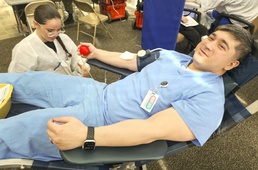
Naval Hospital Bremerton hosted a blood drive, April 15, 2026, in coordination with the Armed Services Blood Bank Center – Pacific Northwest.
A total of 27 units of blood were collected - considered a significant contribution for the command-level drive - as each [unit] has the potential to save up to three lives of military members and their families worldwide.
The drive, led by coordinators from both the military and civilian sectors, highlighted the critical intersection of medical readiness and community service.
Hospital Corpsman 3rd Class Ariel King, NHB blood drive event coordinator, provided behind-the-scenes support for ASBB-PNW and leads the military treatment facility effort to ensure the local donor pool remains robust.
When asked about any personal inspiration behind joining the mission, King shared, “I’ve always considered medical professionals to be real superheroes, and I want to be a part of helping to save lives.”
Addressing the common anxiety surrounding needles, King and ASBBC Staff emphasized the psychological push that helps donors overcome their fears. According to their experience, donors often find their motivation in how many people they are potentially helping.
For King, the act of donating blood serves as a tangible manifestation of the military oath, “As a member of the military community, donating blood feels like an extension of our oath because I’ve done something meaningful.”
The ASBBC-PNW is a tri-service organization dedicated to providing quality blood products and services to all branches of the military during peace and war.
During the drive, staff also took time to dispel common misconceptions. One thing King says donors are usually surprised to learn the process is neither long nor painful. Furthermore, King emphasized that a steady stream of donors is vital because blood components have short shelf lives. Red cells last only 35 days.
“Regular, voluntary donors ensure a stable, safe supply for daily surgeries and chronic care needs,” said King. “Emergency-only donations cannot fulfill constant needs, often occur too late and have higher risks of transfusion-transmissible infections.”
The atmosphere at the drive remained light-hearted, with donors citing apple juice and cookies as the reward that makes the process worth it. When asked to describe the feeling of donating in one word, the consensus was, ‘accomplishment.’
For those still hesitant to participate in future drives, King offers a simple message: “Remember the long-term reward that your contribution is helping others.” she added, “And don’t forget the short-term reward; your snack immediately after donating.”
One pint [or unit] of blood can save up to three lives. Just one unit can be separated into several components: red blood cells, plasma, platelets and cryoprecipitate. The red blood cells carry oxygen to the body’s organs and tissues. Plasma is a mixture of water, protein and salts, and makes up 55 percent of actual blood volume. Platelets promote blood clotting and give those with leukemia and forms of cancer the chance to live. Cryoprecipitate is collected from plasma that has been frozen, then thawed, and acts as a coagulation agent.
The overall mission of the Armed Services Blood Bank Center is to operate a Tri-Service staffed regional blood donor center which collects, tests, and distributes blood and blood components in support of contingency and peacetime operations worldwide.
NMRTC Bremerton supports the execution of the Navy Medicine mission by maintaining medical readiness and providing high-quality healthcare to the fleet, Fleet Marine Force, and shore-based commands in the Pacific Northwest.