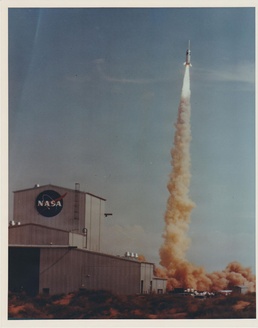
White Sands Missile Range has continued to play a crucial role in supporting U.S. space activities well into the 21st century. From the 1970s to today, WSMR’s facilities have been integral to the testing, development, and launch of space technologies, supporting everything from satellite missions to the Space Shuttle program. This article highlights the range’s contributions from the 1970s to the present day, showcasing how WSMR remains a key player in space exploration.
1970s: Skylab, Satellite Launches, and Expanding Space Capabilities
In the 1970s, WSMR expanded its focus from missile testing to include a growing emphasis on satellite launches and space station support. A major event during this decade was WSMR’s involvement in the Apollo program’s successor, Skylab. Skylab was the U.S.'s first space station, and WSMR played a role in testing the rockets that would launch astronauts to this orbiting laboratory.
Additionally, WSMR supported the launch of numerous communication and weather satellites, marking its increasing role in facilitating not only military and civilian satellite operations but also testing the systems for these space missions. The range’s large open spaces were ideal for ensuring the rockets could perform flawlessly in preparing for long-duration space missions.
1980s: Space Shuttle Testing and Historic Landings
The 1980s marked the advent of the Space Shuttle program, and WSMR became an essential part of this new phase of space exploration. One of the most significant contributions WSMR made during this decade was in supporting Space Shuttle landings. In 1982, Space Shuttle Columbia made its historic landing at White Sands after completing its first mission in space, becoming the first Shuttle to land at WSMR. The range was designated as an alternate landing site due to its vast, flat, and dry landscape, ideal for the Shuttle’s emergency landings.
1990s: Supporting Satellite Systems and the Rise of Commercial Space
In the 1990s, WSMR expanded its role even further by supporting the deployment of a wide range of communication satellites, including the Global Positioning System (GPS) satellites. These launches were critical in establishing GPS as a global navigation tool used for military, commercial, and civilian purposes.
The range also supported the emerging commercial space industry. As companies began testing new space technologies, WSMR served as a test site for private and military satellites and experimental payloads. The continued expansion of commercial aerospace activities marked WSMR as a crucial player in the growing private space sector.
2000s: Commercial Space Ventures and Deep Space Exploration
In the 2000s, WSMR’s role in commercial space exploration grew substantially. Companies began using the range to test and launch new rockets and spacecraft, marking a turning point in the commercialization of space. The range became an important testing ground for reusable rocket technologies, a development that would later prove pivotal in the next wave of space exploration.
WSMR also continued to support NASA’s ambitious deep-space missions. WSMR was involved in testing spacecraft propulsion systems and other technology components used in NASA’s New Horizons mission to Pluto, which launched in 2006. The range's facilities were used to simulate space conditions and test various components before they were launched on deep-space missions.
2010s and Beyond: Innovation in Space and New Challenges
The 2010s saw WSMR continue to support NASA, the U.S. Department of Defense, and private companies. The range played an essential role in testing new rockets, satellite systems, and spacecraft designed for missions beyond Earth’s orbit. It remains an essential site for testing space vehicles that will support future lunar missions, including NASA’s Artemis program and commercial ventures that aim to send humans to Mars.
The commercial space industry’s rapid growth has ensured that WSMR remains at the forefront of technological innovation. The range continues to be used for launching and testing small satellites, as well as for next-generation propulsion systems, including those that will be used for deep-space exploration.
From its role in the Apollo program to supporting the Space Shuttle and commercial space missions, White Sands Missile Range has played a critical role in U.S. space exploration over the decades. Today, as space exploration expands to include lunar bases, Mars missions, and satellite networks, WSMR remains an essential site for testing and launching the technologies that will shape the future of space exploration. With its continued support for both government and private initiatives, WSMR’s legacy in space exploration is secure, and its contributions will only grow in the years to come.
White Sands Missile Range is America’s Range. It is the Birthplace of Space Activities and has provided continued support in the decades since.