In February 2026, the newly appointed director of the Defense Health Agency, Vice Adm. Darin K. Via, made one thing clear: the DHA is a combat support agency.
From the front lines to Military Treatment Facilities, each core function of the Department of War’s health system serves one unifying mission as America’s warfighters face unprecedented challenges across the globe. Clinical care, education, training, logistics, research, information systems, and enterprise management combine to make the DHA a force multiplier for a lethal, prepared, and far-forward Joint Force.
Delivering for Warfighters is the DHA’s primary objective, and its mission covers the full array of military and dependent health care in both forward-deployed operational treatment and clinical settings in military hospitals.
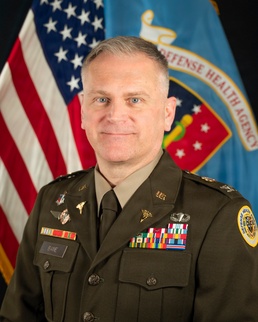
A prime example of the “Delivering” ethos is the Operational Medical Systems Force Health Protection division, based at Fort Detrick, Maryland. Led by U.S. Army Col. Charles “Chuck” Bane, FHP’s team of regulatory and product management experts rapidly fields treatments, diagnostics, and preventive medical countermeasures for high-consequence threats to the troops when a U.S. Food and Drug Administration-approved product is not available.
FHP manages regulatory oversight and implementation of policies to bridge the gap between new medical products and the Joint Force, enhancing combat readiness and maintaining warfighter lethality. The team’s portfolio, including French Freeze-Dried Plasma for combat casualty care and treatments for viral diseases, gives combatant commanders and Joint Force medical providers deployed across the world ready access to products that are needed for operational medical readiness.
FHP uses a variety of regulatory tools, including Investigational New Drug Expanded Access Protocols and Emergency Use Authorizations. These mechanisms allow for investigational medical products, which have not been approved by the FDA, to be used to protect military personnel in the event of a life-threatening emergency.
The team also provides instructions on FDA-compliant product use and safety data reporting to ensure the best possible support to DoW personnel. Product can be pre-positioned where it is most likely to be needed, especially in areas where timing of treatment may be critical.
Below, Bane provides insight into his team’s role, the evolving landscape of the FHP mission to meet DoW operational demands in a challenging threat environment, and how FHP can serve as a model of expediency to fill critical capability gaps, helping warfighters fight and win anywhere in the world.
OPMED STRATCOM: What is your role as director of FHP, and why is your team’s mission important for OPMED, DHA, and DoW?
Col. Bane: I have served in a variety of roles during my 21-plus year career as an Army veterinarian, yet FHP has such a specific and high-consequence role that I have gained a whole new understanding of what our medics, corpsmen, and medical officers need to provide health care for our warfighters. My responsibilities as director are never an individual effort. It takes each member of the FHP team, and the direct support of innumerable organizations and health care experts, to identify and coordinate delivery of required treatments for use in far-forward environments. There is no straight-line approach to how FHP supports our partners across the globe, so our role is intricate, yet flexible – because we have to respond and support as expediently as possible while ensuring the solutions we provide are timely, cost effective, and in line with Department of War policies. My most critical role is defining our mission as a combat support function within OPMED and DHA while leveraging my experience and authorities to enable the FHP team to excel. Our success is a credit to the professionalism, mission focus, and dedication each member of our team brings to the table, and I am incredibly fortunate to lead them each day.
OPMED STRATCOM: As OPMED’s role has expanded to support the Joint Force, how has FHP evolved to better meet the needs of the DHA and DoW?
Col. Bane: FHP is a core function of OPMED’s mission to equip military medical providers. We lean into challenges to meet future needs of the Joint Force and combatant commanders so we can continue to outpace the threats of near-peer competition in places like the Indo-Pacific and Arctic regions. FHP is a small component within OPMED, yet our reach is nearly unlimited due to our flexibility and responsiveness to meet urgent needs anywhere in the world with the speed of relevance. Individual units, Warfighters, naval fleets, Marine expeditionary units, Army divisions, Air Force wings – all stand ready to respond as directed by the Department of War. That operational tempo requires the FHP team to build relationships with stakeholders across the military medical establishment and with industry partners to rapidly deliver critical medical capabilities for troops on the front lines, wherever that may be.
OPMED STRATCOM: How does FHP’s operational tempo mirror the real-world challenges DoW is tackling across the world?
Col. Bane: The key to our success is responsive partnership. We are directly connected to operational planners across the Joint Force to generate opportunities, not just wait for taskings. This gives us a proactive posture and enables our situational awareness of wider DoW strategies in each area of operations across the combatant commands. What we do that is unique within the DoW is give leadership – from combatant command down to the battalion aid station level – access to cutting-edge medical solutions using authorized regulatory mechanisms. Our close partnership with DHA’s Office of Regulated Activities is key to the process. This capability is critical for combatant commanders who are facing myriad threats from the operational environment. Our Soldiers, Sailors, Airmen, and Marines cannot maintain 100% readiness without some of the solutions we provide.
OPMED STRATCOM: What are some ‘real-world’ examples of FHP’s direct support in key geographic regions and combatant commands?
Col. Bane: My team is fantastic, and they constantly look for opportunities to influence medical readiness strategies for combatant commands and boots on the ground. We routinely travel to major Military Treatment Facilities and take part in regional exercises – like we did in 2025 supporting the Army-led DEFENDER Exercise in Lithuania. We train medical providers across combatant commands, brief Joint Force medical leadership, and assess readiness to identify possible capability gaps. These efforts are paramount to OPMED and DHA acquisition transformation strategies, allowing us to meet specific needs for commanders planning for critical missions. FHP’s effectiveness relies on direct, consistent, routine, and flexible engagement with the military medical professionals deployed worldwide. I am proud to be part of OPMED and DHA as they continue to revolutionize how the DoW saves lives and cares for America’s Warfighters.