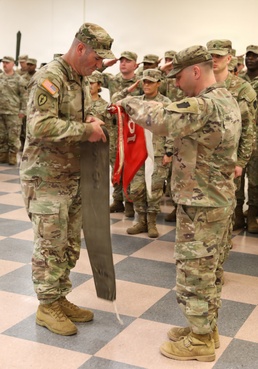
FORT INDIANTOWN GAP, Pa.– The Pennsylvania Army National Guard is reshaping how it fights on the modern battlefield, establishing a new reconnaissance unit designed to counter emerging threats from drones, electronic warfare and near-peer adversaries.
Authorized by the Secretary of the Army under National Guard Regulation 10-1, Company M, known as “Mike Company,” has been formally created as part of the brigade’s transition from a Stryker brigade combat team to a more agile mobile brigade combat team. While the restructuring is now in effect, officials said a formal activation ceremony has not yet been held, and a date has not been announced.
The reorganization reflects lessons learned from recent and ongoing conflicts, particularly the growing importance of electronic warfare and unmanned aerial systems. Military planners have emphasized the need for smaller, more flexible reconnaissance elements capable of operating in environments shaped by near-peer adversaries and rapidly advancing technology.
According to 1st Sgt. Brandon Lutz, the formation of Mike Company represents a clear break from past doctrine.
“Modernization, in short,” Lutz said. “In a shift from the Global War on Terror era of ‘pull up to the fight,’ this signals the beginning of a more modern combat force in the Pennsylvania Army National Guard.”
Unlike traditional reconnaissance units embedded within battalion structures, Mike Company is designed to operate more independently while maintaining direct ties to brigade headquarters. That shift, Lutz said, enables faster and more precise decision-making on the battlefield.
“Mike Company is different in the way that it brings technology and recon to the brigade headquarters and allows us to function independently of traditional battalion hierarchy,” he said. “It allows the brigade to pinpoint high-value targets with less delay in a more modern, mobile battlefield.”
The unit will integrate light mechanized scouts with capabilities in drone operations and electronic attack, forming a hybrid force intended to extend the brigade’s reach while reducing risk to soldiers.
Lutz described modern reconnaissance as a shift away from large, centralized formations toward smaller, highly mobile teams.
“Smaller teams working independently with simultaneous feedback to brigade headquarters allow the rapid deployment of assets with less delay,” Lutz said.
As drones and electronic warfare systems take on a greater role, the skill set required of soldiers is also evolving. Lutz said today’s reconnaissance troops must balance advanced technical expertise with time-tested fieldcraft.
The creation of Mike Company also marks the deactivation of the 2nd Squadron, 104th Cavalry Regiment, a legacy unit whose history has long been tied to reconnaissance operations within the brigade. Leaders have acknowledged the squadron’s service as the organization moves into its next phase.
Looking ahead, Lutz said the restructuring better positions the Pennsylvania Army National Guard to face emerging threats.
“It brings a new thought process and doctrinal shift from the Global War on Terror era,” he said. “It allows us to be ready, trained and aware of modern capabilities of opposing forces.”
Despite the increasing reliance on technology, Lutz emphasized that some fundamentals remain unchanged.
“At the end of the day, what technology can’t replace is a good infantry reconnaissance team,” he said. “Quiet, forward, lethal when necessary, and able to report enemy movements to higher headquarters undetected.”