WASHINGTON — The Army is continuing to improve how it feeds its Soldiers through the roll-out of the Campus-Style Dining Venue (CSDV) pilot, an essential change for military readiness.Building on lessons from the first CSDV opening in February, the Army and Compass Group, the contractor selected to operate the first five venues, are shaping a modern dining model designed around today’s Soldiers.
“The Campus-Style Dining Venue represents a fundamental shift in the way that we view Soldiers’ quality of life,” said Lt. Gen. Chris Mohan, Army Materiel Command commanding general. “It’s about providing our men and women in uniform with the same quality, variety and modern atmosphere that we would find on a college campus or in a vibrant city.”
The goal: Provide Soldiers with healthier, more accessible, and convenient food options in a modern, welcoming environment.
The Flagship: 42 Bistro
The first CSDV, 42 Bistro at Fort Hood, Texas, opened Feb. 18. Named for the installation’s founding year, the facility offers a contemporary dining experience with multiple stations—including a grill, Italian kitchen, salad bar and a rotating international cuisine line—drawing from more than 3,000 recipes.
Soldiers and families can choose fresh, locally sourced, made-to-order meals. Extended hours, a coffee bar, smoothie station and grab-and-go selections accommodate demanding schedules.
The response has been overwhelmingly positive. Leaders described the surge of customer as a “catastrophic success,” highlighting strong demand for a modernized dining model across Army installations.
Lessons Learned for Future Rollouts
Army Materiel Command conducted a post-launch review of the first CSDV opening, noting several key takeaways to refine operations at future venues.
“We learned a lot from 42 Bistro that will help us deliver a more efficient launch at future sites,” said Mohan.
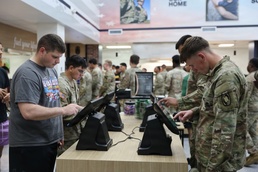
Most notably was that demand far exceeded initial Army expectations. As foot traffic surged and lines got long at 42 Bistro, Compass Group responded quickly by adding additional ordering kiosks and adjusting the facility layout to improve flow. These changes significantly reduced wait times and created a smoother dining experience — lessons that will be applied to future openings from day one.
The review also highlighted the necessity of educating Soldiers prior to the opening on how their meal card values work under the new CSDV model. It emphasized the need for clear, user-friendly materials that explain the process and the “Freedom Dollar Value” concept created by Compass Group.
Another critical takeaway was the importance of ensuring Soldiers’ Common Access Cards (CAC) are coded with the MEC 09 designation, which enables meal card access at CSDV locations. Early delays in coding created challenges during 42 Bistro’s first month of operation, but the experience led to improved monitoring and streamlined processes. With these updates in place, future CSDV sites will be better prepared to complete CAC coding ahead of opening, ensuring a seamless checkout experience for Soldiers. For example, at Fort Carson, 83% of Soldiers on a meal card already have the MEC 09 coded onto their CAC ahead of Stack House Bistro’s grand opening.
Compass Group said it will also continue to refine the CSDV experience from learning what returning customers want most while keeping hours at both the restaurant and coffee bar flexible for Soldiers.
“What has been most meaningful is hearing directly from Soldiers about how they are using the Campus-Style Dining Venue in ways that work best for their individual schedules and needs, along with how they make the best use of their meal entitlements,” said Donna Turner, Compass Group vice president of government engagement and sales and project lead for CSDVs.
To maintain quality, the company will continue to expand partnerships with regional suppliers to bring fresh ingredients into the CSDV while also supporting the local economy, she said.
“For us, that is part of delivering a program that is not only innovative, but rooted in quality and community,” said Turner.
The Path Forward
The foundation built at Fort Hood offers a reliable roadmap for upcoming restaurants, and Compass Group said lessons learned will help ensure smoother operations and an even better Soldier-centric experience at Fort Carson.
“We listened to our Soldiers, and we want to make this better for them. We have to,” said Mohan. “We’ve got to finish the fight and get the rest of the CSDV locations open.”
As the Army continues to transform the way it feeds its modern-day Soldiers, additional requests for proposals are now live on SAM.gov.
Other initiatives like the Flexible Eating and Expanded Dining (FEED) initiative, meal prep programs, grab-and-go options, kiosks, food trucks, and Victory Fresh have the potential to redefine the food ecosystem across installations.