The St. Paul District is embracing a path forward to integrate artificial intelligence into
everyday processes.
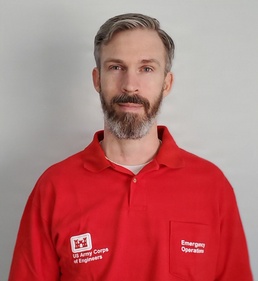
Chris Bowen, chief of construction and leader of the St. Paul District AI working group, shared his thoughts. “AI is poised to become the defining technology of the 21st century, reshaping how we work, learn and interact with the world.”
Bowen has been active in AI discussions at USACE headquarters and is playing a key role in the development of a USACE learning center course on AI literacy. He will serve as an instructor for the Prospect course and share his expertise to empower others with the knowledge and skills needed to navigate the world of AI. He said, “This AI prospect course under development targets practical applications intended to help USACE employees apply AI to areas of their own work to increase the quality, efficiency, or both, with respect to their routine work products.”
The course developers come from varied backgrounds in USACE, but all have a genuine interest in helping coworkers become “AI ambassadors” who will be excited to share techniques with others once they return, he added.
In addition to contributing to formal training initiatives, the St. Paul District is fostering a culture of collaboration and innovation through hosting biweekly meeting called “Sips and Scripts” to train people in AI. These informal gatherings provide an opportunity for team members to come together, enjoy a short training session and participate in an open discussion about utilizing AI in their work, Bowen said. “It’s a safe space for sharing ideas, asking questions and exploring the possibilities of AI in a supportive and interactive environment,” he added.
Kevin Denn, project manager and a member of the AI working group, said, “I look forward to ‘Sips and Scripts’ every two weeks. It cuts through the noise around AI and provides practical, time-saving solutions to our everyday work challenges. No matter your experience level with AI, you’ll walk away having learned something new and seeing how others in the district are using this powerful tool.”
Lt. Col. Joshua Rud, deputy district commander, largely attributes the success of the group to Bowen. “Chris [Bowen] exemplifies the innovative spirit that drives St. Paul District forward.” Rud’s hope is to prepare the workforce for an AI-enabled future, whether you are a brand-new college graduate or the district commander. “Each of us will leverage it differently and at our own pace – but each of us needs to start now. To that end,we are creating regular, low-pressure opportunities to try AI tools, share ideas and learn from each other like in ‘Sips and Scripts,’” he said. “As our collective comfort with these tools grow, we will be positioned to integrate AI more deeply into our business processes and strengthen how we work and deliver our projects and programs.”
Bowen concluded, “‘Sips and Scripts’ is a low-stakes environment to learn about AI. Come for the training and stay for the conversation and discover how AI can empower you to make an even greater impact. Together, we can lead the way in innovation and deliver the best possible services to the American people.”
There is no shortage of articles from the early 1990s, at the advent of the internet, that claimed the World Wide Web was a passing fad. In 1995, scientist Clifford Stoll, an Astronomer for Astrophysics in the Harvard-Smithsonian Center for Astrophysics, (source) said in an interview with Minnesota Public Radio, “I think it’s [the internet is] grossly oversold and within two or three years people will shrug and say, ‘Uh yep, it was a fad of the early ’90s and now, oh yeah, it still exists but hey, I’ve got a life to lead and work to do. I don’t have time to waste online.’ Or, ‘I’ll collect my email, I’ll read it, why should I bother prowling around the World Wide Web or reading the Usenet’ simply because there’s so little of value there.”
However, as we know, the internet has influenced every aspect of our lives. According to the World Economic Forum, “The internet is changing the way we live, work, produce and consume. With such extensive reach, digital technologies cannot help but disrupt many of our existing models of business and government (source).”
The impact of the internet in 2025 cannot be understated. Even in 2017, the World Economic Forum published an article about how people could not imagine life without the internet.
AI is poised to become as transformative as the advent of the internet.
However, like the skepticism for the World Wide Web, some people have skepticism about the use of AI. “There is no denying that AI has changed our lives. However, some argue if it’s for the better,” said the Virginia Tech Engineer in 2023. The popularity of AI has raised questions from environmental implications, energy consumption, over-reliance on technology to the spread of misinformation.
-30-