Launched Effects Program Accelerates Battlefield Reach
U.S. Army Acquisition Support Center
Date: 04.02.2026
Posted: 04.07.2026 13:10
News ID: 562169
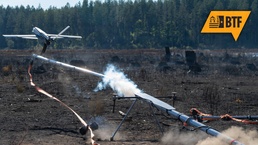
The Army’s Launched Effects (LE) program is accelerating a new era of battlefield reach and responsiveness by pairing cutting-edge uncrewed technology with acquisition approaches designed for speed. Built to deliver decisive effects from standoff distances, these systems are rapidly moving from concept to operational use—demonstrating that smarter acquisition can be just as transformative as the technology itself.
The LE program—comprised of small, attritable (low-cost, reusable, semi-expendable) uncrewed aircraft or payloads that can be launched from airborne or ground platforms to detect, identify and target threats—has evolved steadily since the Army approved its initial requirements in 2020. What began as a technology concept to extend the reach of manned platforms in contested environments has matured into a demonstrated capability through iterative flight testing, modular architecture development and hands-on Soldier involvement.
The program’s plan to continually iterate and update systems based on Soldier feedback marks a significant departure from traditional acquisition programs.
“Unlike legacy systems, which often took years to finalize requirements and deliver capabilities, the LE program incorporates Soldier feedback during every testing phase to refine designs, uses agile development frameworks to deliver incremental updates rapidly, and ensures systems remain adaptable to evolving threats and operational needs,” explained Lt. Col. Hunter Gray, product manager, Capability Program Executive (CPE) Aviation.
“This iterative approach fosters innovation, responsiveness and alignment with real-world battlefield requirements, ensuring the program remains relevant and effective.”
The LE program directly supports the Army’s Transformation Initiative by enabling multidomain operations through adaptable, autonomous systems, enhancing lethality and survivability in contested environments, and accelerating delivery of advanced capabilities to Soldiers, ensuring readiness against near-peer adversaries. It also aligns with Secretary of War Pete Hegseth’s directive, in December 2025, to secure “drone dominance” for the U.S. military by prioritizing the development of advanced autonomous systems that integrate intelligence, surveillance and reconnaissance (ISR), electronic warfare and lethal strike capabilities into small, expendable platforms.
The program positions the Army to achieve dominance in the drone battlespace by effectively countering adversary advancements, increasing situational awareness and lethality in complex, contested environments, while enhancing Soldier protection.
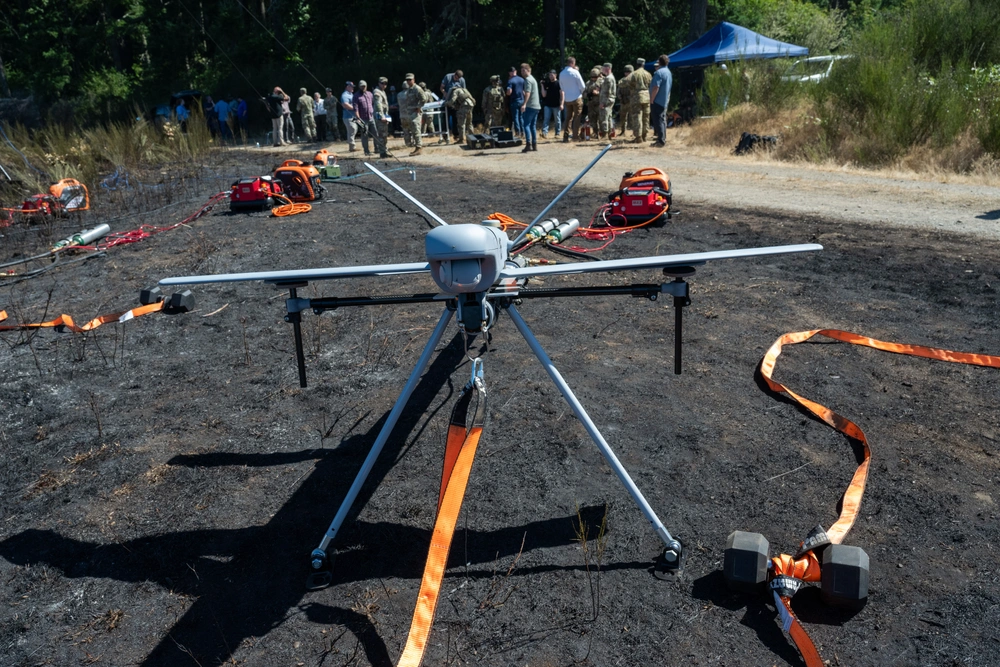 The 5th Battalion, 20th Infantry Regiment employs the AEVEX Atlas 600 LE during a LE-SR SUD held at Joint Base Lewis-McChord, Washington,in August 2025. The Anduril Altius 600 and Raytheon Coyote Block III were also evaluated at the event. (Photo by Mathew Ryan, CPE Aviation)
A NEW CLASS OF UNCREWED TEAMMATES
The LE program was initiated in 2021 as part of the Army’s broader modernization efforts to counter evolving threats in multidomain operations, with materiel development led by CPE Aviation and supported by a diverse set of industry partners specializing in advanced defense technologies.
Described as a family of systems designed to deliver mission-critical effects autonomously or semi-autonomously, LE can operate independently or collaboratively as part of a coordinated team, providing scalable and adaptive solutions for diverse operational needs. According to Gray, the introduction of LE represents a shift from Uncrewed Aircraft Systems use as “tools” to “teammates,” which will accelerate the kill chain and enhance maneuver.
“Introducing LE to Army divisions enhances operational effectiveness and readiness across air and ground domains, equipping these units to address emerging threats in contested environments,” he said.
FROM MODERNIZATION CONCEPT TO OPERATIONAL CAPABILITY
Since its inception, the LE program has progressed through deliberate milestones that steadily advanced the capability from concept to field demonstration.
In March 2023, LE systems were evaluated at Yuma Proving Ground, Arizona to assess early performance and integration concepts. These efforts were followed by field assessments in Georgia in July 2024, expanding operational realism. In August 2025, multidomain exercises in Washington state tested interoperability with ground and air platforms, confirming LE’s adaptability and seamless integration across operational domains.
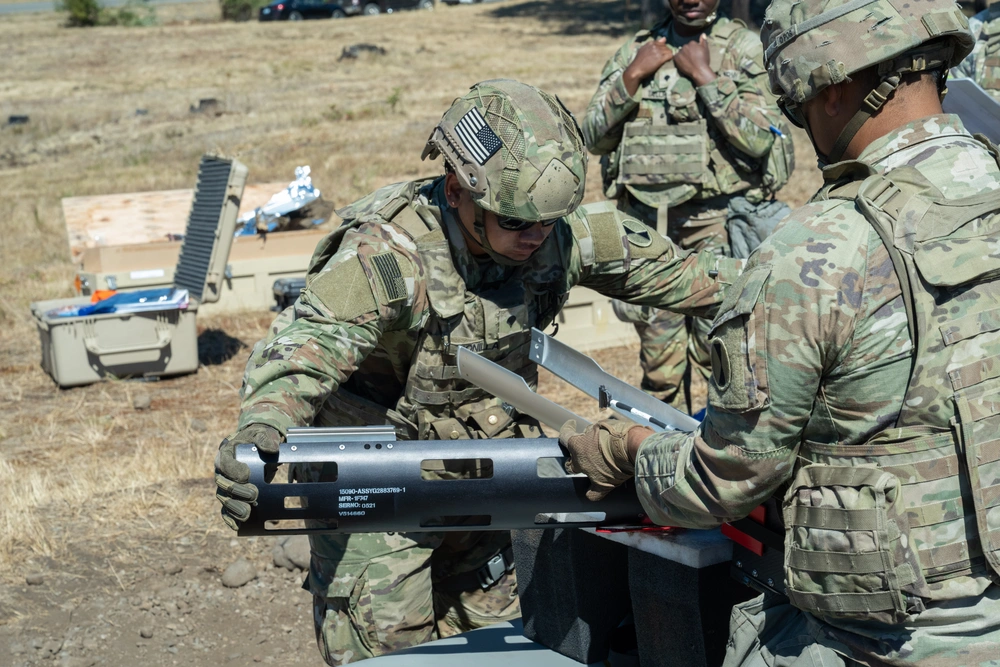 Soldiers assigned to I Corps gained hands-on experience in the field handling, operating and maintaining LE during the LE-SR SUD at Joint Base Lewis-McChord in August 2025. (Photo by Mathew Ryan, CPE Aviation)
SOLDIER‑INFORMED DEVELOPMENT
Momentum continued in August 2025 with a major operational milestone at Joint Base Lewis‑McChord, Washington, during the Launched Effects–Short Range Special User Demonstration (LE-SR SUD). For the first time, operational units employed LE technology in a realistic field environment, allowing Soldiers to test systems directly, refine tactics and provide actionable feedback.
This user demonstration was an “important step forward in developing Launched Effects capabilities,” said Brig. Gen. David Phillips, CPE Aviation. Working with industry partners, and “putting their systems in the hands of Soldiers to evaluate their performance and identify areas for improvement.”
Insights collected directly from Soldiers through the LE-SR-SUD user demonstration will support iterative LE requirement development and influence future warfighting concepts and employment approaches.
Gray said Soldiers who participated in the demonstration are not just operators, they are “active contributors to shaping the future of Launched Effects.” The Army, along with industry partners, “will use Soldier feedback to assess LE’s impact across all areas including materiel, doctrine, training and personnel,” to help refine fielding requirements, improve training programs and ensure the technology supports Soldiers effectively.
Soldiers who have participated in user demonstrations consistently emphasized the operational value of the capability and noted the training as comprehensive and easy to understand.
“These systems give us eyes and ears in places we couldn’t reach before,” said Sgt. 1st Class John Davis, 3rd Infantry Division. “They’re game‑changers for ISR missions.”
This Soldier‑centered feedback loop is a cornerstone of the program, ensuring systems evolve based on real-world use rather than static requirements.
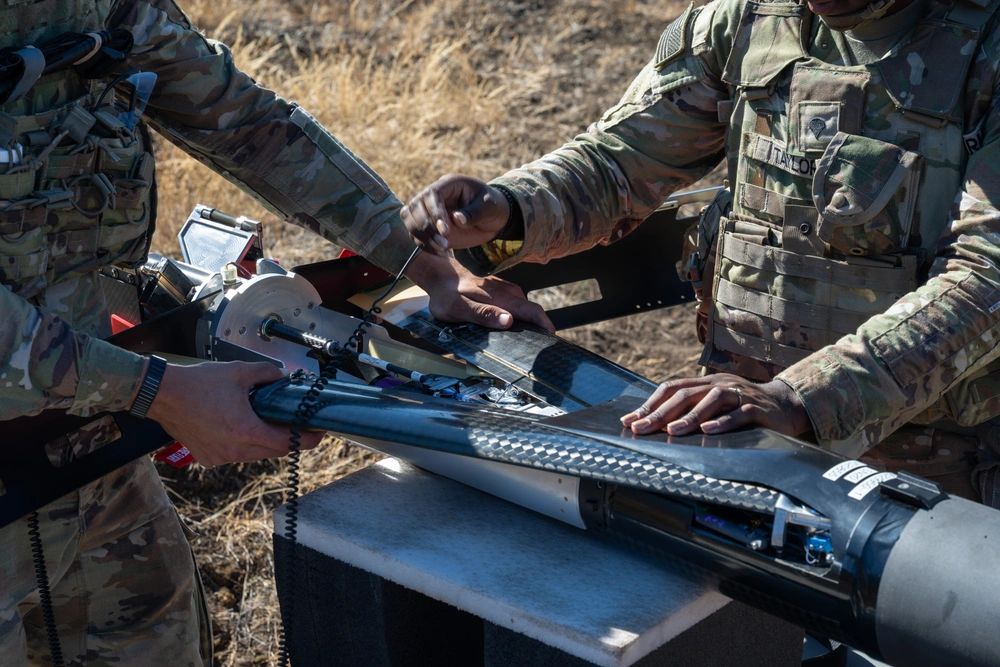 Soldiers assigned to I Corps gained hands-on experience in the field handling, operating and maintaining LE during the LE-SR SUD at Joint Base Lewis-McChord in August 2025. (Photo by Mathew Ryan, CPE Aviation)
ACCELERATING DELIVERY THROUGH MODERN ACQUISITION
Progress within the LE program has been driven not only by technical innovation, but also by the Army’s deliberate use of streamlined acquisition authorities aligned with the Adaptive Acquisition Framework and the Army’s Transformation Initiative.
Programs like Launched Effects leverage other transaction authority through the One Nation Innovation Marketplace with Army Contracting Command, Rock Island, to bypass traditional procurement processes. This allows the Army to partner with non-traditional defense contractors and startups; rapidly prototype and test systems without lengthy bureaucratic delays; and integrate designs based on Soldier feedback and operational needs—enabling faster delivery of relevant capability to Soldiers. This challenge‑based sourcing approach represents a fundamental departure from past methods that prioritized documentation over speed and adaptability.
Recent updates to the Federal Acquisition Regulation further support this effort by streamlining contract processes to reduce administrative overhead; encouraging competition among nontraditional original equipment manufacturers to drive innovation, and aligning acquisition strategies with the Adaptive Acquisition Framework. These updates ensure compliance while enabling rapid development and deployment.
In addition, the Army’s urgent capability acquisition pathway—approved in July 2025—accelerates the delivery of critical capabilities to warfighters within two years. For LE, this pathway enables rapid prototyping and testing to address immediate operational needs; reduces the time required to transition from development to deployment; and focuses on Soldier-centric feedback to refine systems iteratively—a significant contrast to legacy acquisition timelines that often required years to set requirements, develop systems and complete testing.
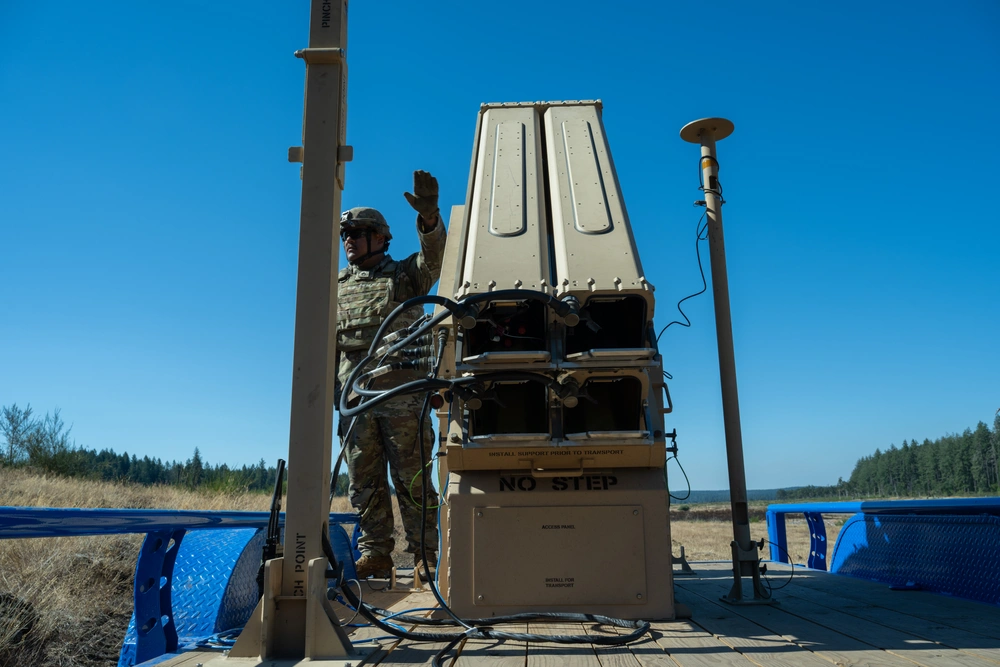 Soldiers received hands-on training in both classroom and field settings to learn how to operate, maintain and deploy LE during the LE-SR SUD in August 2025. (Photo by Mathew Ryan, CPE Aviation)
OPERATIONAL ADVANTAGE AND FIELDING TIMELINE
At the tactical level, LE allow units to sense farther, track targets longer and share intelligence faster—improving sensor‑to‑shooter timelines and enabling more responsive fires. At the strategic level, they strengthen the Army’s ability to counter anti‑access and area‑denial environments by extending the reach of manned systems with affordable, attritable platforms deployable at scale.
Gray emphasized that the Army is fully committed to equipping every Army division and Multi-Domain Task Force (MDTF) with LE by the end of 2026. This effort is being driven by streamlined acquisition pathways, accelerated contracting mechanisms and sustained coordination with the U.S. drone manufacturing base. A comprehensive fielding approach—combining phased delivery, synchronized training and integrated sustainment planning—has been established to ensure LE are rapidly and effectively distributed across the force.
These coordinated plans and execution strategies are designed to deliver full operational capability to all Army divisions and MDTFs on schedule.
CONCLUSION
The LE program exemplifies a modern approach to capability development—pairing modular, plug‑and‑play technology with agile acquisition and continuous Soldier feedback. By iterating rapidly and fielding early, the Army ensures LE remains adaptable, relevant, and aligned with real‑world operational demands.
Together, these efforts underscore a broader objective: making LE an enduring element of the Army’s future force—one that delivers operational advantage through both technological innovation and acquisition speed.
For more information go to https://www.army.mil/cpe-avn.
CHERYL MARINO is a writer-editor at the U.S. Army Acquisition Support Center at Fort Belvoir, Virginia, providing contract support for Behind the Frontlines and TMGL, LLC. Prior to USAASC, she served as a technical report editor at the Combat Capabilities Development Command Center at Picatinny Arsenal. She holds a B.A. in communications from Seton Hall University and has more than 25 years of writing and editing experience in both the government and private sectors.