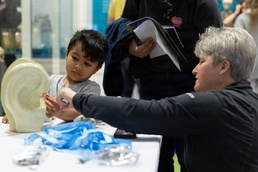
The brain shapes how we think, move, and make decisions. Taking care of it matters for everyday life and military readiness. On March 21, 2026, the National Museum of Health and Medicine hosted its annual Brain Awareness Day. More than 100 visitors attended the hands-on event focused on protecting brain health. Attendees explored interactive stations led by military and civilian experts.
Presenters shared simple habits people can use every day. Sleep emerged as one of the most important. “The number one thing you can do to improve virtually every aspect of your waking life is improving your sleep,” said Bradley Smith, a neuroscience PhD student at the Uniformed Services University. He explained that good sleep helps the brain recover, process information, and perform at its best.
Speakers also connected brain health to mission readiness. Service members rely on clear thinking, quick decisions, and physical coordination. “If a service member has a concussion and they don’t get the proper care and rest that they need, they’re not mission ready,” said Heather Kopf of the Defense Health Agency’s Traumatic Brain Injury Center of Excellence. She explained that one person’s injury can affect the readiness of an entire team.
Prevention was a key part of the event. Experts encouraged visitors to wear helmets, protect their hearing, and seek care after a head injury. NMHM’s Neuroanatomical Collections Manager Archibald Fobbs reminded visitors that brain health starts early and needs daily care. “Brain health begins at birth. It’s something that should be an everyday practice and a lifelong commitment,” Fobbs said.
Brain health also includes mental health, social connection, and daily habits. U.S. Public Health Service Cmdr. Marie Manteuffel of the Defense Health Agency’s Psychological Health Center of Excellence encouraged people to stay connected. She noted that strong relationships support mental health and resilience.
By the end of the event, visitors left with clear, practical steps to protect their brain. Getting enough sleep, wearing protective gear, and staying connected all support long-term health.
Brain Awareness Day also showed NMHM’s role in educating the public and showcasing the value of the nation’s investment in military medicine. The event highlighted how brain health supports warfighter military readiness, resilience, and quality of life, both on and off the battlefield.
To learn more about the NMHM, or about upcoming events, please check us out on the web, or social media.