For desert animals, in the High Desert ecosystem, Spring marks a season of movement and survival.
From rodents and spiders to slithering snakes,Marine Corps Logistics Base Barstow, Californiaand the surrounding desert are home to a wide variety of wildlife.
Rueben Flores, pest control technician, and the pest control team aboardMCLB Barstowdiligently preserve the lives of animals and protect their natural habitats.
As spring arrives and more people head outdoors, it is important to respect the environments these creatures call home and maintain cleanliness around residential and office areas to avoid wildlife encounters.
“Critters thrive during springtime because they are coming out from being dormant during the winter. Like flowers blooming, the bees are going to begin looking to collect pollen, the snakes in (brumation and ecdysis) begin to search for the food they have not had for months and shed their old skin which removes parasites, and mammals begin coming out for mating season and in search of survival” Flores says.
There are characteristics that animals portray during spring that humans may not always be aware of.
“Coyotes, some of the common desert wanderers, are naturally cautious because of their vigilance around birds, squirrels, and other prey” Flores says.
In search of food or shelter, they may occasionally wander close to offices, vehicles, or residential areas and it is important that these areas remain free of debris, build up, and other cluttered mounds to avoid these animals from forming habitats, he explained.
The Southwestern Speckled Rattlesnake, Sidewinders, Mojave Greens and other snake species inhabit the areas of the Mojave Desert surrounding the base.
During spring, many people hike through desert areas where snakes commonly live. These critters often live in underground burrows or shaded terrain. It is important to be extra vigilant in watching for wildlife, which is often camouflaged to match their habitat.
“The importance of keeping in mind the shape of the snake’s head in determining whether a snake is venomous or not. Note that the snakes with a more diamond shaped head are likely to be the more venomous,” Flores explained.
Although snakes can be fascinating to observe, and some species are kept as pets, they should always be left alone in the wild, as they may be venomous and can become defensive if threatened.
“The heat sensing pits, and their sensory tongues allow the snakes to perceive threats, mates, prey, and this enhances their survival” Flores said.
A snake’s unique sensory adaptations help it detect danger and because snakes blend easily into their surroundings, hikers should remain alert to avoid accidentally provoking them, or other wildlife.
Habitat, diet, and behavior have a significant impact on the various species that reside in the Mojave Desert. For example, many of these species include birds that the Bureau of land Management has been keeping their eye out for, such as the southern fly catcher. This bird is an endangered species within the Mojave Desert. This team spent some time wondering if the bird would still be seen out in the wild, and sure enough they eventually caught sight of it.
“The bird has a bright orange breast” Flores says. “There are a few other bird species that pass through the Mojave Desert during their migration and those are identified as; the turkey vultures, the blue crane, and more. If you are sitting outside before sunrise, you may encounter one of these birds and they are fascinating.”
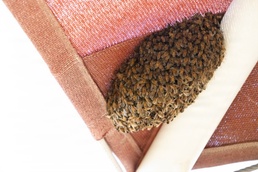
Bees, flies, and other insect species are found frequently in the spring and roam throughout the desert in search of survival. Bees seek cool, dry areas to establish honeycomb structures. Often, these hives go unnoticed until they have grown large enough to become hazardous to children and families.
“At the Child Development Center aboard MCLB Barstow, the staff reported a swarm of bees to the pest control team,” Flores said. Reuben Flores and Eddie Hernandez, both pest control technicians on base, successfully removed the honeycomb and bees without harming the children and most of the bees.
“Always use caution, take your time, and ensure you are not rushing the process of containment,” Flores says. “Honeybees are vital to our planet, using their harvesting and pollination to help sustain life.”
Having the proper tools is an asset to carefully removing the hives, especially if there is a queen bee present.
“I encouraged my team to purchase a device called the bee removal vacuum which is a necessary tool for a successful removal of the honeycomb which helps preserve the life of most of the bees.” Flores said. “Wasps, although they don’t make the honey, do pollinate, and it is just as important as the bees to preserve their lives, as much as possible.”.
The pest control team relies on the proper equipment to perform their duties while helping preserve wildlife. According to guidance from the Bureau of Land Management, there are many creatures that come out in the spring. One of the Mojave Desert’s main inhabitants is the desert tortoise. These animals spend most of their lives in underground burrows, which protect them from the desert’s extreme heat and cold. Tortoises leave their burrows to search for food, such as plants and cactus pads, which also provide much of the water they need to survive the summer.
“One of the main threats to the tortoises are ravens because they disturb the tortoise by poking their beak into its shell; this causes the tortoise to lose all the water is has stored and eventually kills the animal,” Flores said.
The environmental team aboard MCLB Barstow has taken measures in protecting the desert tortoise.
“They have created decoy desert tortoises with a paint substance inside the animals shell and when the bird comes by to disturb it, they are marked with the paint from inside the shell and it tells the team that this bird is a threat,” Flores explained. “Other things you can do to ensure the safety of your home, office, and families, is to ensure that the areas around your spaces are clean, and free of debris.”
During an interview with the public affairs office aboard MCLB Barstow in 2023, Gregory Kunkel, former Emergency Medical Services Chief, was once bitten by a rattlesnake while spelunking in the High Desert. His advice then would be to refrain from putting your hands and feet in places where you cannot see what lies within. He had placed his hand on a ledge just above eye level, and the snake likely mistook his hand as prey.
If an animal is in the way of daily activities, such as near your home or office, on a road, or in a traffic area, please contact the Facilities helpline at (760)577-6220, and they will safely return the animal to its habitat.