The U.S. Army Reserve is accelerating efforts to secure and modernize Facility Related Control Systems (FRCS) across its nationwide footprint, marking a significant advancement in protecting the infrastructure that enables Soldiers to mobilize and deploy when the nation calls. With the inventories and assessment phase complete at all four Army Reserve-funded installations and Readiness Divisions, the FRCS project has now entered a multi‑year mitigation phase that began in fiscal year (FY) 2025 and is scheduled to conclude in FY28.
FRCS—encompassing the building automation, utility, and environmental control systems that keep Army Reserve Centers operational—is a critical focus area as cyber threats increasingly target facility infrastructure. These systems, once viewed as routine facility components, now represent potential entry points for adversaries seeking to disrupt military operations and degrade military readiness.
Lt. Col. Dane Hanson, Sustainment and Resiliency Division Chief, Army Reserve Installation Management Directorate (ARIMD), underscored the importance of the effort. “Modernizing our control systems is essential to safeguarding our ability to mobilize Army reservists,” Hanson said. “This work reinforces the Army Reserve’s commitment to staying ahead of emerging threats and ensuring our infrastructure is never a point of failure.”
The FRCS initiative originated under Department of Army Executive Order 141-18, directing the Army Reserve to inventory, assess, and secure its control systems nationwide. When the COVID19 pandemic halted travel and in-person inspections, the Army Reserve partnered with Pacific Northwest National Laboratory (PNNL) to develop a remote assessment model using commercial off-the-shelf technology.
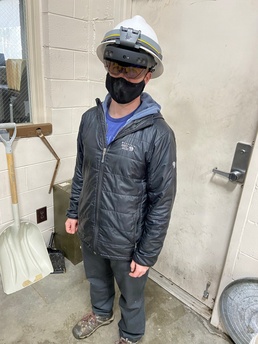
PNNL deployed portable kits equipped with passive sensors and augmented reality headsets, enabling facility managers to conduct virtual walkthroughs while receiving real-time guidance from centralized experts. The approach reduced travel costs, increased efficiency, and produced the first enterprise-wide FRCS inventory for the Army Reserve and the Army.
“The remote model allowed us to gather high-quality data while minimizing the burden on facility staff,” said William (Clete) Schaper, who provides contract support as ARIMD’s Control Systems Focus Team Leader. “It demonstrated that we could scale expertise nationally without sacrificing security or accuracy.”
Building on the inventory and assessment data, the Army Reserve launched its mitigation phase in FY25. This phase focuses on strengthening cybersecurity, modernizing outdated components, and standardizing protections across facility systems. The work includes:
To execute this work, the Army Reserve has partnered with the U.S. Army Corps of Engineers, which selected Siemens Government Technologies and M.C. Dean Smart Buildings under an existing Multiple Award Task Order Contract. These firms are currently performing mitigation at locations across the Army Reserve.
“The transition from assessment to mitigation is where we begin to see tangible improvements in resilience,” Hanson said. “We are taking deliberate steps to reduce vulnerabilities and strengthen the infrastructure our Soldiers and Civilian employees rely on.”
As mitigation progresses through FY28, the Army Reserve is preparing for future phases that will expand the program’s reach and refine its technical approach. The long-term goal is a standardized, resilient FRCS security posture across all Army Reserve facilities.
“This effort is a true team mission,” Hanson added. “Our partners, our commands, and our facility teams are all moving in the same direction—securing the infrastructure that underpins Army Reserve readiness.”
Released by Lt. Col. Xeriqua Garfinkel, PAO.