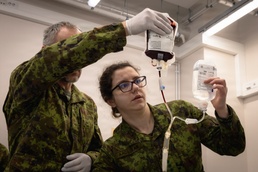
TARTU, Estonia – U.S. Army Staff Sgt. Trey Tardio, senior medic assigned to the 102nd Military Police Company, 327th Military Police Battalion, conducted a blood transfusion class with medical members of the Estonian Defense Forces on March 25, 2026. “It really helps getting that hands-on practice in the muscle memory with certain practical skills like this,” said Tardio. “Such as starting the IV, actually drawing the blood from a casualty, getting everything ready, and recognizing certain bottlenecks.” According to the Institute of Biomedical Science, the U.S. Army first started experimenting with blood transfusions around World War I. Doctors used direct transfusions between the patient and a blood donor, but it was a slow and risky process. By World War II, improvements in blood typing and storage practices made the process much safer and quicker. Now, in modern times, blood transfusions have become much more accessible on the battlefield through systems such as rapid medical evacuations and portable kits that Soldiers can use on patients before evacuation to higher-level care. Tardio instructed the Estonian 1st and 2nd Infantry Brigade Role 2 hospital personnel how to use the portable blood transfusion kits and administer them to designated patients within the group for their next phase; practical application. Blood transfusion kits include an assortment of medical instruments and supplies essential for administering blood transfusions. Among those supplies are blood collection bags, IV tubing, needles, blood typing tests, saline flushes, personal protective equipment, and portable fluid warmers. The groups were taught to follow a step-by-step process designed to track the patient’s needs and ensure the safety of everyone involved. During practice, each group took turns performing different tasks and collaborating to complete a successful blood transfusion. Designated patients within each group had their blood withdrawn and then transfused back into their system, allowing for safe and controlled practice across the class. Each group also used slightly different methods, sharing information as the session progressed and supporting one another in completing the tasks. After conducting the class, Staff Sgt. Tardio expressed his appreciation for how willing the doctors have been to help throughout his time in Estonia. “I've worked with the Estonians quite a bit. They have been very helpful for our operations up here,” said Tardio. “A lot of them are junior doctors, very hands-on and very willing to be involved.” The training improved interoperability by allowing Estonian personnel to share techniques and practices used in performing blood transfusions. Sharing information like this further strengthens the relationship between military and civilian medical personnel, helping ensure all parties remain medically prepared for a wide range of situations.