PEASE AIR NATIONAL GUARD BASE, N.H. – A maintainer walks the length of a KC-46A Pegasus, running through observations and checklists before the first inspection of the day. As the sun rises across the installation, a team prepares equipment inside a maintenance bay, while another Airman reviews procedures ahead of a training event. The work is routine. The pace is steady. And behind each task is something often unseen but ever present, the wing safety program.
At the 157th Air Refueling Wing, safety is not a single checklist or requirement. It is a culture shaped by three interconnected efforts: Flight Safety, Occupational Safety and Weapons Safety.
The offices work in coordination across the wing to reduce risk, strengthen operational readiness and ensure Airmen return home safely after every mission.
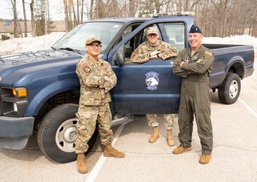
“The ultimate goal of Wing Safety is to prevent both damage to equipment and injuries to personnel,” said Lt. Col. Walter Hale, 157th Chief of Safety and Flight Safety Officer. “Effective risk mitigation helps ensure we can accomplish our mission when called upon.”
Long before an aircraft taxies down the runway, the work of Flight Safety is already in motion. Flight Safety professionals partner with aircrew and maintenance personnel to identify risks, review trends and ensure each operation is conducted with precision.
In one recent project, the office worked with the U.S. Department of Agriculture Wildlife Services and Eversource Energy to coordinate the relocation of an osprey nesting platform away from the airfield.
Ospreys are large birds of prey with wingspans that can exceed five feet. When nesting sites are located near an airfield, increased bird traffic can elevate the risk of bird strikes, which can cause significant damage to aircraft and pose a hazard to aircrew.
“We have been working to get this moved for nearly three years,” Hale said about the relocation. “We’re glad to finally to see it happen.”
The repositioning reflects a broader commitment to proactive risk management, identifying hazards early and taking deliberate action to reduce them before they impact operations.
While aircraft operations draw much of the attention, most Airmen spend their day in offices, shops, hangars and training environments where different types of risks exist.
Occupational Safety specialists conduct workplace assessments, evaluate equipment usage and reinforce practices that reduce the likelihood of injury. From proper lifting techniques to safe equipment operation, the program helps ensure Airmen have the tools and knowledge needed to perform their duties safely. The program also works with supervisors and commanders to identify hazards, implement corrective actions and strengthen safety awareness across the wing.
“Safety is everyone’s responsibility,” said Master Sgt. Frank Perry, 157th Occupational and Weapons Safety Manager. “Occupational Safety helps reinforce that culture by empowering and giving our airmen a voice to recognize hazards and take action.”
In training environments where weapons are present, precision and discipline take on an even greater level of importance.
Weapons Safety ensures that every step, from storage and handling to accountability, is carried out in accordance with established procedures. The program supports both training and readiness by reinforcing consistent, disciplined practices when working with weapons systems.
For Airmen, that means understanding that safety is not separate from the task, it is part of it.
“Our people are our most important resource,” said Perry. “These programs exist to ensure that every Airmen can perform the mission safely and effectively.”
Through integrated efforts across Flight Safety, Occupational Safety and Weapons Safety, the wing maintains a proactive approach to risk management that protects Airmen and preserves operational capability.
Safe flying does not start in the air; it starts with preparation and awareness. Across the 157th ARW, the safety office is the key player in ensuring safety is a shared responsibility embedded in every mission and every task.