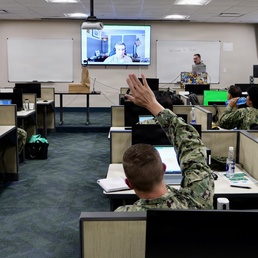
NEWPORT, R.I. — In an era of escalating global complexity, the U.S. Navy's human resources leaders are sending a clear message: the path to victory on the battlefield is forged by the people who are professional, resilient leaders and planners. For the students at the Human Resources Center of Excellence (HRCOE) , the lesson was clear: warfighter readiness is paramount, and it begins with the HR professionals who cultivate the force. Students in the Human Resources Introductory Course (HRIC) and Human Resources Advanced Course (HRAC) received unfiltered guidance from two of the Navy’s top HR flag officers, whose combined experience drove home the critical importance of strategic thinking, resilience, and mentorship in today’s demanding operational environment.
The Bedrock of Leadership: Values and Resilience Rear Admiral Kertreck V. Brooks, Commander of MyNavy Career Center, delivered a candid message on the importance of adhering to Community Values in forging successful leaders. He stressed to the two classes that these values are not mere suggestions — they are the standards that directly shape careers and determine who is selected for promotion. “If you are not doing the things outlined in the Community Values, it can impact whether you are selected,” Rear Adm. Brooks stated, linking consistent performance and professionalism directly to promotion and command opportunities. He also advocated for building strong and broad professional networks, emphasizing that every leader needs trusted mentors for the inevitable challenges ahead. He called on more experienced officers to remain accessible and engaged, particularly when junior personnel seek guidance. “It’s our responsibility to ensure [Sailors] have everything they need to be successful,” he asserted. “We need to be reaching down to help pull others up.” Drawing from personal experience, Rear Adm. Brooks shared his own career setbacks, including being passed over for key opportunities before ultimately achieving selection above zone. His message emphasized resilience and the importance of maintaining focus when plans do not go as expected — a trait as critical for an officer’s career as it is for a warship at sea. He also reinforced the importance of leadership grounded in integrity, humility, and courage — aligned with the Chief of Naval Operations’ guidance — and reminded students that taking care of Sailors must remain a daily priority. “It’s an honor and privilege to serve,” Rear Adm. Brooks said. “Give it your all every day.”
The Strategic Imperative: Planning for the “What Ifs” Continuing the strategic dialogue, Rear Admiral Benjamin E. Baran, Deputy Commander of Navy Personnel Command, challenged the HRAC students to look beyond administrative tasks and fix their gaze on the ultimate purpose of their profession. “We are here to support Sailors so they can focus on ‘no-kidding’ warfighting,” Rear Adm. Baran declared. In an increasingly complex world, Rear Adm. Baran warned against complacency, urging the future leaders to adopt a "what if" mindset to anticipate and prepare for future conflicts and crises. His personal mantra resonated with the audience: “If you want peace, prepare for war.” He introduced the concept of “managerial derailment,” a potent warning that the skills which bring early success can become a liability at higher ranks without adaptation. The key, he argued, is balancing your standards with flexibility, and fostering an environment of absolute trust and candid feedback. “You need to find the balance between rigid adherence to standards and reckless flexibility,” Rear Adm. Baran said. “Define your non-negotiables, but create an environment where people feel comfortable providing input.” When asked how to operationalize HR in wartime, Rear Adm. Baran's answer was swift: establish rapid feedback loops with those who are out there doing the work. He also highlighted the critical role of the Navy Reserve, whose goal is to be ready to surge up to tens of thousands of Sailors within a month. “To do that, you have to do the work of a crisis before the crisis,” Rear Adm. Baran said, encouraging creativity and forward-thinking approaches to problem-solving.
The Mission, The Message, The Takeaway Throughout both engagements, one theme echoed: developing resilient, adaptable leaders who are relentlessly committed to their people is not a peacetime luxury — it is a core requirement for naval supremacy. As the Navy confronts dynamic and demanding global challenges, the role of the HR professional has never been more critical. They are the architects of the Navy's most essential and valuable weapon system: its people. They ensure every Sailor is prepared, supported, and ready to execute the mission when it matters most.