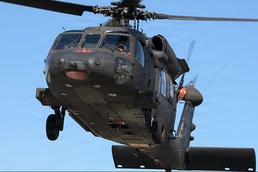
Fort Eustis, VA, March 19, 2026 – The U.S. Army officially received a groundbreaking H-60Mx Black Hawk helicopter, extensively modified to fly with or without a pilot at the controls. This next-generation "Optimally Piloted Vehicle" (OPV) now enters a rigorous testing phase, marking a pivotal moment in the Army's push to build a safer, smarter, and more versatile helicopter fleet for the future.
A Decade of Innovation This achievement is not an overnight success but the culmination of more than a decade of pioneering work in autonomous flight. The technology at the heart of this helicopter originated from the Defense Advanced Research Projects Agency's (DARPA) Aircrew Labor In-Cockpit Automation System (ALIAS) program. The ALIAS program, which began over ten years ago, was founded on the visionary goal of creating a removable "kit" that could be installed in existing aircraft to give them a high degree of automation. The aim was to reduce the complexity of flying, enhance safety, and allow pilots to focus on higher-level mission tasks. Sikorsky, a Lockheed Martin company, partnered with DARPA on this effort, developing its proprietary MATRIX™ technology as a direct result of this collaboration. After years of successful demonstrations on both commercial and military aircraft, the technology has matured from a developmental concept into a robust and reliable system ready for formal military evaluation.
A Smarter Generation of Aircraft At its heart, this is no ordinary Black Hawk. The revolutionary MATRIX™ technology acts as the aircraft's "brain," a powerful flight control and autonomy system. Functioning like a highly advanced digital co-pilot, MATRIX™ can manage the most complex tasks of flight, from takeoff to landing. This allows the helicopter to perform missions completely on its own or with a crew supervising remotely from a secure ground station, offering unprecedented flexibility.
This advanced capability is delivered in what is known as the ALIAS Optimally Piloted Vehicle (OPV) kit. This comprehensive package includes the MATRIX™ Autonomy Mission Manager, which serves as the brain of the operation, and a Software Development Kit (SDK). The SDK is a crucial feature that allows third-party software and new sensor technologies to be integrated, opening the door for continuous innovation. This "kit" approach provides a critical pathway for adapting sophisticated autonomy to existing aircraft, which will significantly reduce the time and cost required to field this game-changing technology across the fleet.
A key part of this upgrade is the replacement of the helicopter's traditional mechanical flight controls with a modern "fly-by-wire" electronic system. This makes the aircraft significantly more stable and easier to handle, particularly in challenging conditions where visibility is low. By automating difficult maneuvers, the system dramatically reduces pilot workload, allowing the crew to focus less on the mechanics of flying and more on managing the critical mission at hand.
The Path Forward Over the coming months, Army test pilots and engineers will put the OPV Black Hawk through its paces. These tests are designed to validate how seamlessly the aircraft can be controlled from the ground, how it performs in complex, real-world mission scenarios on its own, and how this technology can be used to keep Soldiers safer and more effective.
This single helicopter is the forerunner of a much broader vision. It serves as the primary testbed for the Army's Strategic Autonomy Flight Enabler (SAFE) program. The goal of SAFE is to develop a universal and scalable autonomy kit that can be installed across the Army’s entire fleet of hundreds of Black Hawk helicopters and integrated into the designs of future aircraft.
Collaborating in the ALIAS autonomy technology is the state of Texas, a sponsor of a multi-year autonomy testbed effort through the Texas A&M University System’s Bush Combat Development Complex. This effort will use modified UH-60Ls to determine the value of autonomous aircraft to wildland firefighting and associated state missions.
By proving out this technology, the Army aims to unlock a new era of aviation. One that will not only save lives but also ensure that critical missions can be completed under any circumstance. The delivery of this first OPV Black Hawk is more than just a hardware handover; it's a tangible step toward a future where technology and soldiers work together in new and powerful ways to ensure mission success.