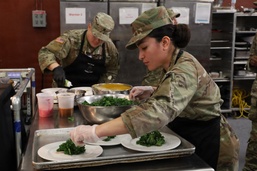
Eating a nutritious, healthy https://www.hprc-online.org/nutrition/performance-nutrition can keep a service members’ physical performance and mental well-being in top shape, ensuring mission readiness. Staying hydrated with water also helps you stay focused and at your peak of performance.
Access nutrition, physical fitness, psychological, spiritual, and social resources through the Consortium for Health and Military Performance at the Uniformed Services University to perform at your best — both in body and mind. CHAMP has tools you need to fuel for the fight, guides for https://www.hprc-online.org/nutritional-fitness/performance-nutrition/military-diet-tale-two-eating-plans, and a https://www.hprc-online.org/nutrition/performance-nutrition/hprc-food-journal to give you insight into your nutrition intake and what needs to change.
“Overall dietary pattern is more important than any one singular food for mental performance and emotional well-being," said Lt. Col. Tanisha Currie, associate director of Center for Enabling Capabilities located at the Walter Reed Army Institute of Research, WRAIR has been optimizing warfighter readiness and lethality since 1893.
CHAMP provides simple guidelines to be mindful of what you eat and drink to meet your mental and physical occupational and training demands. A recent series on health.mil outlines how nutrition and hydration keep you at maximum readiness, whether on duty or just getting through your day with healthy snacks. The fact-filled articles include:
Recommendations to stay mission ready through nutrition from CHAMP include:
“Warfighters can benefit greatly by understanding the basic elements of foods that can bolster their cognitive health and mood,” said Currie. However, they do not have to stop at understanding the basics of nutrition alone. “There are terrific and credible Department of War resources such as https://www.hprc-online.org/nutrition/performance-nutrition/food-and-mood-does-diet-affect-stress, Armed Forces Wellness Center, https://www.opss.org/, and registered dietitians and health care providers to assist them navigating their personal well-being journey together,” she suggested.
Snacking gives the extra boost we need during the day
Providing your body with the right amount of fuel at the right time might be the difference between success and failure on a mission, a training day, or any time you need additional energy. CHAMP recommends balancing your snacks. Pair protein with carbohydrates (such as whole grains, fruits, vegetables) to optimize your nutrition and keep you full. Nutritioushttps://www.hprc-online.org/nutrition/mne/optimize/home/simple-and-satisfying-snack-ideas can support your energy levels at home, work, or on the go.
Food for military training and intense sessions
CHAMP’s nutritional resources are a guide for how to fuel your body before, during, and after activities. Having a nutrition plan is important, especially on days with heavy exercising, training, or working in physically stressful operations. Look for the Department of War’s https://www.hprc-online.org/nutrition/go-green labels at your https://www.hprc-online.org/nutrition/mne/optimize to build nutrient-dense meals. These foods and drinks are https://www.hprc-online.org/nutrition/go-green/about-g4g/nutrition/eat-your-way-better-performance-go-greenr for your day. The labels “have taken the guess work out of finding healthy options,” said Jonathan Scott, registered dietitian and associate professor of the department of Military and Emergency Medicine, USU.
Eat for the kind of day, or https://www.hprc-online.org/nutrition/go-green/about-g4g/nutrition/build-your-plate-heavy-day-handout, you’ll have and know that heavy or hard training days require more https://www.hprc-online.org/nutrition/performance-nutrition/macronutrients-101 to support intense activity and full recovery. Carbs include foods such as whole-grain bread, pasta and rice, fruit, and starchy veggies provide energy and micronutrients.
Stay hydrated, first and always
Stay hydrated. Water is the most abundant component of the human body — around 50% to 70% of your weight. Staying hydrated is an essential part of medical and mission readiness. By the time you’re thirsty, you’re probably already dehydrated.
Ensure you stay hydrated throughout the day by sipping liquids (don’t chug), especially water or https://www.hprc-online.org/sites/default/files/document/HPRC_WHEC_Exertional_Illness_Prevention_020222_508.pdf. These https://www.hprc-online.org/nutrition/warfighter-nutrition-guide#775 can help guide your hydration choices.
Take charge of your nutrition
Taking charge of your nutrition can help optimize readiness.
CHAMP’s Strategic Habits for Better Nutrition https://www.hprc-online.org/nutrition/performance-nutrition/strategic-habits-better-nutrition guides you to optimal nutrition goals — and it includes how to stay motivated and committed in changing your habits. "We now know that body strength, weight, and overall functioning are the result of biological, psychological, and environmental factors,” said Dr. Marian Tanofsky-Kraff, director of Developmental Research Laboratory on Eating & Weight Behaviors for USU. “Good nutrition and physical activity can supplement physical and emotional health."
The bigger nutrition picture
The U.S. government emphasizes nutrition is more important than ever, for both the civilian and military populations.
The Department of Health and Human Services has made significant changes to nutrition guidelines under Secretary Robert F. Kennedy Jr. HHS and the U.S. Department of Agriculture dietary guidelines for 2025–2030, released on Jan. 7, 2026, flipped the official food pyramid on its head. The guideline now emphasizes that Americans should eat more protein and cut down on processed foods.
The official guidance, which influences what foods are served on military bases and elsewhere, is part of Kennedy’s “Make American Healthy Again” campaign. It also fits with Department of War Secretary Pete Hegseth’s emphasis on a fit and lean military ready for action at all times.
To take your nutrition goals to the next level, contact your local military hospital or clinic and request a consultation with a nutritionist or a dietitian.