From Reform To Results: Early Momentum From Army Acquisition Transformation
U.S. Army Acquisition Support Center
Date: 03.12.2026
Posted: 03.18.2026 13:46
News ID: 560827
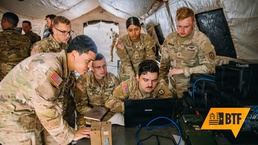
The Army’s acquisition reform is beginning to show tangible results, as early actions taken under the new portfolio acquisition executive (PAE) construct translate strategic intent into measurable progress.
Within the first 60 days of the Army’s implementation of the new PAE approach, several portfolios are already demonstrating how empowered teams can move quickly to reduce friction, streamline legacy processes and accelerate delivery of capability to the field. For example, the PAE for Command and Control/Counter Command and Control (C2/CC2)—a portfolio that is central to the Army’s transformation by ensuring our forces can achieve decision overmatch—rapidly delivered results across requirements, contracting, resourcing and equipping Soldiers.
A closer look at these actions reflects the early benefits of outcome‑driven acquisition, and how emphasizing speed, integration and informed risk will continue to drive change.
“Modern warfare is a sensor-war, and to outpace our adversaries, the Army has to quickly and continuously deliver our forces the tools to see first, understand faster and act decisively,” said Joseph D. Welch, PAE C2/CC2. “Especially in this portfolio, that takes a modern acquisition strategy—where we adopt commercial technology, utilize rapid fielding with commercial-centric technology refresh cycles, leverage flexible contracting to drive industry teams and constantly iterate to address problem statements, not prescriptive requirements. Through this team’s expertise and hard work, we are validating the premise of acquisition reform.”
MODERNIZING REQUIREMENTS FOR SPEED AND FLEXIBILITY
A central theme of focus in the PAE’s first 60 days was reforming how the Army defines and manages requirements. Rather than relying on hundreds of narrow, prescriptive documents, the portfolio focused on consolidating demand into fewer, more adaptable constructs that describe operational needs while leaving room for innovation.
For example, within this window, the portfolio created a new characteristics of need (CoN) document for Electromagnetic Spectrum Operations (EMSO). The CoN is a new framework that outlines problem statements and critical capabilities rather than dictating prescriptive solutions, helping bridge the gap between industry innovation and military requirements. The CoN approach was first implemented for Next Generation Command and Control (NGC2), the Army’s new, fundamentally different approach to provide commanders with the data they need to make more, better, and faster decisions than the enemy, leveraging rapid progress in commercial technology and decision dominance through artificial intelligence (AI).
The NGC2 CoN represented a fundamental departure from traditional requirements development, with the potential to replace more than a thousand standalone C2 and network documents over time. It described the Army’s current challenges with sharing warfighting data, and the vision for an NGC2 integrated architecture across hardware and software, but did not specify solutions, instead encouraging competition and industry teaming to deliver best-of-breed capabilities. Although the NGC2 CoN predated the PAE construct, it set the foundation for an iterative, interdependent requirements approach. Once the PAE was established late last year, the C2/CC2 portfolio team applied this template for EMSO to deliver a CoN in the first 60 days.
Once fully implemented, the CoN is expected to replace dozens of fragmented EMSO requirements that have historically driven stove‑piped solutions. In contrast, dominance in the future EMS will depend on the ability to effectively attack, protect, support and manage use of the spectrum and related EMSO common services to create and maintain an advantage across multiple domains and across all warfighting functions. By framing EMSO needs holistically, the Army can better identify shared dependencies across warfighting functions and deliberately place technical tradeoffs in the hands of organizations best positioned to make them. The CoN will allow the Army to hone requirements through continuous experimentation, faster iteration and earlier engagement with industry—reducing the risk of delivering capabilities that are obsolete before they reach operational units.
“The legacy, stove-piped requirements process has traditionally been a significant roadblock to innovation, especially in areas where technology evolves rapidly,” said Maj. Gen. Ryan Janovic, commanding general of the Cyber Center of Excellence and a Deputy PAE C2/CC2. “The new approach will allow us and our industry teammates to adapt much more quickly to the operational environment.”
CONTRACTING REFORM THAT DELIVERS MEASURABLE IMPACT
Requirements reform was matched by equally aggressive progress in contracting. Working with Army Contracting Command – Aberdeen Proving Ground (ACC‑APG), the PAE C2/CC2 team focused on reducing inefficiencies, shortening procurement timelines and aligning incentives with operational outcomes.
In a matter of weeks, contracting reforms delivered millions of dollars in savings by eliminating inefficiencies and shifting to outcome-based contracts, ensuring payment is made for defined results—not just hours billed—and therefore maximizing the value of every dollar spent. ACC-APG is also leveraging AI-powered acquisition by piloting commercial AI‑enabled tools to automate contracting and slash procurement lead times. Additionally, ACC-APG implemented a new incentive playbook to accelerate delivery of superior capabilities and foster innovation within existing contracts, ensuring faster and more effective support to the warfighter. This approach fundamentally shifts how to motivate industry partners by incentivizing industry with a bonus and creating space to bring forth creative solutions within existing contracts.
These efforts align closely with the Army’s broader commercial software reform initiative, which continues to consolidate contracts, reduce reliance on non‑value‑added intermediaries and simplify how software is acquired across the enterprise. Within the last eight months, the Army has consolidated 118 separate contracts—that were used to purchase the same items from the same companies—into 14 enterprise contracts, while also negotiating additional annual discounts, allowing the Army to secure better terms and focus resources on mission-critical capabilities.
“We are empowering our workforce to cut red tape and bust through bureaucracy that slows our progress,” said Danielle Moyer, executive director, ACC‑APG. “This is about creating a culture of common sense that shapes smart contracts around solutions that incentivize industry to deliver capabilities to Soldiers quicker than ever before.”
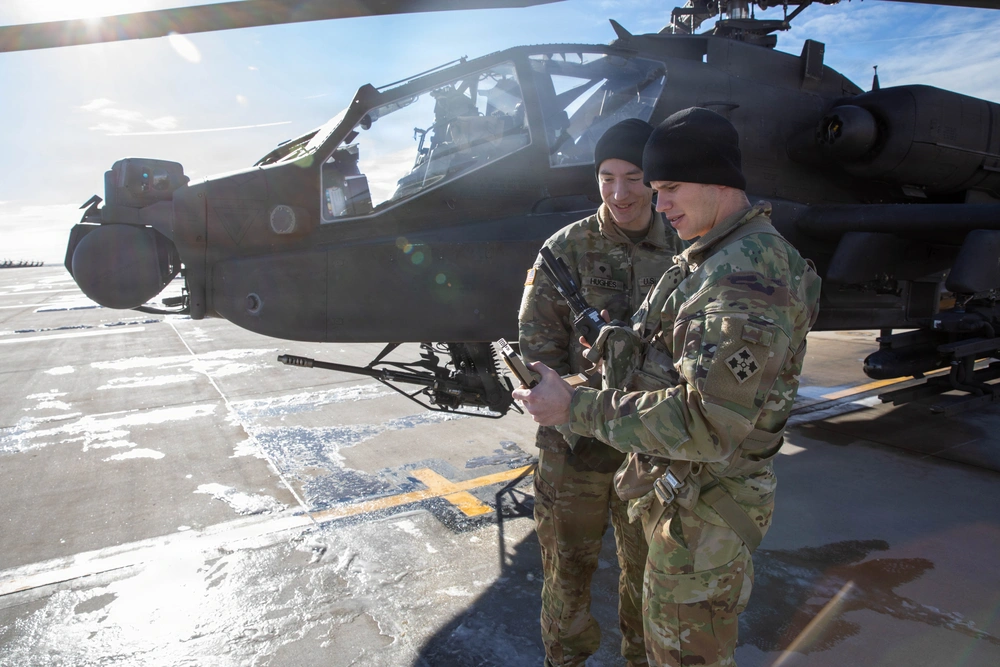 Spc. Joseph Hughes and 1st Lt. Andrew Bane, 4th Infantry Division, review mission data generated by the Android Team Awareness Kit beside an AH-64 Apache helicopter during Ivy Sting 4 at Fort Carson, Colorado, Jan. 28, 2026. (Photo by Spc. Samuel Brandon, 4th Infantry Division)
EXPANDING TRADE SPACE AND OPTIMIZING RESOURCES
Another early success was the enterprise’s willingness to revisit long‑standing assumptions about capability delivery and resource allocation. Recognizing urgent operational demand for resilient positioning, navigation and timing (PNT) capabilities that can withstand adversary spoofing and jamming of traditional GPS, the PAE C2/CC2 team rapidly initiated a capability trade study to accelerate assured PNT fielding. The study addresses the fact that while current programs address portions of the problem, their timelines do not align with operational urgency. By expanding trade space and prioritizing speed, the effort is shaping a more adaptable path to deliver scalable assured PNT solutions sooner.
In parallel, an expedited review of research, development, test and evaluation and procurement funding across the C2/CC2 portfolio identified opportunities to consolidate budget line items and significantly reduce the number of program elements. For example, parts of the Army budget that fund electronic warfare and tactical communications capabilities have traditionally been siloed by line items—even down to a specific sensor or radio—to field across the entire force. That approach has slowed the Army’s ability to adjust resources and update capabilities to address emerging operational needs and made it difficult to tailor solutions for different units and operational environments. Identifying potential areas to consolidate within the portfolio will streamline resource allocation, increase operational tailoring and adaptability and improve alignment between funding and mission impact.
ACCELERATING CAPABILITY TO THE FIELD
Perhaps most importantly, the PAE’s first 60 days directly supported faster delivery of capability to operational units—Army leaders’ main intent for acquisition reform. Through a rapid pilot with the U.S. Army Intelligence Center of Excellence and the 101st Airborne Division, the C2/CC2 team helped inform force design decisions and advance the standardization of intelligence and electronic warfare battalions across divisions. At the same time, approval was fast‑tracked for an equipping strategy that accelerates the fielding of next‑generation intelligence, surveillance and reconnaissance capabilities, and modernized signals intelligence and electronic warfare systems, ensuring battalions receive critical capabilities sooner. The rapid delivery of these capabilities will enable battalions to enhance their understanding of the battlespace and efficiently disseminate intelligence to decision-makers. Additionally, units will gain improved situational awareness of the electromagnetic spectrum, providing them with expanded options to execute both kinetic and non-kinetic actions.
A similar sense of urgency drove work with the 25th Infantry Division, as the PAE’s research and development team rapidly integrated learning demands for advanced cellular and 5G technologies into the division’s Lightning Surge campaign of exercises to prototype NGC2 in the Indo-Pacific. Technical experts developed tailored courses of action to reflect the division’s operating environment, then conducted swift market research, industry engagement and laboratory experimentation in December 2025. Within weeks, the team validated interoperability of experimental technologies with key existing systems, enabling these capabilities to be exercised during Lightning Surge events in early 2026.
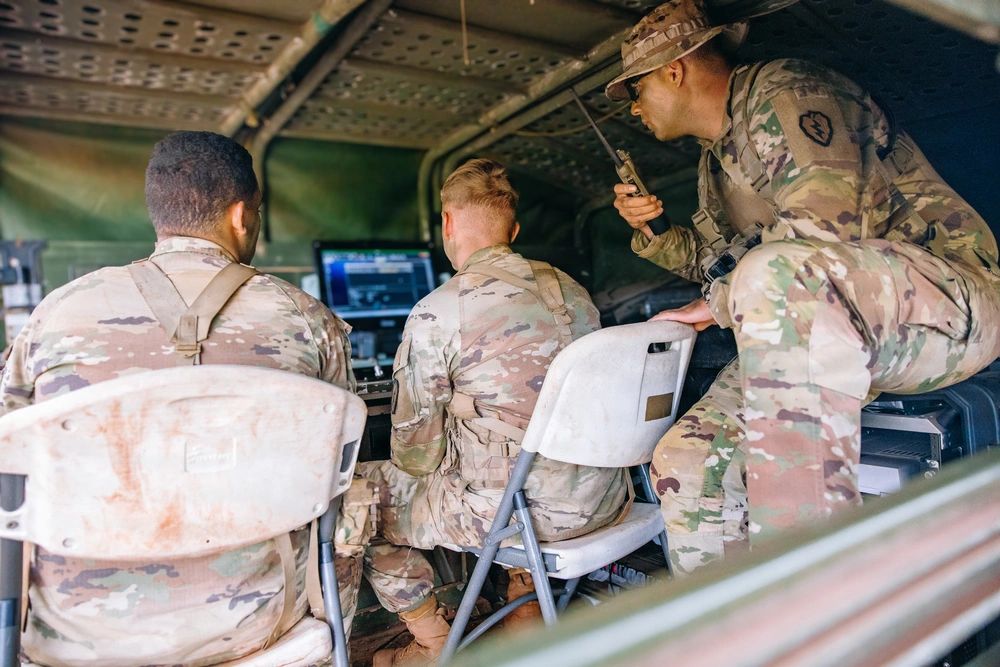 During Lightning Surge 2, Soldiers with the 25th Infantry Division provide direct feedback to shape the future of warfare, ensuring the tools they use are effective, intuitive and built to win on the modern battlefield. (Photo by Lt. Col. Hayden Howell, 25th Infantry Division)
“What we’ve found is with all of these data systems is you need a lot of communication bandwidth, and we can’t become wholly reliant on [satellite communications],” said Lt. Col. Adam Brinkman, 125th Signal Battalion Commander and G6 for 25th Infantry Division. “We fully expect that as we operate in the [Indo-Pacific] that we would not have higher internet connectivity. That’s why things like private 5G, like having a full robust transport plan with infrastructure and architecture that’s able to be tactically deployed, is so critically important to us.”
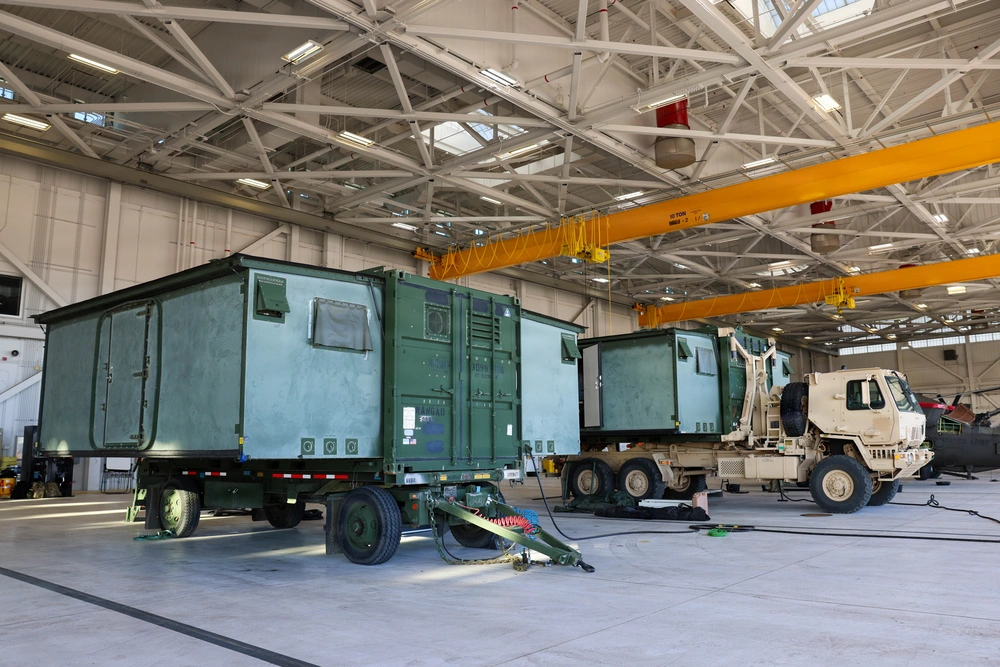 Node 45, assigned to Headquarters and Headquarters Battalion, 4th Infantry Division Artillery, 4th Infantry Division, is emplaced for mission operations during Ivy Sting 4 at Fort Carson, Colorado, Jan. 30, 2026. (Photo by Spc. Cecilia Jasinski, 4th Infantry Division)
CONCLUSION
While acquisition reform is often measured in years, the 60‑day results from the PAE C2/CC2 effort—which are not all-encompassing but provide a sampling of activities—offer early proof that meaningful change is possible on a much shorter timeline. By collapsing requirements, modernizing contracting practices, expanding trade space, optimizing funding and accelerating delivery to units, these actions demonstrate how the Army’s reform agenda can move from policy to practice.
As the Army continues to institutionalize the PAE construct and scale successful approaches across the enterprise, the C2/CC2 experience underscores a simple but powerful lesson: When authority, expertise and accountability are aligned, acquisition can move at the pace the mission demands.
For more information, go to https://cpeisw.army.mil.
CHERYL MARINO is a writer‑editor at the U.S. Army Acquisition Support Center at Fort Belvoir, Virginia, providing contract support for Behind the Frontlines and TMGL, LLC. Prior to USAASC, she served as a technical report editor at the Combat Capabilities Development Command Center at Picatinny Arsenal. She holds a B.A. in communications from Seton Hall University and has more than 25 years of writing and editing experience in both government and private sectors.