ROCK ISLAND ARSENAL, Ill. – “See first, understand first, act first.” This doctrinal phrase underscores how information is fundamental to Army readiness.
It’s a reminder that readiness doesn’t begin on a battlefield or a training range. It begins with clear, timely, trustworthy information that allows leaders to make decisions before challenges become problems.
At the U.S. Army Sustainment Command, that idea is more than a guiding principle. It’s the daily work of thousands of people whose efforts rarely make headlines, but quietly shape the Army’s ability to train, deploy, and fight to win. ASC’s mission is straightforward: turn information into action to get supplies and equipment to Soldiers when and where they need it.
ASC’s analysts and data experts make that mission possible every day.
“ASC Operations Research and Systems Analysts help make data accessible and actionable,” says Maj. Charles Gwynn, ORSA for ASC. “ORSAs collect, connect, transform, analyze, and visualize data at scale. It’s about making information current, accurate, and easily visible so we can support our troops wherever they are.”
And sometimes, the impact of that data becomes visible in a single moment.
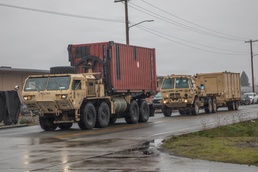
Not long ago, ASC oversaw the movement of more than 40 Heavy Expanded Mobility Tactical Trucks from one Army installation to another. These massive vehicles, workhorses of the Army’s logistics fleet, needed to move across the country, and the estimated cost for the shipment was $830,000. The actual invoice cost, however, was$601,000.
In the past, discovering that $229,000 difference would have required weeks or even months of manual research, data pulls, and cross‑checking across multiple systems. By the time the discrepancy was found, the buying power of those funds could have been lost. But this time was different.
Thanks to automated data processes and the analysts who built them, ASC identified the discrepancy immediately. The command was able to quickly reinvest the savings into other unfunded, high‑priority transportation requirements, shipments tied directly to ammunition distribution and readiness‑critical materiel. What had been difficult and time‑consuming became straightforward and simple.
And that single example represents something much larger. The same enterprise‑level capability now allows ASC to review and reconcile hundreds of thousands of invoices every year, ensuring that every dollar stretches as far as possible in support of Soldiers and the Army’s readiness mission.
That mission is at the heart of what ASC is. As a major subordinate command of U.S. Army Materiel Command, ASC is the Army’s premier provider of equipment and supplies of every kind. The command is AMC’s “single face to the field,” and is built around the idea of turning information into operational capability.
Every system, every process, every innovation is designed to ensure Soldiers have what they need, when and where they need it. All efforts focus on enhancing Soldier readiness, making it the critical measure of success.
Two organizations inside ASC play a central role in making that happen: the Special Activities Group and the Second Destination Transportation directorate.
The Special Activities Group is home to ORSAs and data scientists, and it’s where raw Army data becomes something usable. These analysts work with massive datasets, powerful computing tools, and advanced data‑engineering techniques to make information visible, accurate, and usable.
By making the Army’s data visible and usable, the SAG gives ASC the clarity it needs to keep readiness on track.
SDT manages the movement of military materiel from primary delivery points, ports, depots, and installations to the secondary locations where units actually operate. These shipments can involve trucks, trains, ships, or aircraft, and they reach every corner of the Army’s global footprint. SDT turns planning into action, closing the gap between ASC’s logistics enterprise and the Soldiers it supports.
The connection between SAG and SDT becomes clear when you look at how funding and movement intersect, with Transportation Account Codes serving as the bridge between them. TACs are groups of numbers and letters that identify the exact funding source behind every shipment, ensuring each move is legal, traceable, and aligned with fiscal law. They also give analysts the visibility they need to validate and reconcile transportation costs, just as they did with the savings on the HEMTT shipment.
All this work flows through Army Vantage, the Army’s enterprise data integration and analytics platform. Vantage pulls together information from across the force and presents it in a way commanders and analysts can actually use. SAG builds custom ASC‑specific interfaces inside Vantage that illuminate cost, timing, routing, and the ripple effects of every movement.
With that clarity, SDT can anticipate requirements, validate funding, and optimize materiel flow through the Defense Transportation System, the global network that keeps the Army supplied in peace and conflict.
SDT Chief John Germanceri says the SAG-SDT relationship has been a game-changer.
“This is what ASC’s mission looks like in practice,” he says. “Money saved, equipment moved, readiness strengthened.”
Behind the scenes, the partnership between SAG and SDT keeps the Army moving. When funding lines are clear, shipments are tracked correctly, and discrepancies are caught early, units get their equipment without delay, and ASC gets more out of every dollar.
It’s a simple formula, but a powerful one: move materiel where it needs to go, make sure the numbers add up, and keep improving the process.
Together, SAG and SDT ensure every movement is accountable, every dollar is effective, and every Soldier is equipped to succeed.