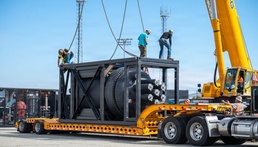
HILL AIR FORCE BASE, Utah —When a U.S. Air Force C-17 Globemaster III touched down here Feb. 15, it carried more than cargo, it delivered a glimpse of how the military may power future operations.
Inside the aircraft sat a transportable micro-nuclear reactor, part of a groundbreaking Department of Defense effort to provide reliable energy to military forces operating anywhere in the world.
But before the advanced technology could continue its journey, a team of Airmen on the ground, including reservists from the 419th Fighter Wing, had to safely receive and move one of the most unique pieces of cargo ever delivered to Hill Air Force Base.
The historic mission, known as Operation Windlord, marked the first-ever military airlift of a microreactor and demonstrated the Department of Defense’s ability to rapidly deploy next-generation power systems by air.
At the center of the effort is Project Pele, a Department of Defense initiative to develop small, transportable nuclear reactors capable of powering remote or austere military installations. The reactors are designed to operate independently of traditional fuel supply chains, reducing reliance on vulnerable and logistically demanding fuel convoys.
Roughly the size of a standard shipping container, the prototype microreactor features modular components and advanced safety systems that allow it to be transported by aircraft, truck or ship and assembled at a forward location.
Once the C-17 landed, responsibility for the specialized cargo shifted to a logistics team composed of the 67th Aerial Port Squadron,151st Air Transportation Flight, and the75th Logistics Readiness Squadron. Together, the units carefully unloaded and transferred the reactor, completing the final phase of the historic airlift.
These Airmen are specialists in military airlift operations, trained to process and move everything from standard cargo pallets to highly specialized and sensitive equipment.
For the reservists of the 67th APS, the mission highlighted the critical role the Air Force Reserve plays in delivering operational capability across the force.
“This operation is a prime example of how the Reserve is a day-to-day operational force,” saidTech. Sgt. William McCalmant, cargo processing supervisor with the 67th APS. “We’re not just training for a future conflict. We are delivering readiness and enabling the military’s lethality now, ensuring groundbreaking technology like this can be fielded safely and effectively.”
While the microreactor represents a major step forward in how the military may power future operations, the success of the mission ultimately depended on the Airmen responsible for safely moving it.
From aircraft arrival to cargo transfer, their expertise ensured the reactor could continue its journey without delay.
For the Reserve Airmen involved, the mission was another reminder that strategic capability often begins with logistics done right. By combining advanced technology with the experience and professionalism of the Total Force, the Air Force continues to demonstrate its ability to deliver innovative capabilities wherever the mission demands.