FORT POLK, La. — Bayne-Jones Army Community Hospital is recognizing Patient Safety Awareness Week with team-focused training and activities designed to strengthen a culture of safety that supports both high-quality care and military readiness.
Observed across the Military Health System, Patient Safety Week highlights the role every member of the health care team plays in preventing harm, strengthening communication and ensuring reliable care for Soldiers, Families and beneficiaries.
One of the week’s featured activities is a patient safety escape room designed to strengthen teamwork, communication and critical thinking among staff.
Alicia Jernigan, patient safety manager at BJACH, said interactive exercises help staff practice the same collaboration skills they rely on in real-world clinical environments.
“By participating in the escape room, our medical personnel are not just playing a game; they are actively honing the teamwork and communication skills that are paramount to patient safety,” Jernigan said. “This creative approach allows them to experience the importance of collaboration in a memorable and impactful way, ultimately contributing to a more cohesive, effective and ready medical force.”
Jernigan said the most important takeaway from the week is the shared responsibility every staff member has in protecting patients.
“If there is one message we hope every staff member takes away from this week, it is this: Every one of you, regardless of your rank or role, is a safety officer with the power and responsibility to protect our patients,” Jernigan said. “It’s about fostering a culture where every individual feels empowered to speak up, remain vigilant and act when something does not seem right.”
Hospital leaders say that culture of accountability directly supports military readiness.
Lt. Col. Ralph Salazar, deputy commander for quality and safety at BJACH, said strong patient safety practices help ensure service members recover quickly and return to duty ready to support the mission.
“A strong culture of patient safety directly contributes to military readiness by minimizing preventable harm, ensuring a faster return to duty for service members and fostering a ready and reliable medical force,” Salazar said. “By treating patient safety as a team sport that includes staff, patients and leaders, military treatment facilities reduce medical errors that could otherwise degrade operational strength and mission capability.”
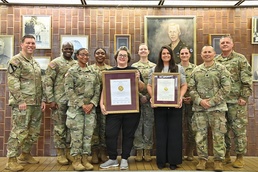
BJACH’s commitment to safe, high-quality care has also earned national recognition. For the fourth consecutive year, the hospital was named a Leapfrog Group Top Rural Hospital, an honor awarded to only a small fraction of hospitals nationwide for excellence in patient safety and quality outcomes.
Stephanie Parks, clinical outcomes nurse at BJACH, said sustaining that level of recognition reflects a culture where safety is embedded in daily operations.
“Sustaining a Leapfrog Top Rural Hospital award for four consecutive years signifies a deep-rooted and organization-wide dedication to patient safety,” Parks said. “It demonstrates that the standards highlighted during Patient Safety Week are part of our daily operations through persistent vigilance, adherence to high standards and a shared commitment across the entire team.”
The hospital also recently earned The Joint Commission’s Gold Seal of Approval, a nationally recognized symbol of quality and patient safety.
Ria Moore, Joint Commission coordinator at BJACH, said the accreditation reflects the hospital’s commitment to continuous improvement.
“The Joint Commission evaluates patient care, facility processes and organizational performance to ensure the highest standards of safety and quality,” Moore said. “Earning the Gold Seal shows our commitment to providing safe care and services for everyone and demonstrates to our community that we continuously strive to improve.”
Stacy Hall, chief of clinical quality management at BJACH, said Patient Safety Week also supports the Defense Health Agency’s strategic priority of delivering Ready Reliable Care across the enterprise.
“Reliable care begins with safe care, and this week sharpens our focus on preventing harm, strengthening systems and reinforcing the behaviors that make consistency possible,” Hall said. “By aligning our workforce around proven practices and shared accountability, we build patient trust and ensure dependable care for our service members, Families and beneficiaries.”
BJACH leaders say the week serves as a reminder that patient safety is not a single initiative, but a continuous commitment shared by every member of the health care team working to deliver safe, reliable care for Soldiers, Families and beneficiaries.