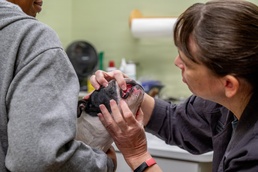
MAXWELL AIR FORCE BASE, Ala. — From safeguarding the health of military working dogs to caring for the pets of service members, the Maxwell Veterinary Treatment Facility plays a critical role in supporting both mission readiness and the well-being of the base community.
Located on Maxwell Air Force Base, the clinic provides preventative care and medical support to Military Working Dogs while also offering veterinary services to privately owned animals belonging to active-duty service members, reservists, National Guard members and retirees.
U.S. Army Staff Sgt. Tawei Chen, a veterinary technician assigned to Veterinary Readiness Activity, Fort Gordon’s Maxwell Branch, said maintaining the health of working dogs is the clinic’s primary mission.
“Our foremost mission is providing preventative veterinary care to Military Working Dogs,” Chen said. “By maintaining their health, we ensure they are ready to perform their duties and support the mission.”
Military working dogs serve as critical partners for security forces, assisting with tasks such as patrol work, explosive detection and narcotics detection. Because of the demanding physical nature of their duties, veterinary care is essential to keeping the canine teams ready for operations.
“Veterinary services directly support security forces operations by ensuring working dogs remain healthy, fit and deployable,” Chen said. “We provide everything from routine checkups and vaccinations to emergency care.”
The physical demands of training and daily patrols can lead to injuries similar to those experienced by athletes.
“Most injuries we see are sports-related due to the amount of running, jumping and physical activity required for their mission and training,” Chen said.
In addition to medical treatment, the veterinary team also trains handlers in canine emergency care so they can respond quickly during missions or deployments.
Senior Airman Sophee Brown, 42d Security Forces Squadron military working dog handler, said veterinary support is essential to maintaining operational capability.
“Vet support is critical because if our dogs aren’t healthy, we can’t complete the mission,” Brown said.
A healthy working dog must be able to perform physically demanding tasks while maintaining the focus needed for detection work.
“A healthy canine means full mission readiness,” Brown said. “They need strong joints and muscles for patrol work, cardiovascular endurance for long shifts and the focus needed for detection operations.”
The clinic also provides training to handlers on how to monitor their dog’s health in different environments, including recognizing signs of heat stress and administering emergency care when veterinary staff may not be immediately available.
“They teach us things like how to monitor a dog’s body temperature and how long they can safely work in the heat,” Brown said. “That training helps us ensure our partners stay healthy.”
While supporting working dogs remains the clinic’s top priority, the Maxwell Veterinary Treatment Facility also serves the broader military community by providing care for privately owned pets.
The clinic offers vaccinations, routine wellness exams, sick-call visits and prescription refills for dogs and cats belonging to military families.
Chen said providing accessible veterinary services helps support service members and their families.
“Our secondary mission is providing veterinary services for service members’ pets,” Chen said. “It allows military families to receive convenient and affordable care for their animals while stationed here.”
The clinic also assists families preparing for permanent change of station moves by ensuring their pets meet international travel requirements.
This support includes administering required vaccinations, conducting necessary laboratory tests and issuing official health certificates needed for overseas travel.
Although the clinic provides many routine services, some advanced procedures are referred to off-base providers.
“We do not perform surgical procedures or X-rays at the Maxwell clinic,” Chen said. “In those cases, we refer patients to local veterinary facilities.”
Even with those limitations, the impact of the clinic’s work is felt across the installation.
For Chen, the most rewarding moments come when both working dogs and family pets recover and return to normal life.
“The most rewarding part of my job is when a pet owner comes back and tells us their companion is feeling better because of the care we provided,” Chen said.
For Maxwell’s military working dog teams, the presence of an on-base veterinary clinic also means faster response times during emergencies.
“Having the vet clinic here is extremely important,” Brown said. “If something happened and we had to travel two hours for care, that could make a huge difference in an emergency.”
By caring for both military working dogs and the pets of service members, the Maxwell Veterinary Treatment Facility supports not only operational readiness but the quality of life for the Maxwell community too.
“A military working dog isn’t just an animal or a tool,” Chen said. “They’re a partner.”