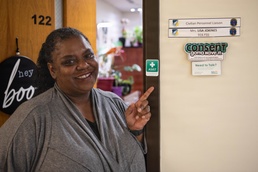
SEYMOUR JOHNSON AIR FORCE BASE, N.C. — The 916th Air Refueling Wing is encouraging Airmen to volunteer as Sexual Assault Prevention and Response (SAPR) and suicide prevention facilitators, a role that helps strengthen resilience, increase awareness of resources and support fellow service members across the wing. The facilitator program equips Airmen with the tools to lead training on suicide prevention and sexual assault awareness while fostering a culture of trust and accountability within the unit.
“We’re looking for individuals who have a passion for helping people,” said Alethia “Lisa” Jokines, a civilian personnel liaison for the 916th ARW and a seasoned SAPR and suicide prevention facilitator. “This program teaches Airmen how to recognize warning signs, connect with others and guide them to the resources they need.”
Facilitators help educate Airmen across the wing on identifying behavioral warning signs and understanding the resources available to them, such as supervisors, commanders, the director of psychological health and chaplain services. According to Jokines, a key focus of the program is ensuring Airmen know where to turn if they or someone else may be struggling.
“One of our main goals is to point folks toward resources,” Jokines said. “Those resources are there to help our Airmen, but they’re not always being utilized the way they should be.” In addition to building awareness, the facilitator role helps develop professional skills. Airmen who volunteer gain experience in public speaking, communication and leadership while strengthening their ability to connect with others across the wing.
“Facilitators learn how to speak in front of groups, how to build relationships and how to create an environment where people feel comfortable talking,” Jokines said. “Someone may connect better with a facilitator they met during training versus someone in their own chain of command.”
To become certified each year, facilitators attend training coordinated through resilience program coordinators at Seymour Johnson Air Force Base. The training introduces the updated annual curriculum and includes a “teach-back” portion where participants demonstrate their understanding by presenting sections of the material themselves.
Once certified, facilitators deliver training sessions within their units and track attendance to help the wing monitor participation rates. The goal is to reach as many Airmen as possible throughout the training cycle. Jokines said the program has made a noticeable impact over the years, particularly when Airmen feel comfortable reaching out after training.
“They’ve stopped me in the parking lot, getting out of my car, because they had a problem and they connected with me because I was the facilitator,” said Jokines. “That connection can make the difference between someone staying silent and someone asking for help.”
Facilitators often play an important role in guiding Airmen to the next level of care, ensuring they are connected with the appropriate resources and support systems.
According to Jokines, the most effective facilitators are those who bring authenticity and compassion to the role. “When you’re teaching this type of content, people can tell if you genuinely care,” Jokines said. “What I look for in a facilitator is someone who’s real. Someone that’s not fake, because when you’re teaching this kind of content, individuals will know whether you care by looking at you.”
Jokines encourages Airmen of all ranks to consider volunteering for the program as a way to shape the culture of the force and support their fellow service members.
“Be the change,” Jokines said. “The younger Airmen, NCOs and officers coming up are the ones who will shape the future of the military. If we want a culture where people feel safe speaking up and getting help, it starts with us taking care of each other. When we take care of our people, they can take care of the mission.”
Airmen interested in becoming a facilitator can contact Alethia “Lisa” Jokines at mailto:alethia.jokines@us.af.mil, or visit her office in the 916th MSG building, room 122, for more information.