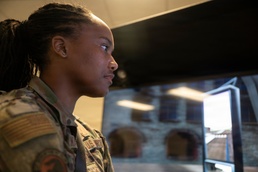
Airman assigned to the 307th Logistic Readiness Squadron, gripped the controls of a high‑tech vehicle simulator this weekend, trading the roar of an engine for the hum of digital terrain at Barksdale Air Force Base, Louisiana.
The 307th LRS plays a critical role in supporting the U.S. Air Force Reserve Command and 307th Bomb Wing missions by providing transportation, logistics and deployment support that enable global strike operations of the B-52 Stratofortress.
To help maintain that readiness, 307th LRS ground transportation Airmen have been training on a new Doron 550 TruckPlus driving simulator for the past five months.
“Our training is built around operating vehicles, but sometimes it’s difficult to get hands-on time due to real-world missions or vehicles being down for maintenance,” said Master Sgt. Christopher McNeal, 307th LRS deployment and distribution flight superintendent. “The simulator allows us to continue training anytime.”
Ground transportation Airmen operate a variety of vehicles including buses, tractor-trailers, forklifts and general-purpose vehicles. While real-world driving remains the primary method for certification, the simulator allows trainees to build familiarity with vehicle systems and procedures before getting behind the wheel.
Senior Airman Karrington Stewart, a 307th LRS ground transportation operator and trainer, said the simulator helps ease new Airmen into the learning process.
“It helps Airmen get more comfortable before you actually put them in a vehicle,” Stewart said. “You can give them different scenarios like bad weather, heavy traffic or even a tire blowout. It prepares them before they’re in the real world.”
Trainers can modify driving conditions within the system, exposing Airmen to situations they may encounter during deployments or missions supporting the 307th BW and broader AFRC.
“We can change the weather conditions, road grip, fog density and even whether it’s day or night,” McNeal said. “It gives Airmen exposure to situations they may encounter in the real world.”
In addition to improving training flexibility, the simulator helps conserve resources by reducing fuel usage and minimizing wear and tear on operational vehicles.
“When we train on real vehicles, we’re burning fuel and putting wear and tear on equipment,” McNeal said. “The simulator helps reduce those costs while still giving Airmen valuable training.”
Rather than relying solely on textbooks or waiting for vehicles to become available, Airmen can now immediately apply what they learn in training.
“This gives Airmen the ability to actually practice,” said Tech. Sgt. Thomas Barksdale, 307th LRS ground transportation training validations and operations NCOIC. “They can get hands-on without the fear of jumping straight into a vehicle.”
While the simulator cannot replace real-world certification requirements, it provides valuable preparation before Airmen operate full-sized vehicles, enhancing their future readiness skills.
“One thing you notice is the weight difference compared to the real vehicle,” Stewart said. “But it still helps a lot because the simulator moves and reacts realistically. Even something small like hitting a curb, you can feel it.”
For instructors and leaders within the unit, the simulator represents an important step forward in keeping Airmen trained and ready for the USAF mission one virtual mile at a time.