MADISON, Wisconsin – This past January marked the 83rd anniversary of the capture of the Japanese stronghold at Buna, Papua New Guinea by American and Allied forces.
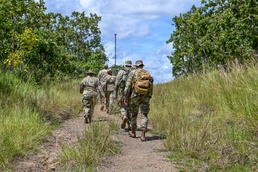
I was lucky to be a part of a group of six Wisconsin National Guardsmen who last year retraced the steps of the historic 32nd Division’s march across New Guinea on the Kapa Kapa trail.
We traveled to Papua New Guinea to collaboratively train with the Papua New Guinea Defence Force as part of a State Partnership Program between our home state of Wisconsin and Papua New Guinea. The State Partnership Program is a Department of War security cooperation program managed by the National Guard Bureau that helps improve the partnership between nations and increase readiness of U.S. and partner forces to meet emerging challenges. Our exchange with the Papua New Guinea Defence Force focused on civil engineering projects, medical care and treatment, base security, and communication strategies. While this year marks the 6th anniversary of our partnership program with Papua New Guinea, our shared and storied history goes back far earlier, to the bleak and uncertain early days of World War II, when a menacing power in the pacific exerted itself by subjugating all who dared stand in its way.
In the fall of 1942, members of the 32nd Army Division comprised mostly Wisconsin and Michigan National Guardsman, found themselves on the eve of battle on the remote island of New Guiana in the western pacific to counter a Japanese advance. Without proper jungle training and equipment, they were ill-prepared for what awaited them, but they did have grit and determination, and invaluable help from native guides. The support from the New Guineans was instrumental to the overall success of the mission and began a partnership that continues to this day.
The goal for the Allies was to take out the Japanese stronghold of Buna on the other side of the island. It was a two-pronged attack, with the Australians marching on the Kadoka trail to the north, and the Americans forging a trail to the south over the Owen Stanley Mountains with help from the natives. The Kapa Kapa trail, which gets its name from the American mispronunciation of the local seaside village of Gabagaba, tested the Soldiers to their core.
They suffered in stifling heat and pouring rain. The dye they were told to dip their uniforms in back in Australia to better blend in with the jungle environment, they now learned kept the fabric from breathing, causing sores to break out on their skin. To lighten their loads, many emptied their packs of anything deemed unessential, including blankets, something they would later regret when they reached the heights of Ghost Mountain. Inadequate water purification and short-supply of anti-malarial medications led to many soldiers suffering from bone-chilling fevers and the exhaustive effects of malaria. Lack of hot food, tattered-ragged clothing, fevers, chills and dysentery – they became the “Ghost Mountain Boys.” Most would lose a quarter to a third of their body weight by the time it was over. Their reward for enduring the grueling 42-day march was being thrust almost immediately into combat with the Japanese who were all but waiting for them. The fighting that ensued was some of the fiercest of any battle in that war. Inch by inch they advanced until Buna finally fell.
And now, over three-quarters of a century later, the Wisconsin National Guard finds itself there again, in partnership with Papua New Guinea. An important part of the Consolidated State Partnership Program Exchange is time for cultural activities designed to enhance understanding and build trust. Familiar with the book “Ghost Mountain Boys,” by James Campbell, a staple of reading for all Wisconsin Guardsmen (and the source document for many of the details in this article), we knew we had to get in touch with our roots and retrace the steps of the men who came before. With coordination from the U.S. Embassy – Port Moresby, local guides brought us from the capitol city to Gabagaba, on past Kwikila to connect with the Kapa Kapa trail.
Time limited us to a 4-mile hike and we made the most of it. We hiked in a column, mostly in silence, through rugged terrain, water and mud, in the heat of the mid-day sun. As a thunderstorm rumbled in the distance the sounds of boots grounding the earth mixed in with that of native insects and species. It was a reflective time for each of us as we brought to mind the stories of the journey and sacrifice of those who had gone before. Master Sgt. Kailani Trainor-Bird, a Wisconsin Air National Guard medic, called it “a powerful, humbling experience.”
Chaplain James Buckman, a Wisconsin Air National Guard Lieutenant Colonel said, “It’s significant, not because of what we’re experiencing, but because of who’s steps we’re following in.”
More than anything, I think the experience instilled in us a renewed sense of purpose, heraldry and pride in who we are as Wisconsin Guardsmen, and the gravity of knowing we too must stand ‘always ready’ to match their level of courage and sacrifice when called upon. For the Wisconsin National Guard, the 32nd Infantry Brigade Combat Team continues to carry on the legacy of the 32nd Division, bearing the “Papua” streamer on their guidon.
The experience was the perfect culmination to the March 2025 Consolidated State Partnership Program Subject Matter Expert Exchange, where relationships between the Wisconsin National Guard and the Papua New Guinea Defence Force continued to strengthen. We each now bring a heightened awareness and understanding of that special relationship between our nations to share with fellow guardsmen here at home. It is a lasting friendship born out of shared experience, forged in blood, sustained by trust and cooperation, and destined to continue for generations of Guardsmen yet to come.