STRATTON, Ohio – Friday, Feb. 13, was a day many people spent their evenings urgently buying last-minute Valentine’s Day gifts and pretending that was the plan all along. On the Ohio River, a navigation facility crew was dealing with a different urgent matter: one of New Cumberland Locks and Dam’s locks was not locking.
New Cumberland Locks and Dam is a U.S. Army Corps of Engineers Pittsburgh District-operated facility near Stratton, Ohio. The facility’s two lock chambers help commercial navigation transport more than 180 million tons of bulk commodities on the river year-round, so when a chamber stops cooperating, it becomes a very big problem.
And on Friday the thirteenth at 5 p.m., the 1,200-foot lock chamber’s emptying valve refused to close fully.
It looked like the sort of problem lock crews have seen before. When a valve refuses to behave, the culprit is usually something straightforward, like a worn hydraulic piston or a bad solenoid. With a tow in the lock chamber, the crew did what experienced lock operators do and swapped out the solenoid.
The problem was not the solenoid.
Then the hydraulic pump would work for about eight seconds and shut off (when the system responsible for moving 235,000-pound metal gates and controlling water in a navigation chamber does this, the proper engineer-ese term for it is “bad.”)
The crew put the unit in bypass, locked a tow through, and kept working on the problem. Then the miter gates refused to open (when the backup system responsible for moving 235,000-pound metal gates and controlling water in a navigation chamber does this, the proper engineer-ese term for it is “very bad.”)
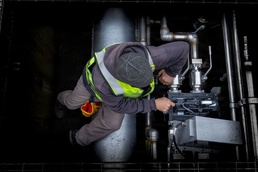
But commercial navigation doesn’t slow down because a lock isn’t working correctly, so the New Cumberland team improvised. The operators opened the metal grates and climbed into the river lock wall. Through a combination of screwdrivers and sheer willpower, the operators actuated the solenoids by hand – opening and closing the massive metal gates manually – and safely locked three tows through the chamber.
Meanwhile, Lockmaster Willie Maynard was on the phone with four of his bosses – Alan Nogy, chief of the Locks and Dams Branch; Ian McKelvey, supervisory operations specialist; Eric Thewlis, acting Ohio River supervisory operations specialist; and Ryan Kinneman, district electrician – to provide a status update.
Maynard expected Kinneman might come to the facility and lend a hand.
“All four of them left their houses to come here,” said Maynard. “It was all hands-on deck.”
Once everyone arrived – some driving two hours – Kinneman started troubleshooting and identified a voltage deficiency in an electric panel box. The team traced the wire and determined the most likely culprit was a faulty wiring splice connected to the hydraulic power unit system.
The wiring was buried under snow and ice somewhere because nothing is allowed to be easy.
“First, the valve wouldn't shut, then we went from the valve not shutting to the gate not opening, then we went from the gate not opening to having a lack of power,” said Maynard. “It was a pretty rough day.”
A temporary extension wire could keep the lock gates running from a control shelter. By 10 p.m., after testing the configuration, the lock’s systems responded as intended, and the valve closed properly.
Maynard said the response highlighted both the dedication of the district’s operations personnel and the importance of having qualified electrical support available for critical navigation infrastructure.
For Maynard, the biggest takeaway was not just a clever solution, but that people showed up and supported him. In his view, the response said a lot about the team.
“I can’t thank Ryan, Ian, Eric, and Alan enough for coming to assist us,” said Maynard. “Every level of this team really cares, and they make sure the locks stay running no matter what we need to do.”