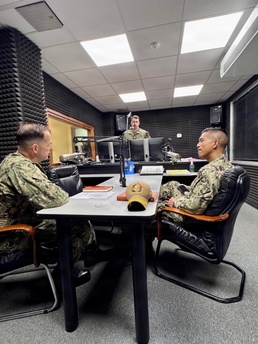
ROTA, Spain. (Mar. 1, 2026) -- Total Force Fitness (TFF) is a framework that enables individuals to achieve optimal health and become high-performing service members. It comprises eight interrelated domains that together provide a holistic view of the factors influencing a service member's health, readiness, and performance. Within this framework, spiritual readiness plays a critical role, directly supporting resilience, decision-making, and overall mission success. Being spiritually ready can support a warfighter’s resilience to endure hardship, provide clarity to lead with purpose, and foster the inner strength to persevere through adversity. Spiritual readiness enables sailors and marines to remain focused, adaptable, and mission-capable in complex and demanding environments.
Spiritual readiness is also a key enabler of medical force readiness, supporting the cognitive, emotional, and moral resilience required for healthcare professionals to deliver care in operational and expeditionary environments.
According to the TFF framework, human beings are composed of both physical and spiritual dimensions. Some describe the spiritual aspect as the soul, while others define it as the mind, will, and emotions. Regardless of definition, this dimension of life is real and is shaped by beliefs, values, effort, and the influence of others. Just as physical readiness requires consistent training, spiritual readiness requires deliberate and sustained investment.
While technical skills, training, and experience are essential, they have limitations. When individuals encounter challenges that exceed their abilities, they often rely on will, purpose, and moral strength. Spiritual readiness builds that foundation, enabling warfighters to push through adversity, remain resilient under pressure, and continue forward with purpose. This foundation directly supports operational readiness by strengthening the mental and emotional endurance necessary for sustained mission execution.
Recognizing When We Are Not Ready for Adversity
It is important that sailors and Marines recognize they do not need to wait until they face major challenges to strengthen their spiritual readiness. In fact, studies show that delaying this effort risks individuals becoming overwhelmed by personal burdens, which can limit their ability to support others, make sound decisions, and accomplish the mission.
Although everyone has unique backgrounds and experiences, the human spirit often displays common signs of strain. These may include emotional exhaustion, anxiety, isolation, loss of motivation, hopelessness, moral fatigue, or a diminished sense of purpose. These symptoms rarely stand alone and often intensify when left unaddressed.
When these indicators appear, they can serve as an internal signal to pause, reflect, and seek support. Assistance can come from trusted friends, mentors, religious leaders, counselors, or a command chaplain. What matters most is reaching out to a trusted source and maintaining a willingness to grow and strengthen resilience. Early intervention and support contribute to both individual well-being and overall unit readiness.
Developing Spiritual Readiness
Spiritual readiness is built throughspiritual fitness, which is the deliberate focus on the mental, moral, and ethical dimensions of life. Key elements includepersonal faith, foundational values, and moral living.
Understanding what individuals believe and why shapes their worldview, enabling them to process adversity, leadership challenges, and ethical decisions with clarity and purpose. Values, shaped by family, culture, education, and belief systems, provide an objective moral compass that guides daily choices and behavior, particularly in high-stress operational environments where decisions may carry significant consequences.
Moral living requires consistency in actions, decisions, and interactions. Living with integrity, accountability, and compassion strengthens trust, reinforces command climate, and supports both mission effectiveness and personal well-being. When practiced daily, these principles directly contribute to spiritual fitness and long-term resilience. With focused effort, a spiritually fit individual may demonstrate engagement, hope, forgiveness, respect, and awareness.
Spiritual fitness directly supports combat readiness, resilience, and ethical leadership. It allows warfighters to face adversity with strength, clarity, and determination. Spiritual readiness also provides perspective, enabling individuals to interpret both challenges and successes with meaning, purpose, and a continued commitment to serve.
By investing in spiritual readiness, warfighters strengthen not only themselves but also their teams, commands, and mission effectiveness.
Sailors and Marines located in Rota who want help developing spiritual readiness should contact Chaplain Brady Rentz at mailto:brady.a.rentz.mil@health.mil.
NMRTC Rota serves as a force multiplier in Navy Medicine’s strategic global medical support mission throughout Europe, Africa, and the Middle East while also supporting operational readiness and maintaining a strategic repository of expertise at Naval Hospital Rota on the Iberian Peninsula.
For 250 years, Navy Medicine, represented by more than 44,000 highly trained military and civilian healthcare professionals, has delivered quality healthcare and enduring expeditionary medical support to the warfighter on, below, and above the sea, and ashore.
<br>