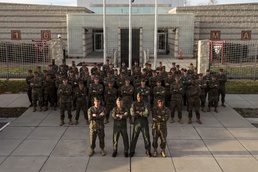
MARINE CORPS AIR STATION MIRAMAR, Calif. — Commanders and senior enlisted leaders from across 3rd Marine Aircraft Wing gathered at Marine Corps Air Station Miramar for the 2026 Senior Leaders Course, a two-day forum designed to align strategic leadership, reinforce standards, and address the challenges shaping the future of Marine Corps aviation.
The conference opened with check-in and administrative briefings at the Marine Expeditionary Force Mission Information Operations Center, followed by opening remarks from Maj. Gen. James B. Wellons, commanding general of 3rd MAW. Wellons set the tone for the course, emphasizing the operational focus of the wing.
“The main effort is getting our Marines ready to go,” Wellons said. “As senior leaders, your actions and decisions leave an impact. Every day matters.”
Day one featured a packed agenda, including briefings on distributed maritime operations, MAW plans and updates on joint air-denial operations and the Marine Aviation Plan, MEF hard goals, and the Fleet Integration Cell playbook. Participants toured the MIOC Watch Floor, explored the MEF Force Employment Center mission, and reviewed operational planning vignettes such as find, fix, track, target, engage, and assess.
Wellons continued to emphasize that the wing operates in a high-tempo environment, where units are deployed across the globe.
“3rd MAW is a warfighting organization,” Wellons said. “Right now, we have units across all five groups deployed.”
During the course, participants focused on the future force. Questions addressed the integration of artificial intelligence into Marine Corps operations, the allocation of 2027 funding, decreasing time-in-grade requirements, and maintaining the value and influence of senior leaders within an evolving force.
Guest speakers brought valuable experience to the course, joining the event or calling in from across the country. Among briefers were the assistant commandant of the Marine Corps, deputy commandant of aviation, and chaplain of the Marine Corps.
General Bradford J. Gering, assistant commandant of the Marine Corps, led a discussion over questions and concerns brought forward.
“In 2027 we stand the possibility of being resourced like never before,” Gering said. “What we do with that matters.”
Gering emphasized that the brand of the Marine Corps remains central to recruiting and retention. He described that brand not as marketing, but as a reputation forged through honor, courage, and commitment, sustained daily through disciplined leadership, warfighting excellence, and accountability. Preserving that reputation, he noted, requires leaders who uphold standards and embody the character expected of the institution.
As the second day continued, the focus shifted from modernization and future capabilities to the responsibility leaders carry in safeguarding the force. Senior leaders underscored that combat readiness is inseparable from personal readiness. Preventable losses off duty, whether from misconduct, poor decision-making, or untreated stress, have direct operational consequences, eroding unit cohesion, trust, and mission capability.
“The majority of the losses we experience in the Marine Corps are preventable,” said Brig. Gen. Henry Dolberry Jr., assistant wing commander of 3rd MAW. “They don’t occur in combat, they happen in moments of poor judgment, isolation, or unchecked stress.”
Leaders were challenged to remain actively engaged with their Marines and Sailors, not only in administrative oversight, but in genuine mentorship and daily presence. The emphasis was on identifying warning signs early, enforcing standards consistently, and fostering a command climate where accountability and care coexist, and where seeking help is viewed as strength rather than stigma.
The message was clear: maintaining a lethal aviation combat element requires more than equipment and funding. It demands leaders who are present, accountable, and committed to protecting their people with the same intensity applied to preparing them for combat.
The discussions reinforced that senior leadership shapes both the culture and effectiveness of the wing. Leaders emphasized maintaining standards, mentorship, and situational awareness, ensuring that decisions positively influence Marines and Sailors across 3rd MAW.
The two-day Senior Leaders Course concluded with alignment on wing priorities, and reinforcing 3rd MAW’s identity as a “Fight Tonight Force,” a capable, lethal, and ready aviation combat element prepared and striving to deploy at a moment’s notice.
As the wing continues its global mission, this deliberate investment in senior leader development ensures commanders and sergeants major remain synchronized, informed, and equipped to maintain readiness across all subordinate units.