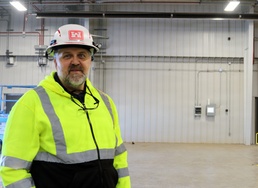
TINKER AIR FORCE BASE, Okla.—Before he even understood the engineering behind it, Stephen Sewell loved to build. From an early age, models, forts and nearly anything that required instructions caught his attention.
As he aged, he excelled at math and science, making engineering a perfect fit.
“My parents always said I would spend hours in my room building things as a kid,” said Sewell.
He earned a degree in civil engineering from the University of Memphis.
Today, Sewell is the area engineer for the U.S. Army Corps of Engineers, Tulsa District, where he leads a team responsible for delivering critical military construction projects. He leads a team responsible for delivering critical military construction projects that help the Air Force and tenant organizations at Tinker AFB meet mission demands. When delivered, these projects contribute to national defense and the readiness of America’s warfighters.
“Getting to see a project from start to finish and being able to see our warfighters using something you helped create is a pretty great feeling, “said Sewell.
As the area engineer, Sewell oversees engineers and construction inspectors who manage major construction and renovation projects at Tinker and Will Rogers Air National Guard Base. While construction may seem straightforward from the outside, Sewell says leadership and team coordination are just as important as technical expertise.
“I really have to manage people as much as I do construction,” said Sewell. “Everyone is different, and it sometimes takes slight adjustments with how you manage people to bring out their full potential.”
Construction often requires higher-level engagements, so Sewell stays involved in day-to-day operations to maintain a clear understanding of what happens on project sites. He believes engaging with the people who do the tough work every day, from project engineers to construction inspectors, is one of the best ways to learn and grow.
“Since stepping into the area engineer role, Stephen has brought a renewed sense of focus and cohesion to our team,” said Audrey Seaman, deputy engineer, Tulsa District, Tinker AFB. “His leadership has elevated morale, strengthened collaboration, and introduced meaningful structure specifically in our Monday huddles, which keep us aligned and moving forward together.”
Building relationships with contractors and base personnel is also an important part of Sewell’s job. These relationships help ensure the successful completion of projects, while safeguarding the warfighter’s mission.
Behind the scenes, Sewell and his team manage details that keep projects moving forward smoothly. From coordinating budgets and equipment to supporting personnel, their teamwork helps maintain operational efficiency. Despite the complexity of the assignment, Sewell said seeing the direct impact of his work is very rewarding.
One of the reasons he was drawn USACE was the opportunity for overseas deployments and disaster relief missions.
He has deployed to Afghanistan in 2012 and to Kuwait, Iraq and Syria in 2023. The biggest challenge of these deployments, Sewell said, is the sacrifice his family makes during his extended absences.
“Those deployments were great experiences,” said Sewell. “I learned a lot, you have to think on your feet in those environments because you don’t always have the resources you have back home.”
The area was extremely remote, with helicopters the only way in or out, and living conditions were difficult. Seeing the difference in daily life made him appreciate the comforts of home.
“While the conditions were often difficult and I missed my family, the deployments helped fill my adventurous side,” said Sewell. “Working for USACE has given me opportunities to see places and do things I might not have otherwise.”