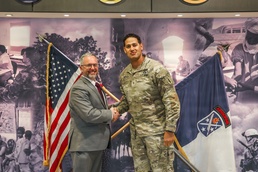
Recently, the Deputy Assistant Secretary of State for Global Operations (DAS-GO) Seth Green visited Fort Bragg to discuss and highlight how civil affairs personnel best integrate their unique capabilities into DOS operations, embedding within embassies and regional offices to deliver critical civil and military assistance with strategic impact in all phases of conflict. Green explained that the reinstitution of USAID’s mission to the DOS shifted responsibility for aid prioritization, distribution, and operations to the regional DOS bureaus, a course of action to better localize strategic initiatives. "We are in the midst of unprecedented change and (DOS) is still developing how we advance in the new construct of the administration," Green said.
Continued Embassy Integration
ARSOF CA units, masters of civil/military coordination, continue to serve as crucial capabilities builders in increasingly resource challenged embassies. Their expertise in analysis, crisis planning and response, civil reconnaissance and civil knowledge integration bring critical competencies to missions that require rapid adaptation to fluid civil environments. "Change is hard, change is difficult, but it always presents opportunities," Green emphasized during his discussion with ARSOF CA leadership.
Ambassadors, chief diplomats and primary representative of the U.S. in a foreign nation, charged to advocate for and implement U.S. foreign policy objectives under the umbrella of the DOS, often lack experience planning for and executing emergency action plans, disaster relief coordination, and bridging military capabilities into civil efforts. ARSOF civil affairs personnel bring critical skills and methods to these missions, for example, medical capabilities (MEDCAP) training and delivery. These specialized skills and ARSOF CA’s ability to coordinate efforts have quickly reinforced trust amongst diplomatic teams across the globe.
Expanding Scope
The DOS provides detailed letters of instruction outlining each embassy’s priorities, to include advancing economic development, supporting U.S. commerce, and ensuring the safety of U.S. citizens in those nations. However, in the absence of USAID’s apparatus, many of the traditional systems for implementing these directives now have DOS looking to ARSOF CA to assist. ARSOF CA capabilities are especially vital in areas like Africa, where USAID operated at a robust capacity and where the agency’s departure left a significant void on economic and humanitarian programs.
Although commercial and benevolent diplomatic efforts are critical to the ARSOF CA mission in many regions, Green encouraged ARSOF CA leaders to build relationships with embassy staff who best align with their shared objectives and strategic direction beyond those efforts. "If you have a mission that fits a little closer to public affairs (strategic communication), find the public affairs officer and build that relationship," Green said. "Partner with them to enable your mission." With ARSOF CA increasingly leading the effort to promote the U.S. image and brand in the public; building more trust and legitimacy of U.S. foreign policy through their efforts aligns with these communication strategy objectives.
SMART Foreign Policy
USAID’s departure also reflects the current presidential administration’s shift toward targeted foreign assistance, focused on short-term objective-driven transactional packages rather than generational developmental projects. "This administration does not feel like we should be in a country for 30 years of development," Green explained. Instead, DOS deploys foreign aid programs designed to commit governments to self-governance and sustainability within 12 to 18 months with specific, measurable, achievable, relevant, and time-bound (SMART) goals.
Given these truncated deployment windows and SMART goals approach, ARSOF CA operations have proven invaluable to our DOS partners. Our personnel bridge gaps between the diplomatic staff, DOS entities and partners, as well as local civil and military partners to meet logistical and operational needs. "How do we go in there and do some good, and be a bridge for the in-between?" Green reflected, highlighting ARSOF CA’s ability to adapt to rapidly changing circumstances and make strategic impacts quickly in uncertain conditions.
ARSOF CA Forging a Way Ahead
Green underscored the importance of adaptability in this new diplomatic service environment—both for embassies, ARSOF CA, along with allies and partners, respectively. He noted that every nation and mission requires a unique approach, demanding adaptable personnel to adjust their methods, relationships, and approaches to the local environment. "Every embassy has different laws and cultures than any other. The (social and) civil construct is different everywhere, and the relationships (as well)," he said. As USAID’s absence continues to reshape the diplomatic and civil service landscape, ARSOF CA stands by to fill critical gaps where our DOS partners see fit. Their ability to plan, coordinate, and execute of these new strategically impactful short-term solutions enhances the effectiveness of DOS and key stakeholders while ensuring U.S. foreign policy meets intent.
With ARSOF CA’s foundational ability to build partnerships, adapt to local nuances, and provide essential training and expertise to U.S. partners and allies, our personnel are proving to be a force multiplier in U.S. foreign policy by, with, and through our diplomatic service teammates. As Green concludes, "change is difficult, but it always presents opportunities." For ARSOF CA, we are meeting this opportunity to adapt to and implement the evolving policies and the on-the-ground execution that embassies—and the lives they touch—depend on.