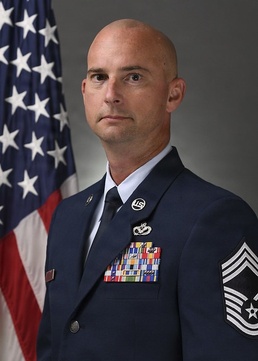
Chief Master Sgt. Steven P. Millerd has spent 25 years in uniform, but some habits never fade. Even now, he still finds himself pausing to look up when an aircraft passes overhead.
“I’m just fascinated,” he said. “I had, and still do have, a very intense interest in military aircraft.”
That fascination endured and evolved. What began as admiration for military aviation grew into a career-long commitment to both the mission and the people who support it. Now, as the Air Force’s Chief of Enlisted Matters for Civil Engineers, Millerd is focused on building an enlisted force that is adaptable, disciplined, and prepared to operate decisively in complex and contested environments.
Millerd joined the Air Force through open general enlistment. Though he initially hoped to follow in his grandfather’s footsteps as a firefighter, changes early in his career led to his assignment in environmental systems and pest management, a field he admits he knew little about at the time.
Reflecting on the unexpected turn, Millerd shared, “I couldn't ask for anything better.” Throughout the course of his career, he remained almost exclusively with Civil Engineers, progressing from pest management shops to superintendent and Senior Enlisted Leader roles across multiple locations, climates, and deployments. Even when other opportunities arose, Millerd chose to remain connected to the Civil Engineer community. “I've been CE through and through my 25 years,” he said. “CE is my blood.”
Originally, he planned to serve just four years. Twenty-five years later, he remains driven by a desire to pay forward what others invested in him.
During his first assignment at Randolph Air Force Base, Texas, Millerd worked alongside civilian mentors Matt Kramm, Steve Kelly, and George Orta. From them, he learned the importance of thoroughness, genuine connection, and the courage to push boundaries.
While at Kadena Air Base, Japan, MSgt Ed Balfour taught me grace, patience, and what it means to be in the military. The master sergeant also gave him permission to fail forward, reinforcing that mistakes could be opportunities for growth.
The philosophy of embracing discomfort and valuing relationships alongside results became the foundation of Millerd’s leadership approach.
Now, each day when he walks into work at the Pentagon, Millerd said he “soaks it up.” He’s energized to be there, excited about the opportunity to represent the enlisted perspective where it matters most.
“I don't want to make decisions in a vacuum,” Millerd emphasized. “I want to include as many people as I can in the process and understand how those decisions are actually going to impact the force.”
That approach, he said, reflects a simple goal: “Within my span of control, my mission has always been to make the lives of others better.”
For Millerd, taking care of Airmen does not mean shielding them from challenge. It means preparing them to succeed under pressure, both in garrison and in combat. “If it looks and feels like labor, you’re doing it right."
Looking ahead, Millerd identified decision-making under pressure as one of the Civil Engineer community’s most critical focus areas. In contested environments, success will depend on Airmen who understand the commander’s intent and are empowered to act. The question isn’t just about having enough resources. It’s whether Airmen have enough creativity and adaptability to succeed where they are.
Civil Engineers have long excelled as problem solvers, forged through expeditionary operations requiring both adaptability and technical expertise. Millerd described this resourcefulness as a “MacGyver mindset,” referencing the fictional character originally from the late 80’s TV series renowned for ingenious solutions. As future operating environments could grow more constrained, he explained, this mindset will be essential. Grounded in creativity, confidence, and training, it will enable Airmen to adapt, embrace discomfort, and sustain missions under austere conditions.
A similar perspective guides the advice he offers young Airmen beginning their careers in civil engineering. “When you’re put in a tough position and it feels like a struggle, that’s how it should be,” he said. “That's how you know you're growing.” He adds, “There’s no such thing as a bad day—just a character-building day.”
After 25 years, Millerd still pauses to watch aircraft overhead. Today, his focus is on the Airmen who make those missions possible. The Civil Engineers who keep aircraft flying must be prepared for any challenge ahead, not because the work is easy, but because they have been supported and developed to succeed. That, Millerd believes, is what it truly means to take care of people.
“I hope when my time’s done, Engineers will look back and see that they’ve reached an insane level of adaptability,” Millerd said. “They’re a lot more technically proficient. Their resiliency is off the charts, and they have a disciplined mindset that can operate effectively and successfully in a very complex and contested environment. That’s my goal.”