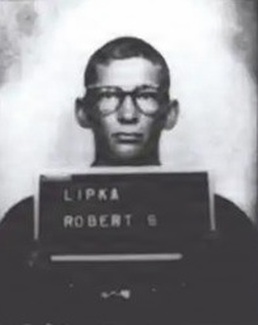
On Feb. 23, 1996, former U.S. Army intelligence analyst Robert S. Lipka was arrested on charges of espionage. He was accused of selling classified information to the Soviet Union in the late 1960s.
Robert Lipka enlisted in the U.S. Army in 1963 and trained as an intelligence analyst. In 1964, the 19-year-old was assigned to the National Security Agency (NSA) at Fort Meade, Maryland. He served as a clerk in the central communications room, removing classified reports from the teleprinters and distributing them to various NSA offices or destroying them. The position came with a high security clearance and a high level of access to classified materials related to national defense.
In September 1965, Lipka approached the USSR embassy with an offer to supply the Soviet intelligence agency (KGB) with classified materials in exchange for cash payments. Over the next few years, Lipka regularly supplied information to the USSR via dead drops, earning approximately $27,000, four times his annual salary. Former KGB General Oleg Kalugin later reported Lipka supplied “whatever he got his hands on, often having little idea what he was turning over.” This included information on U.S. troop movements and official communications with American allies at the height of the Vietnam War.
In August 1967, Pfc. Lipka left active military service and his position at the NSA, taking numerous classified documents with him. He moved to Lancaster, Pennsylvania, where he may have continued to supply these materials to his handlers into the early 1970s. He soon broke off communication with the KGB and, in an attempt to dissuade them from recontacting him, claimed to have been a double agent working for the U.S. intelligence community. According to Vasili Mitrokhin, an archivist for the Soviet foreign intelligence service who defected in 1991, “the KGB had no doubt that he was lying” based on the volume and nature of the information Lipka provided. Lipka went on to attend Millersville College in Pennsylvania, receiving a bachelor’s degree in education and becoming employed as a schoolteacher. His spying went undetected for the next two decades.
In the early 1990s, Lipka fell under suspicion by the Federal Bureau of Investigation (FBI). He had been implicated by the Mitrokhin Archive, which included thousands of documents provided by Mitrokhin to the British Intelligence Service identifying numerous spies working for the Soviet Union throughout the Cold War. Then, in 1993, Lipka’s former wife reported him for spying. FBI agent Dimitry Droujinsky, undercover as a Russian intelligence agent, contacted Lipka in 1993 to “reestablish” communication. Lipka agreed to meet and complained about payments he claimed not to have received for his previous activities. The FBI paid him $10,000 over the next few months to maintain contact. Lipka admitted to passing information to the KGB in the 1960s and offered to hand over more documents still in his possession from his time at NSA.
The FBI ceased communication with him in December 1993 but continued compiling evidence. In 1994, Lipka’s spying was further confirmed by Kalugin, whose autobiography of his time with the KGB referred to an unnamed American soldier whose age, dates of employment at NSA, and level of access left little doubt to the spy’s identity. On Feb. 23, 1996, Lipka was finally arrested. He pleaded guilty to one count of espionage in exchange for leniency during his trial. Lipka was ordered to pay $10,000 in restitution and an additional $10,000 to the FBI and was sentenced to a maximum of eighteen years in prison, of which he served nine before being released in December 2006.
Article by Erin E. Thompson, USAICoE Staff Historian. New issues of This Week in MI History are published each week. To report story errors, ask questions, request previous articles, or be added to our distribution list, please contact: TR-ICoE-Command-Historian@army.mil.