With millions of soccer fans set to descend on the Pacific Northwest for the FIFA World Cup 2026, the Washington National Guard and public safety leaders are preparing for the potential of drones getting in the wrong hands.
On Feb. 11, 2026, at Joint Base Lewis-McChord, the Washington National Guard supported a FIFA Field Ready Range Day focused on countering unmanned aerial system (UAS) threats. The training brought together military, law enforcement, and interagency partners to sharpen their ability to detect, track, and respond to potentially hostile drones ahead of major international events, including multiple World Cup matches scheduled in Seattle.
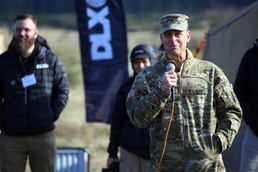
“I spent the last two years as the I Corps chief of staff and I have been all over the Pacific Theater trying to ensure readiness for large-scale combat operations,” said Col. Phillip Lamb, senior army advisor for the Washington National Guard. “And what I've come to determine is that we've defined readiness improperly up until this point in time. What we're doing here now is the future of real readiness.”
Lamb believes events like these are promoting the next level of readiness.
“As you look at defense of the homeland as the priority for this administration and for the Department of War, what we're doing out here is the beginning of generating real readiness to defend critical infrastructure, like installations and ports, from flying unmanned systems while defending and protecting critical war fighting functions,” Lamb continued. “This is now becoming the priority of effort in what we really mean when we talk about generating readiness.”
The event built on momentum from a Counter-Unmanned Aerial Systems Summit hosted by the Washington National Guard in November, which examined drone threats during large-scale public gatherings. Discussions during the February training reinforced the Guard’s role in supporting civil authorities, particularly in detection and monitoring, while operating within federal and state legal frameworks.
Those legal authorities were also a focus during recent testimony before state legislators, where National Guard leaders spoke in support of House Bill 2462. The bill is designed to clarify how the National Guard and Washington State Guard can assist law enforcement in responding to credible drone threats.
“It allows the governor, through the adjutant general, to set clear rules for how agencies respond to drone threats and authorizes the governor to use the National Guard to support law enforcement when needed,” said Lt. Col. Denny Frey, the adjutant general’s command action group lead. “In short, it improves coordination, closes capability gaps, and gives the state additional tools to protect the public.”
During the Range Day event, National Guard subject-matter experts outlined how counter-UAS support typically works during major events. Local law enforcement agencies remain responsible for establishing Temporary Flight Restrictions through the Federal Aviation Administration, while requests for National Guard assistance are coordinated through the State Emergency Operations Center.
“The primary role of the National Guard during these missions is detection and monitoring of potentially hazardous drones,” said Lt. Col. Wes Watson, former commander of the 10th Civil Support Team. “That capability is critical when local agencies are stretched or facing a complex threat environment.”
The 10th CST has extensive experience supporting large-scale public events across the region, regularly working alongside Seattle Police and Fire Departments at professional sporting events and concerts at Lumen Field. That established relationship, officials say, will be essential as planning accelerates for World Cup security operations.
As drone technology becomes more accessible and adaptable, Washington National Guard leaders emphasized that training events like FIFA Range Days are vital to staying ahead of potential threats.
“We're using FIFA as an example, as a springboard to generate that readiness. But there are other events coming up, like with Los Angles hosting the Olympics in 2028,” said Lamb. “Defense of critical infrastructure around the entirety of this nation is so important and we are in the business of making sure that we can protect the homeland.”