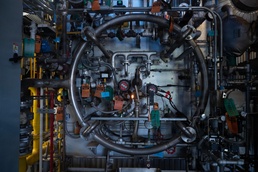
Airmen and technicians assigned to the 374th Civil Engineer Squadron heating, ventilation, air conditioning and refrigeration shop conducted emergency boiler repairs Feb. 2-9 to sustain heating and hot water services to the east side housing areas at Yokota Air Base, Japan.
The effort began after HVAC technicians identified an internal failure in one of the boilers at the East Side Boiler Plant, a system responsible for providing heat and hot water during winter months.
“One of our boilers went down, which required us to take it offline and perform a major repair to continue providing heat and hot water to a little over 1,000 units,” said Staff Sgt. Kyle Amory, 374th Civil Engineer Squadron HVAC/R supervisor.
The East Side Boiler Plant operates three boilers. When one unit failed, the remaining two continued operating, allowing the plant to maintain service while repairs were conducted.
“The east side boiler plant is different from the others,” Amory said. “Steam is used inside the plant to heat water, and that hot water is sent out to housing at approximately 240 degrees, where heat exchangers reduce the temperature for heating and daily use.”
The failure occurred when a hole developed in one of the boiler’s internal heating coils, allowing water to leak into the boiler casing. The damage reduced system pressure and heating efficiency, requiring the affected boiler to be shut down to prevent further damage.
“When an internal failure like that occurs, we have to take the boiler offline to protect the system,” Amory said.
Given the extreme operating temperatures, technicians were required to allow the system to fully cool before beginning repairs.
“When these boilers are running, internal components are extremely hot,” Amory said. “We need at least two to three days for the system to cool before we can safely start work.”
Once cooled, technicians removed the boiler face to expose the internal tubing. The damaged section was identified by filling the casing surrounding the affected coil with water and observing each individual tube to determine which one was leaking. The failed section was welded closed, gaskets were replaced and the boiler was reassembled before being returned to service.
Repairs like this are treated as emergencies due to the potential impact on residents, particularly if additional boilers were to fail during peak winter conditions.
“If more than one boiler were to go down at the same time, that section of the base would have difficulty maintaining heat and hot water,” Amory said.
Maintaining reliable heating during the winter months directly supports quality of life and mission readiness across the installation.
“Emergency boiler repairs such as this highlight the ongoing effort required to sustain aging infrastructure while preserving quality of life and mission readiness at Yokota,” said Senior Master Sgt. Warner Houston, 374th CES Infrastructure Superintendent.
The repair was completed entirely in-house through coordination among boiler plant operators, steam operators and HVAC technicians, including Airmen and Japanese local national employees. This effort ensured uninterrupted heating capability for more than 1,000 housing units and reinforced Yokota’s ability to sustain operations in all conditions.