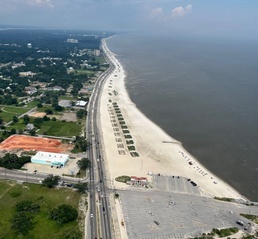
MOBILE, Ala. — The waves of the Gulf Coast have long defined the shoreline of Harrison County, Mississippi. But the gentle lapping of the tide is a stark contrast to the memory of August 29, 2005.On that day, Hurricane Katrina unleashed a fury that reshaped the coast and the lives of all who called it home.The storm's surge, a monstrous wall of water reaching nearly 30 feet, obliterated homes, businesses, and landmarks, leaving behind what many called a "boulevard of broken dreams."
The sugar-white sandy beaches, once a symbol of the region's beauty and a draw for all, were washed away, leaving the coastline scarred and vulnerable.
In the two decades since Katrina, the Mississippi Gulf Coast has been on a long journey of recovery and rebuilding.
Now, a new chapter of restoration is set to begin, promising not just to reclaim the beauty that was lost but to build a more resilient shore for the future.
"The work is part of a long-running, multi-agency coastal restoration effort overseen by U.S. Army Corps of Engineers, Mobile, District," said David Newell, USACE Mobile District Chief of the Coastal Infrastructure Program. "The work began in the aftermath of Hurricane Katrina in 2009, which recommended rebuilding beaches along the Mississippi coast and restoring damaged areas. This is a part of that effort."
A Partnership for Resilience
A monumental effort, the Harrison County Beach Restoration Project, is underway.This partnership between the Mobile District and Harrison County, Mississippi, is a cornerstone of the larger Coastwide Dune and Ecosystem Restoration Project.It represents a significant step in the Coastal Infrastructure Program, a comprehensive plan to bolster the coast's defenses against future storms.
Rebuilding Nature's Defenses
The scale of the project is immense. Over the next 18 months, crews will work along 26 miles of Harrison County's shoreline.The core of the operation involves dredging approximately 1.9 million cubic yards of sand from designated nearshore areas and hydraulically placing it to widen the beach.
This undertaking is about more than just sand. It is a sophisticated ecological restoration.Once the new, wider beach template is in place, a massive planting effort will begin, with about 1.8 million native plants set to be installed.
These plants will create a vibrant, living dune system. This natural barrier will help absorb the energy of storm surges, reduce coastal erosion, and provide crucial habitat for shorebirds and other wildlife.
Matthew Edwards, Mobile District CIP project manager, said he is thrilled to see the project getting underway.
"I'm excited to be part of the Harrison County Beach project delivery team as we achieved a major milestone seeing the beach contract through to award," Edwards said. "I'm looking forward to the beach construction kicking off and delivering a successful project to our non-Federal sponsor, Harrison County, Mississippi."
Restoring a Legacy For the communities of Harrison County, from Biloxi to Gulfport to Pass Christian, the project is a symbol of hope and determination. It is a move to restore the cherished landscape that Hurricane Katrina violently altered. By bringing back the vast, beautiful beaches and reinforcing them with natural dunes, the project aims to turn a story of devastation into one of enduring strength, ensuring the Harrison County coast can stand firm for generations to come.
Trey McKnight, Director of Harrison County Sand Beach, said the partnership with the Corps is crucial to revitalizing the county's coast.
"Our beach in Harrison County was heavily damaged due to the damage caused by Katrina in the early 2000's," McKnight said. "This partnership with the Mobile District is crucial to revitalizing our coast and our beach and restoring it, making it better than ever before."