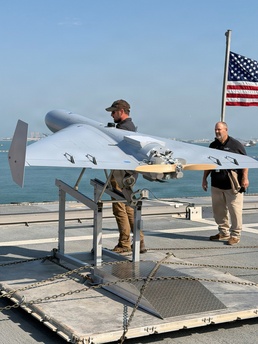
The Shipboard Weapons Integration Team provides independent assessments that ensure Navy ships can safely store, move, and handle weapons at sea, turning new shipboard firepower into usable fleet capability.
That work happens far from the flight deck and long before a system ever deploys. SWIT evaluates weapons facilities on new construction ships and ship modifications to confirm crews can safely handle ordnance under real operating conditions.
Inside the ship, new capability creates hard questions most people never think about: Where does a weapon go when the ship rolls? Can Sailors move it through narrow passageways without forcing unsafe workarounds? Can crews secure it safely alongside other ordnance? SWIT answers those questions before a weapon is delivered.
New capability does not fit the ship by default
Barry Olson, head of the Sustainment Program Management and Analysis Department, described SWIT as a reality check for weapons integration.
“These guys work with the safety board and with the fleet on what is real, how we handle stuff, how we load stuff,” Olson said.
Even small ship modifications can create major problems once a ship is underway.
“Sometimes it’ll be a ship mod that messes things up,” Olson said. “They put a vending machine in the aisle and now you can’t get weapons to fit down the aisle anymore.”
By identifying those issues before a system reaches the fleet, SWIT prevents costly rework, deployment delays, and potentially dangerous workarounds. Finding a blocked weapons route in port can save months of delays and costly modifications at sea.
SWIT’s work spans more than unmanned systems.
The team may be asked to plan safe storage and movement for helicopter weapons such as rockets and Hellfire missiles, ship self-defense rounds like Rolling Airframe Missile, and even Army rocket launchers temporarily embarked on cargo ships or tankers to meet urgent fleet needs.
Independent checks built on fleet reality
Bill Ayers, Shipboard Weapons Integration Team lead, said SWIT’s value comes from its role as an independent assessor.
The Office of the Chief of Naval Operations designates SWIT as the Navy’s independent assessor for shipboard weapons facilities, placing the team inside magazines, weapons handling spaces, and ordnance movement routes on new construction and modified ships. Naval Sea Systems Command tasks SWIT to certify that those spaces work as designed and that crews can safely move and secure weapons before a ship enters service.
Rather than relying on drawings alone, Ayers said the team tests ships the way Sailors will actually use them. SWIT brings inert weapons and representative equipment aboard and moves them through intended routes to confirm they can be handled safely.
Those demonstrations matter because ships rarely match the plans. A few inches lost in a passageway or a late modification can block a weapons route and force crews into unsafe solutions.
Rapid response for operational urgency
SWIT’s rapid response capability proved critical when the team deployed on short notice to support Task Force Scorpion Strike aboard USS Santa Barbara (LCS 32) during Central Command operations.
For the Low-cost Unmanned Combat Attack System, SWIT verified shipboard routes, identified required modifications, and confirmed weapons support equipment fit the littoral combat ship’s layout before the system reached the ship. The team’s validation helped ensure the system could be launched safely within a narrow operational window.
On Dec. 16, Santa Barbara launched LUCAS from its flight deck while transiting the Arabian Gulf. It was the first shipboard launch at sea for the drone operated by Naval Forces Central Command’s Task Force 59.
Validation that keeps capability accountable
SWIT does not install weapons. The team validates them.
“We’re the independent validation,” Ayers said. “The program gets to say we’re good to go. The installer gets to say we’re good to go. Then we come in and ask what about this, this and this.” That role becomes more important as the Navy fields new capability on compressed timelines. By identifying fixes early and testing realistically, SWIT helps ensure speed does not outrun safety or mission readiness.
When a system launches at sea, it can look simple. What you don’t see are the months of assessments that prevented delays, avoided dangerous workarounds, and ensured the ship and crew were ready when the window opened.
For Ayers, the entire process is designed for the warfighter.
“It’s that 19-year-old Sailor on the deck.” Ayers said. “Our job is to make sure that when they have to use this equipment, it works and it’s safe. That’s the only thing that matters.”