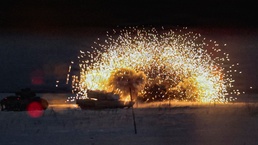
FOS HERKUS, Lithuania-- Operation Atlantic Resolve is a comprehensive mission designed to enhance readiness, deter regional threats, and strengthen interoperability between U.S. forces and NATO allies. This is accomplished through persistent forward presence, multinational training, and combined exercises along NATO’s eastern flank. By fostering close collaboration, the operation aims to ensure allied forces are prepared to respond swiftly and effectively to any emerging challenges. Spanning across multiple European nations—including Poland, Estonia, Latvia, Lithuania, Romania and Hungary—Operation Atlantic Resolve is supported by armored, aviation, and sustainment brigades. The sustained U.S. presence underscores a long-term commitment to collective defense and offers continued reassurance to allied partners. “We’re here on Operation Atlantic Resolve to strengthen relationships with our European counterparts,” said Staff Sgt. Johnathan Sosinski, a squad leader assigned to the 3rd Brigade Engineer Battalion, 1st Cavalry Division. His sentiments reflect the mission’s emphasis on partnership and joint training efforts. Sosinski recently led his squad through a night platoon live-fire exercise aimed at testing combat readiness under limited visibility. The training required maneuvering multiple M2A3 Bradley Fighting Vehicles while suppressing targets at varying distances, before transitioning to complex breaching operations. These challenging drills simulate the dynamic and unpredictable conditions Soldiers may encounter during real-world missions. During the exercise, Soldiers cleared anti-tank obstacles, breached wire entanglements, simulated minefields, and secured lanes for follow-on forces. Such battle drills are designed to mirror realistic threats that Soldiers could face on a modern battlefield and to reinforce critical skills required for mission success. Following the platoon’s first iteration of the exercise, Sosinski noted the unit demonstrated strong momentum and coordination, which are essential for effective operations. “I feel like the platoon is doing really well,” Sosinski said. “We’re moving with a good tempo.” He emphasized the importance of communication and synchronization during mounted breaching operations, especially at night, when challenges are amplified. “We’re getting it done quickly—moving all our assets, communicating across the formation, and reporting up to the follow-on forces that have to pass through the breach afterward,” he added. This training is part of a broader certification process to qualify the platoon as mounted breachers—a critical capability that enables engineer units to support maneuver forces during both offensive and defensive operations. Upon certification, the platoon will be able to integrate seamlessly with other U.S. units and NATO allies during multinational exercises and contingency operations, further reinforcing the collective strength and readiness of the alliance.