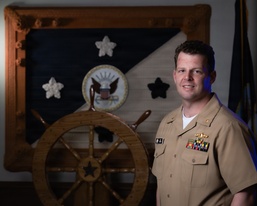
It is no exaggeration to assert that Surface Warfare Officers (SWO) are among the most vital personnel within the U.S. Navy’s surface fleet. SWOs play an integral role in nearly every aspect of shipboard operations. From navigating the vessel and overseeing flight operations to ensuring the safety and coordination of the crew, their influence is both broad and critical. They lead Sailors across divisions responsible for the full range of a ship’s operations—from mast to keel, and bow to stern.
In their roles as Division Officers (DIVO), SWOs provide leadership and management across multiple departments, including operations, engineering, and combat systems. They are actively engaged in all facets of maritime warfare—anti-air, anti-surface, and anti-submarine—and are responsible for the full spectrum of a ship’s mission execution. To fulfill these duties effectively, SWOs must develop a comprehensive understanding of all systems aboard the ship, enabling them to operate it as a cohesive and capable weapons platform.
Becoming a SWO is a rigorous process, demanding dedication and perseverance. Officers enter the SWO community either through Officer Candidate School (OCS) after earning a bachelor’s degree, or via commissioning from the U.S. Naval Academy. From there, candidates undergo intensive academic instruction and simulator-based training at Surface Warfare Officer School (SWOS) before reporting to their first ship assignment—typically a destroyer, cruiser, amphibious assault ship or littoral combat ship.
Once aboard, officers have 18 months to complete one of the most significant milestones of their early careers: earning the gold Surface Warfare Officer warfare qualification. This qualification marks formal entry into the SWO community and is a prerequisite for future leadership positions, including the opportunity to one day command a Navy vessel.
Each year, the Surface Force recognizes outstanding performance through the Surface Warfare Officer of the Year award, selecting one SWO from each coast. This prestigious distinction honors those who embody the core values and ethos of the SWO community—demonstrating exceptional leadership, professionalism, and warfighting proficiency. Unlike many other awards, the selection process goes beyond endorsements from senior leadership. Finalists must complete a series of written and practical evaluations that test both their technical knowledge and tactical skill.
Lt. Cmdr. Carolyn Bystrom: Pacific Fleet’s Surface Warfare Officer of the Year
Lt. Cmdr. Carolyn Bystrom was named SWO of the Year for Naval Surface Force, U.S. Pacific Fleet while assigned to the Arleigh Burke-class guided-missile destroyer USS Spruance (DDG 111) as the ship’s Plans and Tactics Officer (PTO).
“You have to be a good advocate,” said Bystrom, reflecting on the qualities required for a SWO of the Year. “You have to be able to advocate for yourself, and you have to be able to advocate for your Sailors. You have to be able to advocate for the ship. I think you have to have a high level of knowledge and competency because your Sailors are trusting you as the person who's sitting at the front table to make the right decision.”
“She's obviously a remarkable tactician,” echoed Cmdr. Leigh Tate, Spruance’s commanding officer. “She really does embody Get Real, Get Better. We have a mantra on our ship. We call it ruthless self-assessment. And we really mean the word ruthless. We really believe that the key to being the best we can possibly be is self-assessment, which is really what Get Real, Get Better is getting at.”
Following her commissioning through OCS and completion of training at SWOS, Bystrom began her career aboard the Arleigh Burke-class guided-missile destroyer USS John S. McCain (DDG 56). She then transitioned to a tour aboard the Ticonderoga-class guided missile-cruiser USS Shiloh (CG 67). Departing from the traditional SWO career path, Bystrom next served as a naval gunfire instructor and range safety officer at San Clemente Island while assigned to Expeditionary Warfare Training Group, Pacific (EWTGPAC).
“Working with the Marines was really valuable,” said Bystrom, “The Marines that I worked for, all of them had done multiple combat deployments to Iraq, Afghanistan, and so just hearing their stories and gleaning from their leadership experience had a huge impact on me. And it was actually one of the major drivers as to why I signed department head. They were very tough and professional, but they were the ultimate hype squad.”
After completing her service at EWTGPAC, Bystrom reported to Destroyer Squadron 21 in San Diego before joining the team aboard Spruance as Operations Officer (OPS).
“She's actually an interesting case,” said Tate, regarding Bystrom’s assignment aboard Spruance. “She was the OPS and was actually set to leave the ship. And then, the officer that was PTO at the time got pulled early for an assignment. And as she was sort of out the door, she asked myself and the Captain at the time, ‘is there any way that I can stay on as PTO, I’d love to stay and be PTO?’ I think that speaks to her character that not only she volunteered and wanted to stay knowing she's going on a deployment, but also to her talents that we wanted her to stay.”
Spruance deployed in July 2024 for a U.S. 7th Fleet deployment with the Nimitz-class aircraft carrier USS Abraham Lincoln (CVN 72), the flagship of Carrier Strike Group Three. In August, Spruance was redirected to the 5th Fleet area of responsibility, and operated in and around the Gulf of Oman.
"My detailers were telling me, ‘Hey, you’ve got to fly out to execute your schools,’” said Bystrom. “I was like, ‘I’m not going to leave my team while we’re in the WEZ [weapons engagement zone].’ So, we worked out a deal with the detailers where I could stay here as PTO. And then I was really happy to execute the rest of that deployment with my team.”
During a transit of the Bab al-Mandab Strait, Spruance, in the company of the Arleigh Burke-class guided-missile destroyer USS Stockdale (DDG 106), and Freedom-Variant Littoral Combat Ship USS Indianapolis (LCS 17), came under attack by missiles and drones launched by Houthi rebels. The ship successfully engaged and defeated the threats during an engagement that lasted for more than 30 hours.
“When we were in the Red Sea, I think that was the epitome of what an elite group of Sailors can accomplish,” said Bystrom, reflecting on the experience. “Every person was completely bought in. I think a culture was built where junior Sailors felt like they had autonomy to just have complete ownership of their equipment and their warfare area. Watching people succeed is something that brings me joy. So that's something I'm proud of; building a culture where people feel like they can succeed, and I think that translated really well into legitimate combat engagements.”
“She really engenders trust with her teammates,” added Tate. “And I think that's key. I think that she doesn't judge. I think people want to talk to her. She's going to be honest - again, self-assessment; how do we get better? And I think she gives honest feedback. She takes feedback well. And so I think those two common denominators make her very easy to talk to whether it's the crew, the Chiefs Mess or the Wardroom. She just engenders trust, and that’s why people respond to her very well.”
According to Tate, Bystrom’s commitment extends beyond her immediate role and command. “She is always looking at how to make the community better,” said Tate. “So, her head isn't just on Spruance. It's also how do we make the surface warfare community a better community? And, with that type of thinking, it's no wonder that she is SWO of the year. And certainly, her future is wide open.”
Bystrom remains grounded in her accomplishments and quick to recognize those around her.
“I'm the one person who got the award, but I wouldn't have gotten it without my team,” said Bystrom. “You take care of your Sailors, they’ll take care of you. I'm happy to represent this ship and receive this award, but it's definitely not just me.”
Lt. Cmdr. Brian Van Metre: Atlantic Fleet’s Surface Warfare Officer of the Year By: Lt. Ayifa Brooks
Lt. Cmdr. Brian Van Metre's dedicated service aboard the Arleigh Burke-class guided-missile destroyer USS Mason (DDG 87) began in 2021 as the Chief Engineer. He fleeted up to Plans and Tactics Officer and ultimately, Combat Systems Officer, culminating in a prestigious honor: Atlantic Fleet's Surface Warfare Officer (SWO) of the Year.
For Van Metre, the award is a testament to the ship and its crew:
“I am humbled and honored to be recognized as SWO of the Year,” said Van Metre. “To me, this award represents the tireless and extraordinary efforts of the Officers, Chiefs, and Sailors onboard Mason throughout my time onboard. Their expertise, integrity, and hard work throughout maintenance, training, and combat operations were awe-inspiring. I’m proud to have served with them and to have been a part of their success.”
Van Metre is quick to credit those around him as the catalyst for team success. He emphasizes the pivotal role of his Command Master Chief, Executive Officers, and Commanding Officers on Mason, recognizing their guidance in shaping him into a better officer and leader.
“They set high standards for us to meet because they knew that those high standards would lead to superior performance when it mattered most in combat,” said Van Metre. “At the same time, their doors were always open to any officer or Sailor who needed help to meet those standards.”
He also celebrates the expertise and resilience of his Mason shipmates:
“Any time that I had a question on how a system was supposed to operate or what’s needed to succeed, no matter the time of day or night, I was lucky enough to have some of the best junior officers, mustangs, Chiefs and junior Sailors in the Navy to ask,” said Van Metre. “Their ability to problem-solve and innovate was instrumental to Mason’s success during combat operations.”
Capt. Chavius Lewis, commanding officer of Mason, underscores Van Metre’s potential.
“Brian is the future commanding officer we want leading our ships in the high-end fight and great power competition,” said Capt. Lewis. “A brilliant tactician who ensured Mason delivered when it mattered most.”
Beyond tactical acumen, Van Metre distinguished himself as a mentor. As the Senior Watch Officer, he prioritized training and preparing junior officers for success. His guiding principles, particularly his belief that officers must be "the calm in the storm" during critical moments, have been central to his leadership. This ability to maintain composure and confidence, even under pressure, has set a high standard for those following in his footsteps.
The true test of Van Metre’s leadership came during Mason's 2023-2024 deployment with the Dwight D. Eisenhower Carrier Strike Group. Deployed to the Red Sea and Gulf of Aden following the Oct. 7 Hamas attacks in southern Israel, Mason operated for months in a high-threat environment. The ship's Sailors engaged and shot down multiple unmanned aerial vehicles and anti-ship ballistic missiles targeting Mason, other U.S. and Allied warships, and merchant shipping. Van Metre once again credits the crew aboard Mason for their adaptability and resolve.
"They adapted to the threat and evolved with it. From the Sailors in combat information center to the ones manning repair lockers and engine rooms, they found new ways to win, and they did it with a smile,” said Van Metre. “The deployment on Mason and other ships was a culture-defining moment for the U.S. Navy, shaped by the resolve and skill of the Sailors operating those ships.”