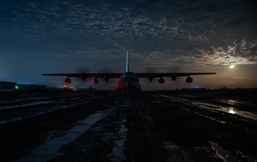
U.S. CENTRAL COMMAND AREA OF RESPONSIBILITY – In today’s rapidly evolving operational environment, airpower depends on speed, adaptability, and the ability to operate far from established infrastructure. One capability that makes this possible is a Forward Arming and Refueling Point, or FARP, which places fuel and skilled Airmen forward to extend the reach and endurance of aircraft in austere locations.
For Airmen assigned to the 26th Expeditionary Rescue Squadron, FARP operations are a critical component of expeditionary rescue. These teams operate in remote and challenging environments, supplying fuel at forward locations to ensure rescue aircraft can reach isolated personnel, remain on station longer, and respond rapidly when time is critical.
“FARPs allow our team to reach locations that might not otherwise have refueling infrastructure and provide fuel to other airborne assets closer to their area of operation,” said U.S. Air Force Maj. William Berryhill, 26th ERQS aircraft commander. “A FARP team provides a force extension to aircraft that might lack air refueling capability and decreases the time required to return to their tasking.”
The concept of forward refueling emerged from lessons learned in modern conflict as aircraft capabilities expanded and mission requirements pushed farther from established airfields. Rather than relying solely on large, fixed bases, military planners developed FARPs to sustain air operations closer to the mission, increasing flexibility, and reducing response times. Over time, FARP operations evolved into a specialized capability requiring technical expertise, adaptability, and precision.
FARP Airmen perform their mission in dynamic environments that demand constant awareness and coordination. From preparing equipment to executing fuel operations, these teams adhere to strict safety standards while working under time-sensitive conditions. Their ability to establish and sustain fueling operations in unfamiliar terrain highlights the professionalism and discipline required to support expeditionary airpower.
“We operate in austere conditions and maintain a covert posture, meaning time is at a minimum,” said Tech. Sgt. Daniel Middaugh, 26th ERQS FARP team lead. “We must deploy equipment, complete the fueling operation, and return to the tanker aircraft with all the equipment in the shortest time possible.”
While aircraft and equipment are essential, the success of FARP operations ultimately depends on the Airmen executing the mission. These professionals bring together technical skill, teamwork, and adaptability to ensure fuel is delivered safely and efficiently, regardless of location or conditions. Their efforts often occur behind the scenes, yet they play a vital role in sustaining air operations forward.
Today, FARPs remain a cornerstone of expeditionary operations. In an era where agility and rapid response define operational success, FARP operations ensure the Air Force maintains global reach and readiness. By delivering fuel forward, FARP teams enable aircraft to operate where traditional infrastructure does not exist. This capability reduces aircraft turnaround time and increases mission effectiveness, particularly for rescue forces operating across the U.S. Central Command area of responsibility.