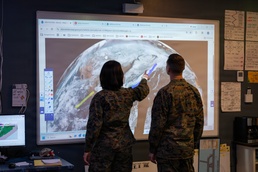
The nine-month weather technical training curriculum has undergone a transformation to improve its organization and effectiveness. These changes are designed to better prepare Airmen to be operationally ready the moment they graduate and reduce time they spend in on-the-job training after technical training.
“This is the most radical change in the last 30 years in our career field,” said U.S. Air Force Senior Master Sgt. Jason Conner, 335th Training Squadron weather career field training manager. “Previously, students would walk out of this course confident in taking a 20-question test. In the new course, they’re going to be confident utilizing the tools that are used operationally.”
“The way our course was previously organized, it’s a lot of memorization,” said U.S. Air Force Master Sgt. Devin Talton, 335th TRS flight chief. “By restructuring the flow of information and making it more hands-on throughout, we are able to cut out a lot of repetitiveness.”
Under the previous curriculum, students spent more than 257 training hours analyzing paper charts, a method no longer used in operational weather units.
In addition to modernizing instruction, the revised course significantly reduces training time. The previous program lasted 151 training days, while the new curriculum has been streamlined to 113 training days without sacrificing mission-essential competencies.
“Our current graduates aren’t always [operationally] usable right away,” said Talton. “There’s a lot of steps to get them to be competent at their duty station with upgrade training and OJT.
“By shortening the course, we’re getting these Airmen out to the field faster, and with a skill set that’s already developed.”
With new online programs, and access to the same references used in the field Airmen will be leaving Keesler more efficient, confident and ready than before.
“We’re going to see more effective apprentices, more effective technicians,” said Conner. “And this will snowball into bigger changes and better Airmen across our career field.”
Through the redesigned weather technical training course, Airmen arrive at their first duty stations better prepared to support operations and deployments, providing an immediate benefit to units across the Air Force.