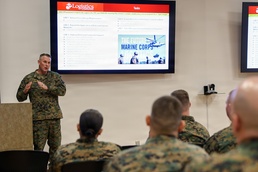
Marine Corps Logistics Command Sharpens Readiness Through Campaign Planning and Professional Military Education
The session opened with an update on Marine Corps Logistics Command’s five-year campaign plan, outlining priority tasks informed by recent wargaming and operational analysis, as well as the Commanding General’s guidance. Leaders reviewed challenges affecting force sustainment, including gaps in equipment inventory, maintenance timelines, and funding requirements necessary to support operational demands.
Discussions emphasized how Marine Corps Logistics Command is aligning logistics, sustainment, and force preparation efforts to ensure the command is postured to support Marine Forces in future conflict. Leaders also discussed professional military education focused on the strategic role of energy—oil, gas, and petroleum—and how global energy dynamics influence modern conflict and military operations. The discussion highlighted energy resilience as a growing logistics consideration and reinforced the need to adapt sustainment strategies to evolving threats and contested environments.
Other focus areas included enhanced maintenance analysis, information technology modernization at depots, and governance frameworks designed to synchronize people, processes, property, and technology. Col. Adam Taylor, assistant chief of staff, G 3/5, emphasized that advancing readiness remains central to the campaign plan update.
“Everything we’re doing is about advancing readiness for the future fight,” Taylor said. “These measures align resources, people, and processes so we know our current status, identify our goals, and define what is required to reach them.”
Taylor also underscored the urgency of closing the gaps identified through war gaming and operational analysis. “This isn’t work we can put off,” Taylor said. “We need to be postured forward, and we need to close our capability gaps to ensure we’re ready when it matters most.”
He added that sustained momentum is critical in a contested environment. “There’s no time to wait,” Taylor said. “As we look at the competing with peer adversaries, this work is necessary to ensure we’re ready. It’s relentless, but it has to be done.”
The update also recognized line-of-effort leads and teams for developing corrective action plans, tracking milestones, and maintaining accountability. Leaders reported increased transparency in planning, a more structured approach to addressing capability gaps, and clearer pathways to achieving fiscal year 2026 objectives.