MILITARY INTELLIGENCE ROLL CALL: Dr. Howard H. Furumoto (Jul. 13, 1921—Jan. 19, 2010)
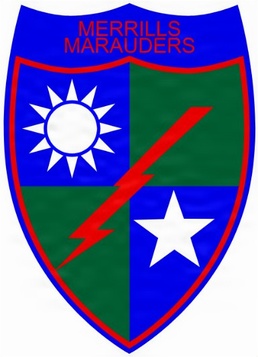
On Jan. 19, 2010, Dr. Howard H. Furumoto passed away in Hawaii. During World War II, he was one of fourteen Nisei interpreters to volunteer to serve with the famed Merrill’s Marauders and helped produce propaganda for the Office of War Information (OWI) and the Office of Strategic Services (OSS).
Howard Hoosaku Furumoto was born in Hawaii in 1921. In December 1941, he was in his first semester at Kansas State University studying veterinary medicine when the Japanese attacked Pearl Harbor. After being rejected from joining the U.S. Army through various university programs, Furumoto determined the best way he could support his country was through his knowledge of the Japanese language. He wrote directly to the Military Intelligence Division in Washington, D.C., offering his services as an interpreter and was quickly accepted into the Military Intelligence Service (MIS).
He began training at the MIS Language School at Camp Savage, Minnesota, in December 1942. After graduating from the language school, Furumoto was one of fourteen Nisei graduates who volunteered and was selected by the school commandant for a “secret and hazardous mission.” He was then sent for combat training at Camp Shelby, Mississippi, before departing for the China-Burma-India Theater.
T3g. Furumoto attended three months of jungle training upon his arrival in India and was finally told the mission he had volunteered for: assignment to the 5307th Composite Unit (Provisional), known as Merrill’s Marauders. According to Furumoto: "The object of Merrill’s Marauders was to indicate to the enemy who occupied northern Burma that the Americans for the first time were entering combat [there], and that they were entering in force…and to give the impression of a larger force to the enemy, we adopted the tactic of hitting the enemy behind their front lines."
However, Furumoto was soon called away from the unit to interrogate a member of the Kempeitai (Japanese military police) at General Joseph Stilwell’s Northern Combat Area Command headquarters in India. This was Furumoto’s first experience with the Japanese in the Pacific, and he learned kindness could also be a weapon in interrogations: “You can’t bludgeon these guys into talking and revealing secrets. But kindness did work.” After several days of getting to know the prisoner, Furumoto collected information on troop strength, weapons, and enemy positions.
He was then assigned to the OWI in the rear echelon and tasked with creating white propaganda. After a month with the OWI, Furumoto finally rejoined the Marauders in northern Burma. Attached to the Intelligence and Reconnaissance (I&R) Platoon, Orange Combat Team, 3d Battalion, Furumoto was tasked with prisoner interrogations and translating captured documents, as well as nighttime assignments at listening posts and occasionally leading scout patrols.
The 5307th was disbanded following the capture of Myitkyina in August 1944. Furumoto then transferred to OSS Detachment 203 in Chungking, China. There he recruited Japanese prisoners captured by the Chinese to help produce newspapers, posters, advertisements, and other types of deceptive materials for distribution behind enemy lines. These materials were sometimes delivered through the Japanese postal system via undercover OSS agents.
Furumoto received a field commission to the rank of second lieutenant in the summer of 1945 and was assigned to oversee a group of fifty newly arrived Nisei interpreters from the MIS Language School. These interpreters were attached to Chinese units for a planned offensive in Canton which was ultimately called off when Japan surrendered in August 1945. Shortly after, Furumoto returned home and was discharged in late 1945, having earned a Bronze Star, Combat Infantryman Badge, and Presidential Unit Citation.
Furumoto returned to Kansas State University to continue his studies, eventually earning a PhD in veterinary medicine. He later served as a professor at the university before returning to Hawaii to open a veterinary practice. Dr. Furumoto passed away on Jan. 19, 2010, at the age of 88.
Article by Erin E. Thompson, USAICoE Staff Historian. New issues of This Week in MI History are published each week. To report story errors, ask questions, request previous articles, or be added to our distribution list, please contact: TR-ICoE-Command-Historian@army.mil.