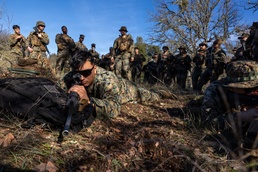
FORT HUNTER LIGGETT, Calif. — U.S. Marines with Combat Logistics Battalion 23, 4th Marine Logistics Group conducted a Winter Field Exercise at Fort Hunter Liggett, California, from Jan. 9 to Jan. 11, focusing on small-unit tactics, fieldcraft and sustainment operations in austere conditions.
The exercise began with the insertion of Marines via a U.S. Army CH-47F Chinook helicopter assigned to Bravo Company, 1st Battalion, 126th Aviation Regiment (General Support Aviation Battalion), from Stockton, Calif. The air assault insertion allowed Marines to rapidly move personnel and equipment into the training area, replicating expeditionary operations that require mobility and coordination with joint aviation assets.
“You don’t normally see Marines flying on Army aircraft, especially into a training area,” said Maj. Michael Hughey, Maintenance Service Company Commander with CLB-23, “it breaks the routine and keeps them engaged.”
Once on the ground, Marines hiked through cold-weather terrain to acclimate to the environment and test their endurance while carrying combat loads. They dug foxholes to practice defensive positioning, reinforcing the importance of field fortifications in cold environments.
Marines trained on communications equipment to maintain communication during patrols. Additional training included clearing structures, sharpening individual and team-level skills essential for operating in dangerous environments.
“Preparing for winter field conditions is about having the right gear and the right mental state,” said Sgt. Jeffrey White, a food service specialist with the battalion, “it is training, it’s cold at night, clothes get wet, but that’s part of it.”
The winter exercise provided CLB-23 Marines an opportunity to build proficiency in expeditionary logistics and infantry-related tasks, ensuring they remain prepared to support Marine Corps operations across a range of climates and mission sets.
“The experience alone makes drill something Marines want to come back for,” said Hughey.