SEYMOUR JOHNSON AIR FORCE BASE, N.C. -- Cross through the entry control point in hangar 4909 here with Staff Sgt. Jaclyn Sporcic and you'll see her pace quicken, her gaze locked on the KC-135R Stratotanker that's currently parked inside.
The jet's engine panels are popped open, exposing an organized mass of wires and tubing. And there's an obvious glint in the Airman's eye as she attempts to explain how the plane works.
"See these wires here?" Sporcic asks. "They run all the way down the wing and along the top of the plane into the cockpit where the pilot can make things happen with the flick of switch or push of a button."
As an active duty isochronal inspector with the 911th Air Refueling Squadron here, Sporcic has an intimate relationship with the 916th Air Refueling Wing's Stratotankers. She knows more about the inner workings of the aircraft than many of the pilots that fly them.
"An ISO inspector's job is to do an in-depth check of everything on the plane," she said. "We basically break it down, replace any broken parts and put it all back together again. We also clean the components too, give it a bit of face-lift. It's beautification and a lot of attention to detail."
Each aircraft will usually go through this grueling check-up once every 18 months and the whole procedure takes around 4 weeks to complete depending on the complexity of the problems that the maintainers encounter during the inspection. However, according to Sporcic, her shop is working to streamline the process.
"We're always looking for ways to do things faster," she said. "Obviously when a plane is in ISO dock it can't fly missions, so the less time it spends here, the better."
Sporcic has nine years of experience working as a crew chief on KC-135s and, as an ISO inspector, is qualified to return to the flightline at any time to resume those duties. Though she may just decide to stay put.
"This has been such an incredible learning experience," Sporcic said. "I think being an ISO inspector has definitely made me a better crew chief because you see things back here that you wouldn't normally see out on the line. I am a hands-on person and when I can get in there and see how all the parts work and fit together there's that moment when you're like, 'Ah, I get it now! I remember seeing this in a schematic somewhere but now I really get it.'"
Meanwhile, out on the line
While the ISO inspectors are poring over every inch of the plane with a fine-toothed comb, dozens of other crew chiefs are toiling away in the early summer heat out on the 916 ARW's ramp. Their job is to perform the regular, everyday maintenance that keeps the aircraft in the air. A job that happens around the clock, 24 hours a day.
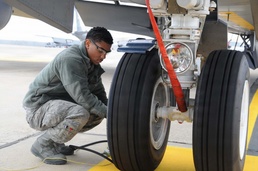
"We pump the gas, air the tires, fix anything that's broken, inspect the planes and make sure they are safe to fly," said Staff Sgt. Corey Lawson, a crew chief with the 916th Aircraft Maintenance Squadron.
Lawson came off Reserve orders to take a position as an Air Reserve Technician and, though he may sport jeans and a T-shirt while in his civilian capacity, he gets a lot of respect from his co-workers in uniform due to his knowledge of the airframe.
"He's a really technical guy," said Senior Airman Kristopher Noble, a crew chief and reservist with the 916 AMXS. "Nothing is complicated for him on the aircraft. I know I've learned a lot from him and the other more experienced guys out here while I've been on orders."
That's key because, in the wing's uniquely integrated maintenance environment, Airmen challenge one another to complete required training and become better crew chiefs. And the Air Force benefits from an influx of quality maintenance professionals.
"We do everything by the book," said Noble. "You have to. We hold each other accountable and we work hard but we play hard too. It's like a sports team. There's camaraderie and brotherhood. We're always cutting up and having a good time but we get the job done."
It's that light-hearted attitude that gets these Airmen through long hours out on the flightline battling the elements. They may share a laugh but they recognize the importance of their jobs.
"You have to be serious about it," Noble said. "We think about it like this, 'Would I put three of my family members on this plane?' You have to do the job right because people are depending on you. The crew members trust you with their lives so you have to be detail-oriented. You have to do it right."
Lawson agrees. He sees where he fits in the Air Force's big picture.
"We have a saying, 'Nobody Kicks Ass Without Tanker Gas!'" he said. "And it's true. If we don't do our jobs then the plane doesn't fly and the gas doesn't get to the fighters or the bombers. We directly affect the mission and there's a lot of pride in that."