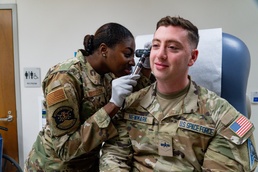
The U.S. Air Force Surgeon General’s Space Force Medical Operations Directorate is directing its focus in 2026 on its most vital component: the medical experts who support the Guardian warfighter.
“This year is set to be a turning point, with a clear strategy to build the policies and the people needed for the future of Space Force Medicine,” said U.S. Air Force Col. Melissa Runge, Deputy Director of Space Force Medical Operations. “A top priority is a new Department of the Air Force Instruction focused specifically on operational medical support for Guardians.”
The directorate is coordinating a Department of Air Force Instruction in the Aerospace Medicine 48-series, Space Force Medicine, which is expected to be published in late 2026. It will formally address the unique medically related demands of the space mission, from working in isolated environments to the intense need for sustained cognitive agility, ensuring the Air Force Medical Service is fully postured to support space warfighters.
Runge said, in addition to developing policy, the directorate is capitalizing on its partnership with the Air Force Materiel Command to ensure feedback from Guardians in the field directly shapes future solutions.
With a focus on investing in people, the directorate is launching three major initiatives in 2026:
“Great technology is a start, but our real advantage will always be our people,” said Runge. “In 2026, we're building the framework to grow our own experts - a team of medical professionals who live and breathe the Guardian mission. They are the ones who will pioneer the solutions we need to keep our force healthy for decades to come.”
As the Space Force grows, these efforts will ensure its medical support is ready for anything, she said. With a long-term vision that includes specific Guardian medical standards and a population health dashboard, the directorate is setting a new standard for 21st-century military medicine.