Path of Most Resistance.
Defense Threat Reduction Agency's Chemical and Biological Technologies Department
Courtesy Story
Date: 09.08.2021
Posted: 09.08.2021 16:02
News ID: 404733
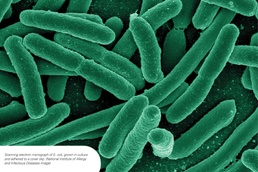
Researchers are making significant progress in antibiotic resistance under the Discovery of Medical Countermeasures Against New and Emerging threats (DOMANE) program of the Defense Threat Reduction Agency’s (DTRA) Chemical and Biological Technologies Department in its role as the Joint Science and Technology Office (JSTO) for Chemical and Biological Defense. A research team at the Massachusetts Institute of Technology discovered a new pathway used by E. coli bacteria for escaping antibiotic control.
When an antibiotic-resistant bacteria spreads unchecked, it poses a significant threat to warfighters and the public. Despite decades of research on fighting antibiotic resistance, new scientific understanding of the phenomenon remains a continued necessity. Discovering a mechanism for antibiotic resistance can present opportunities to design innovative therapeutic approaches to defeat bacterial infections and provide better protections for the warfighter and the nation.
Bacterial antibiotic-resistance mechanisms are complex but have traditionally been categorized into three broad groups:
- Target modification occurs when the bacteria alter themselves to avoid interacting with the medicine, such as in mutations or sharing resistance genes
- Drug inactivation occurs when the bacteria render the medicine ineffective
- Drug transport failure occurs when the medicine is unable to reach its intended target to kill the bacteria
The researchers exposed actively growing E. coli to certain antibiotics that imposed selective pressures and enriched the survival of bacteria with mutations in the genes responsible for metabolism that had not been appreciated previously by scientists. By doing so, certain bacterial processes were minimized, such as respiration, which prevented the antibiotics from killing the bacteria and resulted in antibiotic resistance. The research team discovered that several metabolism-specific mutations are abundant in the genomes of more than 3,500 clinical E. coli pathogens.
DTRA-JSTO’S DOMANE research expands the known processes for antibiotic resistance beyond the usual mechanisms. The discovery can be broadened beyond E.coli to bacterial biothreat agents, both endemic to certain geographic areas as well as those biologically engineered.
POC: Dale Taylor, dale.e.taylor4.civ@mail.mil