CAMP LIBERTY, Iraq — "Adaptive" is a crucial characteristic to have in the military. From historical warfare to modern day operations in Operations Iraqi and Enduring Freedom, the ability to adapt has proven to be the key to success in many situations.
Webster's Dictionary defines adaptive as: "adjustment to environmental conditions." That in itself holds true to all that the military does. The military is always adapting to new conditions for which it faces, specifically in the area of leadership.
Something that all officers are taught is how to be an adaptive leader. When going through the Officer Basic Course, they are faced with a variation of unpredictable scenarios and each person is graded on how they react. This helps reinforce adaption in the leader. It is not only the officers that encounter this. Being an adaptive leader is also important to non-commissioned officers as well. Regardless of the rank, it is key that a leader in the military must remain adaptive.
In some deployed environments, leaders cannot plan more than four to eight hours ahead and even then, things are subject to change at a moment's notice. This creates the "hurry up and wait" mindset. One phrase commonly heard in the Army is "adapt and overcome," commonly answering the question "what if...?" By adapting to situations, leaders can help Soldiers and their units overcome challenges.
Another area in which the military must be adaptive is in the military member's family. Some situations are particularly harder on family members because they are not the ones who joined the military initially. Yet, more often than not, they find themselves serving alongside their spouses and parents for the duration of their obligation. Children are probably the most adaptive. They have no choice where they live, go to school, and how often they relocate. Many military members do not stay in one location for longer than three years because the needs of the military are constantly changing. If the military service member has a child, he or she could live in many different homes before they reach adulthood. Furthermore, children must face challenges associated with switching schools so they too have many challenges to face.
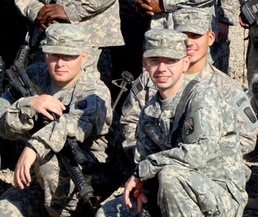
Sgt. Christian Ferrera, a native of Honduras, is a prime example of a leader adapting to new environments. Stationed at an active duty military base outside of the continental U.S., he has found unique ways to adapt to living outside the U.S. Culture shock and trying to get used to living in another country are daunting tasks. Most Soldiers stationed in the U.S. take for granted the ability to use the U.S. dollar, drive on the right side of the road, and speak English wherever they go. Spouses and children must adapt to a whole new education system.
In Sgt. Ferrera's case, getting accustomed to German traditions was a whole new experience for him. Going off post was an adventure in itself. After meeting new friends in his unit he was able to adapt to his new environment. For Ferrera, it was all about being flexible and adaptive to whatever came his way. He plans to not only continue to be stationed in Germany, but also Korea. "I joined the Army to see what the world has to offer," says Ferrera.
Everyone in the military must be adaptive to be successful. The military has perfected this concept over time, and now teaches its leaders to be adaptive from the beginning of their training. A military member's family has many resources available to them to aid the transitions associated with deployments, moving to new posts, and switching schools. Whether it is on mission in Iraq or Afghanistan, or preparing for a new assignment at home, leaders who are adaptive will succeed.