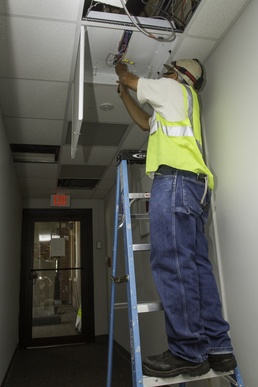
By Mass Communication Specialist 2nd Class Pedro A. Rodriguez
Naval District Washington Public Affairs
WASHINGTON- Installation of energy smart devices at Joint Base Anacostia-Bolling (JBAB) improves energy savings, enhances environmental stewardship and supports the Secretary of the Navy’s Energy Program of Security and Independence.
Secretary of the Navy (SECNAV) Ray Mabus’ energy goals include a reduction in the Navy and Marine Corps’ overall consumption of energy, decrease reliance on petroleum, and significantly increase the use of alternative energy.
A $2.3 million investment at JBAB has included the replacement of incandescent light bulbs with more energy efficient light emitting diode (L.E.D.) bulbs and occupancy sensors (motion and infrared detectors) in building hallways and rooms, turning lights on only when an area is occupied.
“The cost of installing the energy measures should equal the energy [gas/electrical/water] bill savings over the span of 15 years,” said Wendy McCoy, JBAB project manager for fiscal year 2014 energy projects. “Theoretically, they will pay for themselves.”
The new energy efficient equipment is being installed in several locations throughout the base, including parking lots.
The motion and body heat occupancy sensors reduce the lights being left on in any given work space by as much as 75 percent, reducing energy waste and improving energy conservation.
“We have also installed electric meters that provide us with the ability to monitor electric consumption in our buildings. The data we collect from the meters will enable us to determine the reduction in energy consumption and the amount of savings we get, resulting from our installation of the sensors, L.E.D and other low energy alternative lighting,” McCoy said.
The data will also enable JBAB energy managers and planners to take other additional actions to optimize the savings even further. McCoy said that plans are already underway to install other upgrades at JBAB for Fiscal Year 2015, which begins in October.
The additional energy saving upgrades include faucet aerators for
sinks, replacing old heating, ventilation and air conditioning motors,
with more efficient equipment, replacing weather stripping on doors, caulking windows and repositioning brick, to better insulate walls.
Navy and Marine Corps leadership has also made renewable energy a priority to successfully meet the SECNAV’s energy savings goals. The renewable energy strategy is an aid for base commanders and other leaders to seek ways to further enhance their energy posture and contribute even more to the energy goals of the Department of the Navy.
At JBAB, solar power collectors are just one example of how the base helps contribute to meeting the SECNAV renewable energy goals.
Joseph P. Cirone, Joint Base Anacostia-Bolling Public Affairs contributed to this story.