
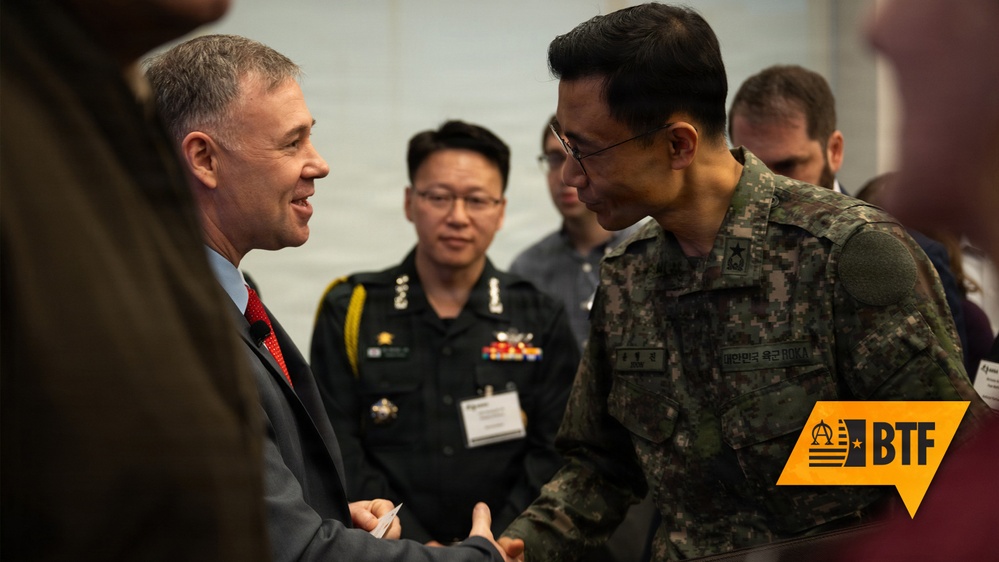
Photo By Wiley Robinson | The Hon. Brent G. Ingraham, assistant secretary of the Army for acquisition, logistics...... read more read more
 Subscribe
The future of warfare is defined by speed—speed in decision-making, rapid adaptation, and most critically, delivering capability to Soldiers when they need it. As the Army continues to modernize, this driving principle remains clear: We cannot afford delays when lives are on the line. The Army must be strategically equipped at the “speed of relevance,” ready to outmaneuver adversaries in tomorrow’s combat environment.
To execute this imperative, the Army has embarked on an ambitious overhaul of its acquisition strategy, with the Pathway for Innovation and Technology (PIT) serving as one of the Army’s key acquisition reform initiatives. The PIT is not simply another office or program; it represents a transformational philosophy embedded into Army acquisition—a deliberate, structured research and development (R&D) approach designed to bring purpose, agility and creativity to how the Army identifies, procures and deploys emerging technologies.
As the Army Acquisition Executive (AAE), I view the PIT as a proving ground for how the Army can rapidly inject promising technology into the hands of our warfighters, iterate with vendors and scale across the Army through our six Portfolio Acquisition Executives (PAEs). To enable this need for speed, we have aligned R&D resources with Capital Integrators and forward-embedded acquisition offices at both the Corps and Army Service Component Command levels. This powerful combination of agile resources, aligned with warfighting commands, allows the Army to be Soldier-focused while maintaining acquisition standards. We can now meet the needs of commanders in the field much faster while also being smarter in our risk-taking. This shows that the PIT isn’t just about technology, it’s about transformation—of systems, partnerships and how we think about innovation.
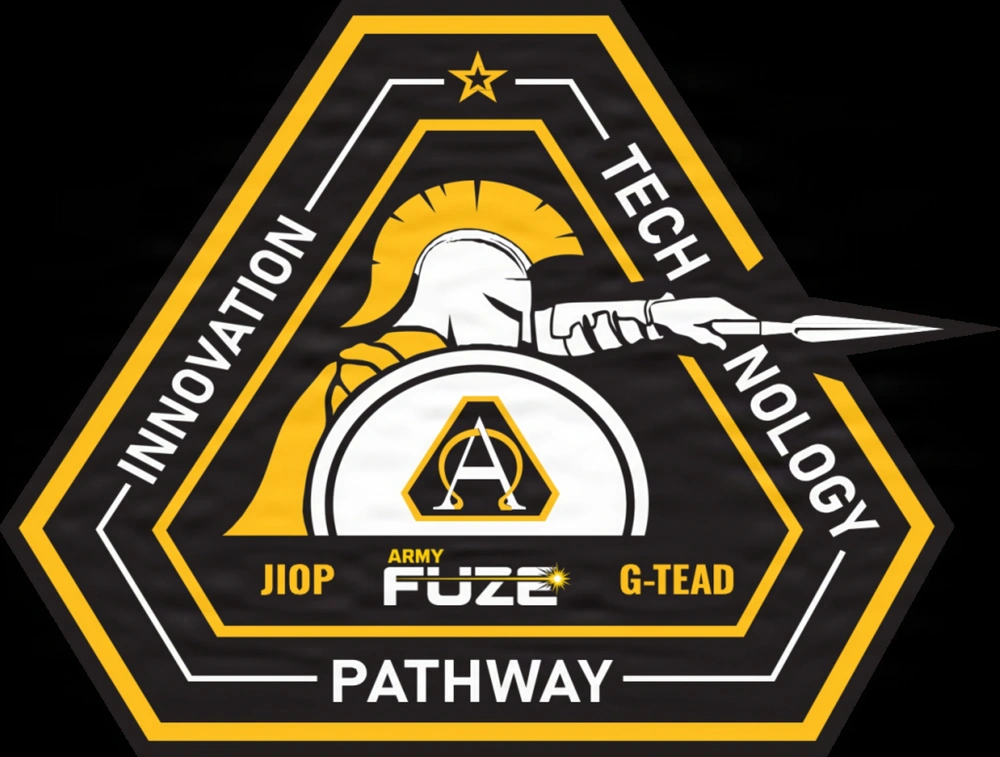 Pathway for Innovation and Technology (PIT) Logo
The world is changing at a pace too rapidly for our legacy systems and limited R&D budgets. In the past, Army acquisition sought precision through lengthy planning and procedural rigor. While effective for decades, this slow-paced model is untenable in the face of constant and disruptive technological advancements by our adversaries. Approaches that once spanned years must now be condensed into months or weeks, particularly in rapidly evolving domains like artificial intelligence (AI), hypersonics, counter-unmanned aerial systems (C-UAS) and secure communication networks.
Most critically, the enduring delays of traditional methods leave our warfighters at a disadvantage. Soldiers operating at the tactical edge need solutions now, not years from now. The PIT is our answer. This is our commitment to actively bridging the gap between industry, innovation and urgent Army needs, ensuring Soldiers have the tools and technologies they require to fight and win.
The PIT was launched as the Assistant Secretary of the Army for Acquisition, Logistics and Technology’s answer to the need for agility and speed. As the reform hub for acquisition innovation, the PIT is guided by a few key principles and structures:
 The Hon. Brent G. Ingraham, assistant secretary of the Army for acquisition, logistics and technology, discusses the Army’s acquisition efforts driving greater speed, accountability and operational readiness during the Coffee Series, an event hosted by the Association of the U.S. Army (AUSA) at their headquarters in Arlington, Virginia, March 12, 2026. The Army’s acquisition reform establishes six PAEs and the PIT Office. (Photo by Sgt. Tien Dat Ngo, Army Communications Outreach Office)
Successful innovation requires taking calculated risks, and this principle lies at the core of the PIT’s strategy. Built into our philosophy is a new definition of failure: a lack of speed to iterate with Soldiers. The PIT enables the Army to learn fast, adapt and refocus—not on the scale of years, but within months or even weeks.
Through rapid prototyping, flexible contracting tools and Soldier-led experimentation, the PIT not only advances innovation but also reduces technical and financial risk for its partners. By fostering collaboration, the PIT mitigates the uncertainties commonly faced by technology developers. This risk reduction is a key reason why companies should want to work with us—we shoulder much of the technical and financial burden, allowing innovators to focus on creating transformative solutions.
This openness to calculated risks—addressing emerging threats, enabling iterative design and fielding experimental systems—not only ensures the Army is equipped for tomorrow’s challenges but also demonstrates why we are an attractive partner. Together, we drive innovation while buying down the risks that otherwise hinder progress.
This philosophy of calculated risk is now being put into a concrete action plan for fiscal year 2026. The PIT will sharpen its focus by concentrating on Critical Mission threads designed to address specific warfighting challenges, representing a strategic shift from many individual projects to a few high-value outcomes. Our fiscal year 2026 plan is built to accelerate the transition of mature, commercial-first capabilities to our PAEs within a 12- to 18-month timeline. To achieve this, all PIT efforts will include representation from the PAE, U.S. Army Transformation and Training Command and a warfighting unit from the outset. We will leverage ongoing experimentation venues like Transformation in Contact, Project Convergence and various command-level exercises. Synchronization is paramount, and the PIT will support the Army Innovation Forum and host a biannual Army Innovators Synchronization Summit to align our efforts with the Army Combat Capabilities Development Command Labs, the Defense Advanced Research Projects Agency, the Defense Innovation Unit and other critical partners.
For fiscal year 2026, the PIT’s priority focus areas will span several warfighting functions. In Command and Control, efforts will concentrate on integrating autonomous C-UAS capabilities, developing open systems architectures and providing AI-enabled decision support and scalable Electronic Warfare. For All Arms Maneuver, the priority is on autonomous capabilities, including breaching, terrain shaping and launched effects. In Adaptive Sustainment, priorities include enhanced and low-signature energy solutions, alongside autonomous refueling, rearming and medical triage. Formation Based Layered Protection will focus on enhanced vehicle camouflage, while Cross Domain Fires will prioritize enhanced warhead seekers and low-cost, platform-agnostic offensive fires. This focused approach demonstrates our commitment to solving urgent problems. The PIT actively seeks ready-now capabilities to meet our fiscal year 2026 priority focus areas and, by shouldering much of the technical and financial burden, we make ourselves an attractive partner for companies on the cutting edge.
Ultimately, the PIT is not just a new framework, it’s a leap forward, driven by necessity and executed with urgency. It reflects the operational imperative at the heart of Army acquisition reform: ensuring our Soldiers maintain overmatch on the battlefield.
As the AAE, I am deeply optimistic about what the PIT represents—a future where the Army’s acquisition machine is no longer a cumbersome institution, but a model of speed, creativity and decisive action. To all those across the Army and industry who will contribute to this journey, the success of the PIT depends on your willingness to innovate, collaborate and commit to delivering excellence for those who fight our nation’s battles.
Let’s meet the moment—because our Soldiers and our nation can’t afford to wait.
For more information about the PIT, go to https://pit.army.mil./.
| Date Taken: | 04.07.2026 |
| Date Posted: | 04.13.2026 15:14 |
| Story ID: | 562599 |
| Location: | US |
| Web Views: | 267 |
| Downloads: | 0 |

This work, From The AAE: Transforming Army Acquisition Through The Pathway For Innovation And Technology, by Rebecca Wright, identified by DVIDS, must comply with the restrictions shown on https://www.dvidshub.net/about/copyright.


No keywords found.




