
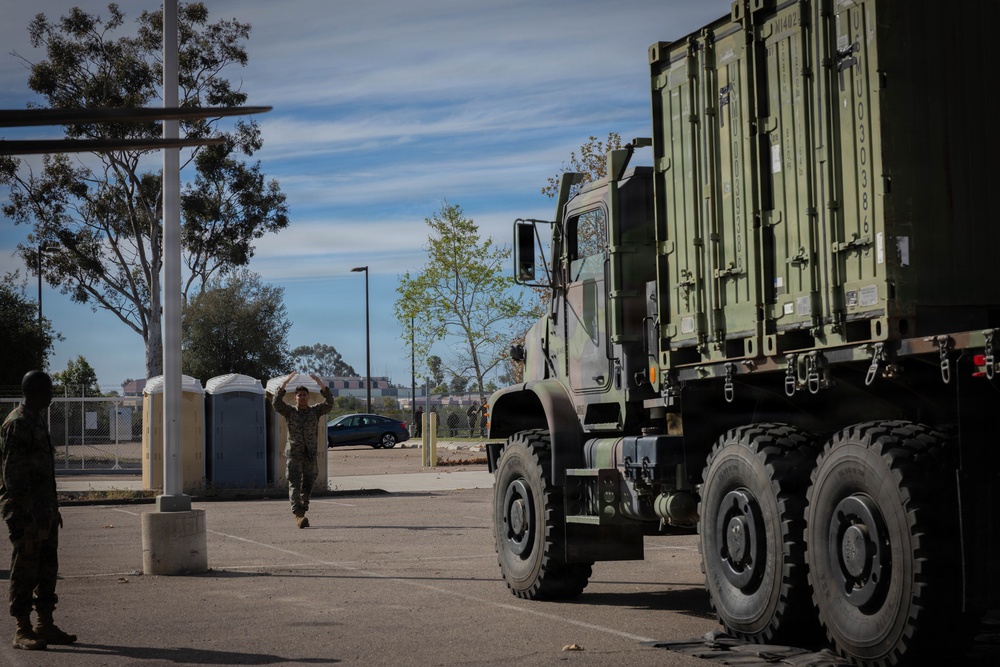
Photo By Lance Cpl. Claire Cheney | U.S. Marines with 4th Medical Battalion, 4th Marine Logistics Group, Marine Forces...... read more read more
 Subscribe
SAN DIEGO — U.S. Marines and Sailors with 4th Medical Battalion, 4th Marine Logistics Group, Marine Forces Reserve, conducted a Reserve Mobilization Exercise to test the unit’s ability to rapidly activate and assemble reserve medical forces for contingency operations.
The exercise evaluated how quickly personnel could respond to activation orders, report to their home training center and complete required readiness checks before preparing equipment for operations.
“It is a spot check exercise to see how efficiently and quickly we could activate in case of a large-scale mobilization ready to support the total force wherever we are needed,” said Lt. Col. Robert Frye, inspector-instructor for 4th Medical Battalion.
Following notification from Marine Forces Reserve, unit leadership coordinated orders for Marines and Sailors in the reserve to report in for the exercise. Upon arrival, personnel conducted accountability checks and verified individual readiness requirements, including medical, dental and administrative screening.
“Fourth Medical Battalion was able to test its processes and procedures for rapid integration of United States Navy reservists, specifically medical personnel from throughout the United States, along with Marine Corps Reserve members,” said Capt. Gerald T. Delk, commanding officer of 4th Medical Battalion.
During the exercise, Marines and Sailors assembled medical equipment and prepared supplies as if deploying for contingency operations. The training simulated the steps required to prepare personnel and equipment for deployment during a real-world contingency.
“The RMX demonstrates that we can quickly and efficiently respond, assemble and mobilize in order to generate an operationally relevant medical capability to provide the health service support required for combat operations,” Delk said.
Exercises like RMX provide commanders an opportunity to evaluate the battalion’s readiness and ensure reserve medical personnel can integrate with Marine Corps units during contingency operations. The training also reinforces the role of reserve medical forces in providing health service support to Marines operating in forward and austere environments.
| Date Taken: | 03.13.2026 |
| Date Posted: | 03.20.2026 13:05 |
| Story ID: | 560508 |
| Location: | SAN DIEGO, CALIFORNIA, US |
| Web Views: | 100 |
| Downloads: | 0 |

This work, 4th Medical Battalion conducts Reserve Mobilization Exercise, by Cpl Kanoa Thomas, identified by DVIDS, must comply with the restrictions shown on https://www.dvidshub.net/about/copyright.

No keywords found.




