
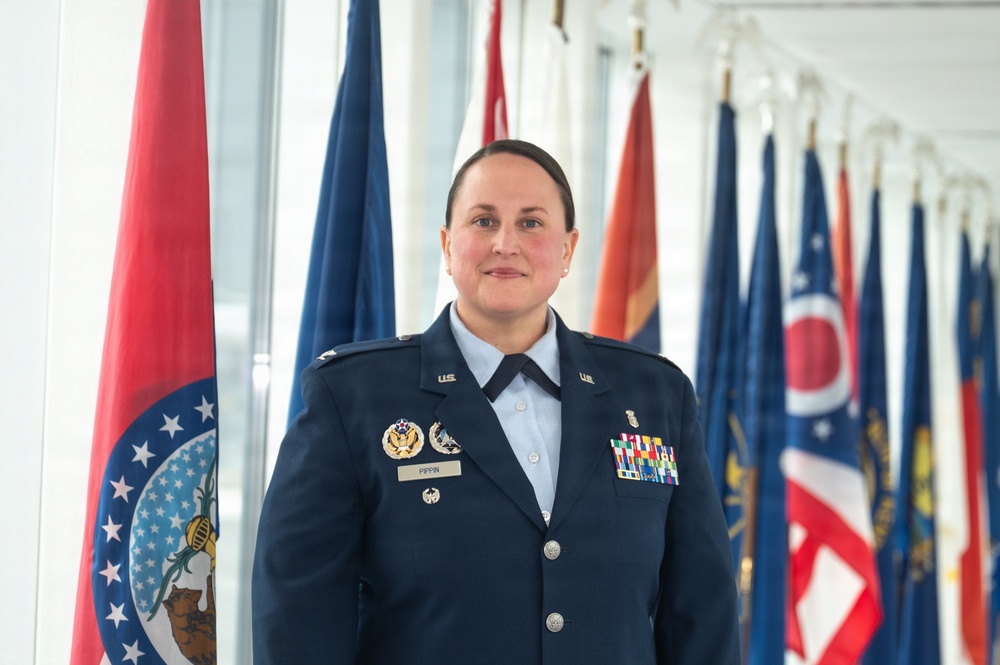
Photo By Megan Hearst | U.S. Air Force Col. Elisha Pippin, director of psychological health, poses among state...... read more read more
Our resilience is built through a preventive maintenance model of wellness. We would never wait for an aircraft’s engine to fail mid-flight before performing maintenance. Our amazing maintainers whether they are Airmen or Guardians conduct rigorous, schedule checks to ensure all of our equipment is sound, reliable, and ready. True resilience begins with these same fundamentals.
Proactive wellness is not about waiting for a crisis; it is about consistently checking our own systems - our mental, physical, social and spiritual health - to ensure we are always mission ready.
This starts with building a “psychological armor” focused on quality sleep, balanced nutrition, consistent exercise, and strong social connections, which are not luxuries but critical materials of our resilience. Each healthy meal, workout, solid night of seven to eight hours of sleep, or conversation with a friend is another layer of defense against stress, burnout, and adversity.
By making these small and daily inputs, we build a reserve of strength that ensures when we face inevitable stressors - a demanding TDY, a personal setback, or operational pressure - we are drawing from a surplus, not a deficit.
Neuroscientist Lisa Feldman Barrett describes this process as managing the brain’s “body budget” - where your brain is constantly predicting and managing your body’s energy needs. When a pattern of poor sleep, chronic stress, and lack of support is formed, decision-making and emotional control become more challenging.
Learning how to effectively manage your “body budget” prevents minor issues from escalating to a crisis. These moments of overcoming challenges equip us to become more resilient. By equipping ourselves with tools to manage our own well-being, we build a more resilient force, reduce the strain on formal support systems, and foster a culture of mutual support within the force.
Non-clinical approach to care
Knowing where to turn is key, and not every stressor requires a clinical solution. A stepped approach ensures the right care at the right time. The DAF Mental Health Overview is a useful guide that captures the complexities of mental health and the different types of care available to Airmen and Guardians.
Start with foundational resources like a chaplain, Military OneSource, or a Military & Family Life Counselor for flexible support. For more focused wellness goals like improving sleep or managing stress, primary care behavioral health within your primary care clinic is an excellent resource. PCBH can refer you to the mental health clinic for specialized medical treatment. This Targeted Care model ensures our specialty clinics are reserved for acute needs.
Mental fitness is not merely the absence of illness; it is the presence of the cognitive and emotional strength required for peak performance.
A well-rested, properly fueled, and socially connected service member makes better decisions under pressure, communicates more effectively, and contributes more meaningfully to their team. A service member struggling with preventable stress and burnout is a degraded asset on the battlefield. Their focus is split, reaction time is slowed, and leadership potential is diminished. A mentally fit warrior, however, is a force multiplier.
Proactive wellness is not a soft skill but a strategic imperative and the ultimate form of personal readiness. By taking command of our well-being, we are helping ourselves and upholding our duty to our families, our teams, and our mission.
Maj. Caley Kropp, 59th Medical Wing Clinical Health Psychologist, emphasized this, stating that “sustained performance under pressure is best predicted not by motivation in the moment, but by the physiological and psychological flexibility we deliberately cultivate through fundamental health behaviors across time.”
Grit and resilience are a mindset that we must develop, one day at a time, taking a deliberate, focused effort to be better than we were the day before.
Taking steps toward specialty care
Reaching out for help is a courageous step. When you connect with a mental health clinic, you can expect a team committed to providing a professional and confidential environment.
While your privacy is a priority, the mental health professionals do have a legal duty to report immediate threats of harm to yourself or others to ensure safety. The team will vector every individual seeking support to the appropriate resource in a timely manner. This vectoring approach enables the medical staff to provide immediate attention for those whose concerns must be addressed by a mental health provider, while connecting others whose needs may not require clinical services to a helping agency for timely care.
Engaging with your provider: The importance of openness
Treat your appointment as a strategic conversation about your well-being. Be an active partner in your own care to make it truly count.
Before you go, take a moment to reflect on your story. Think about the recent changes in your mood, like new irritation or a sense of hopelessness, and in your actions, such as isolating yourself or changes in sleep. Next, briefly consider your past, noting any previous treatments and how these worked for you.
Finally, with an eye toward the future, ask yourself what you hope to achieve. What does getting better look like for you? Bringing these three pieces to your appointment - your story, your history, and your goals - transforms the conversation. You arrive not just as a patient seeking help, but as an empowered partner, ready to collaborate on the best path forward for your health.
Your provider is your partner in this process. To ensure you receive the most effective care, it is vital to be open and direct when sharing your concerns and what you hope to accomplish. The more honest you are about your experiences and goals for treatment, the better your provider can tailor a plan that works for you.
Mental fitness as people-focused readiness
Our people are our decisive advantage, and their readiness must be our central focus.
In aircraft maintenance, we understand the danger of “delayed discrepancies” - small, non-critical issues that, if left to accumulate, can ground an aircraft. We need to apply that same maintenance discipline to our personal wellness.
The first line of effort is personal command: Every service member must become the primary mechanic of their own well-being, addressing the personal “discrepancies” - poor sleep, rising stress, frayed connections - before they cascade into a mission-stopping emergency.
The second is command climate: Leaders are the maintenance supervisors, responsible for building and sustaining an environment where proactively addressing these issues is a sign of professionalism, not weakness. Our helping agencies remain the critical backstop, ready with support and resources when a discrepancy becomes a true crisis.
This integrated maintenance approach - from the individual to the leader to the helping agencies - is how we guarantee a force that is not only resilient and effective, but overwhelmingly lethal.
Courtesy article by Col. Elisha P. Pippin, Air Force Director of Psychological Health
| Date Taken: | 03.16.2026 |
| Date Posted: | 03.16.2026 07:26 |
| Story ID: | 560482 |
| Location: | FALLS CHURCH, VIRGINIA, US |
| Web Views: | 160 |
| Downloads: | 0 |

This work, The readiness mindset: Why mental wellness is mission-critical, must comply with the restrictions shown on https://www.dvidshub.net/about/copyright.


No keywords found.





