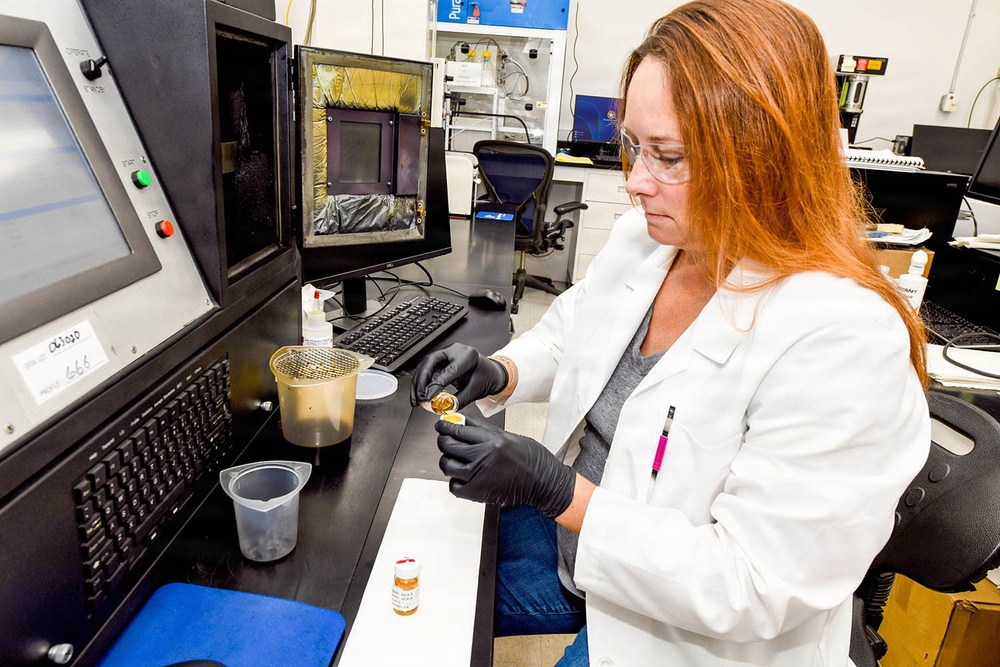
Corpus Christi Army Depot, Texas-Oil analysis is crucial for maintaining readiness and ensuring flight safety in Army aviation. Regular laboratory testing of used oil samples assesses the lubricant's condition and serves as an early warning system to predict equipment breakdowns. At the heart of this essential process is the Corpus Christi Army Depot, home to the Army's only aviation depot oil laboratory.
The fleet labs, which were once part of the Army Oil Analysis Program, do not operate in the same manner as the depot Oil Lab. CCAD performs a one-time snapshot analysis to verify that a rebuilt component or aircraft was assembled correctly and is functioning as intended. In contrast to Compared with the hundreds of hours that the field labs monitored the equipment, searching for wear patterns that would signal a failing item that needed to be replaced before it failed in use.
"We evaluate rebuilt components and aircraft to ensure they contain no foreign object debris and that fluid systems: oil, fuel, and hydraulics are not contaminated," Dr. Frederick Koch, Director of Quality Management said. “We don't have the hundreds of hours it takes to develop a wear trend. Our job is to certify that it's flawless before it leaves our facility."
The depot's initial verification is even more critical now that the AOAP was sunsetted in 2022 and the field units are mostly submitting samples to assess damage following an in-flight occurrence.
With the Army transformation in progress, including the removal, reduction, and repurposing of facilities. When the depot lab equipment became dilapidated, they had an opportunity to acquire a sustainable solution. The lab secured vital equipment from the closing Fort Hood installation. The depot needed to act quickly after both key instruments, the primary spectrometer at headquarters and the backup unit at the Aviation Multipurpose Production Facility, failed their daily tests. Through a series of three trips to Fort Hood, CCAD acquired two functioning instruments and a third to be refurbished, ensuring the lab’s continued operation. These instruments measure dissolved metals in lubricating oils and perform various tests on fuels and hydraulics.
Deputy and Chief Operations Officer Roderick Benson said this acquisition's success demonstrates the value of connections.
“I talk about reputation, relationships, and results. Relationships is our network,” Benson said. “We found out about the equipment that was up at Fort Hood because [COL] Ferguson called the oil analysis program manager in Huntsville and said, ‘we have this problem.’ The program manager said, ‘We’re getting rid of this equipment.’ Next thing, you know, CCAD acquires the equipment. By having a strong network, you expand your knowledge base exponentially.”
Managing Director for Aircraft Operations LTC Kenneth Ferguson personally vetted and acquired the equipment, highlighting the mission's importance.
“Often the larger Army has resources within the formation to solve operational shortfalls and friction points until a permanent solution can be resourced,” Ferguson said. “In this case, timing and resource availability created a rapid and permanent fix.”
Ultimately, oil analysis enables the identification of contaminants early on, allowing for preventive maintenance to be performed before component failure occurs. Besides saving money on repairs, this saves the lives of the pilots and crew. Furthermore, oil analysis enables units to prolong oil change intervals beyond a set schedule, a significant advantage for large systems that store a substantial amount of expensive oil, thereby increasing efficiency and maximizing resources.
By analyzing the oil's properties and the parts-per-million levels of various wear metals, the CCAD oil analysis lab can identify new issues before they escalate into catastrophic failures.
As the Army’s only aviation depot lab, CCAD also plays a critical role in training the next generation. The Deferred Resignation Program led several experienced oil analysis technicians and chemists to retire, providing an opportunity for other chemists to step up. Amanda Herrera has been a key contributor to all chemical processes. She now leads the Oil Analysis Program, which she helped develop into its current successful state, applying the specialized process knowledge she's gained.
“I am grateful for the opportunity to learn more about the instruments and methods involving oil analysis,” Herrera said. “Developing methods and procedures for CCAD’s oil analysis program with our technicians has allowed us [CCAD] to retain tribal knowledge, standardize operations, and provide quality results for our customers.”
Early problem detection allows repair to be scheduled and completed during planned downtime, significantly increasing the fleet's overall readiness and availability.